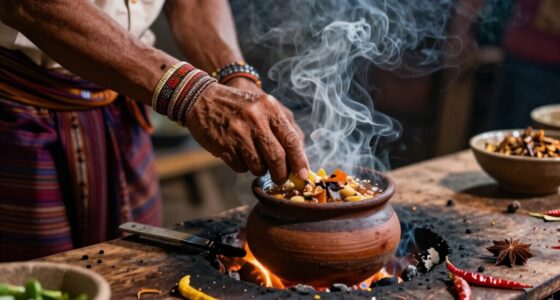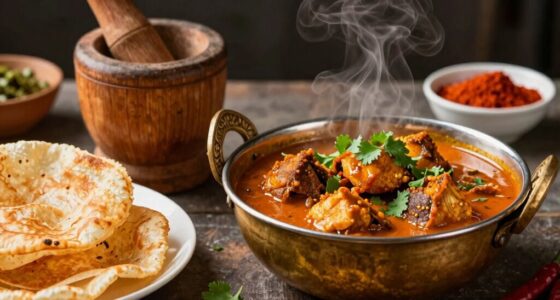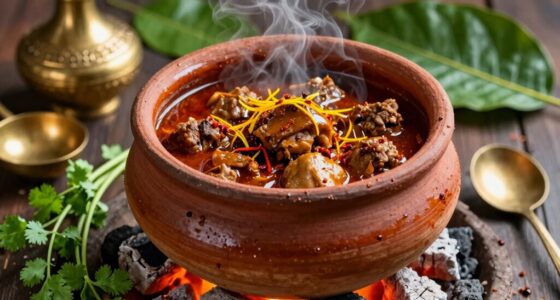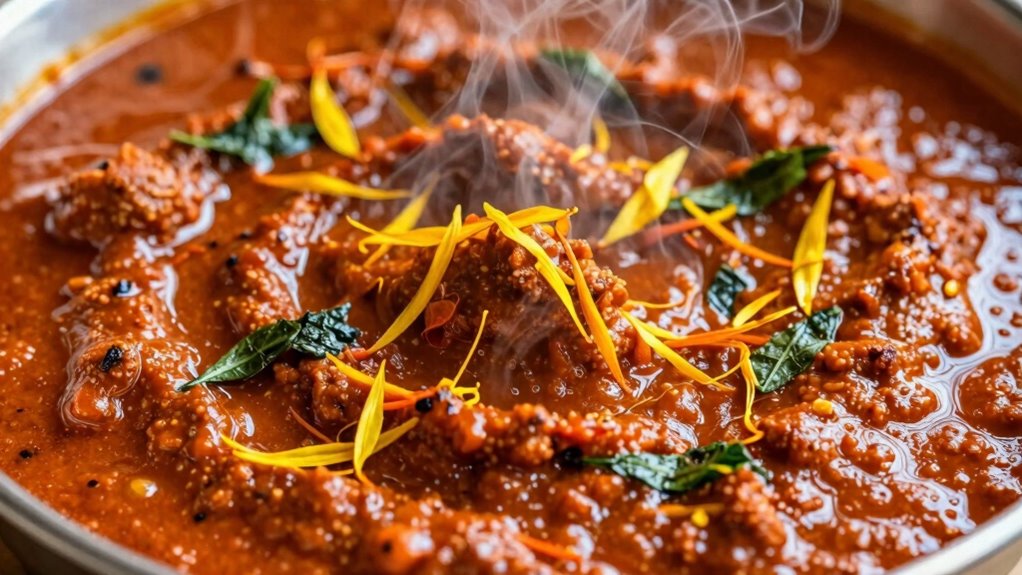

You’ll notice that Kashmiri food feels warm and comforting without relying on spicy heat because it focuses on subtle seasoning, slow cooking, and the use of aromatic ingredients like saffron and dried fruits. These techniques help develop deep, layered flavors that evoke warmth and richness. The balance of spices and careful craftsmanship create a nuanced taste experience. If you’re curious about how these methods work together, there’s so much more to discover.

Get kitchen staples and gadgets delivered free with Prime
- Fast, free delivery on millions of items
- Prime Video, Amazon Music and more included
- Member-only deals all year
Key Takeaways
- Slow cooking techniques develop deep, layered flavors that create a warm, comforting taste without excessive heat.
- The use of aromatic spices and toasting enhances aroma and warmth, emphasizing subtlety over spiciness.
- Ingredients like saffron and dried fruits add gentle sweetness, balancing spices and contributing to a warm flavor profile.
- Kashmiri cuisine focuses on harmony and craftsmanship, producing nuanced flavors that evoke warmth without fiery heat.
- The cultural emphasis on subtlety and artistry results in dishes that are warm and inviting rather than intensely spicy.

Have you ever wondered what makes Kashmiri cuisine so uniquely flavorful? It’s not just about the spices you taste, but how those flavors come together through specific cooking techniques and deep cultural influences. Kashmiri food offers a warmth that feels inviting without overwhelming your palate with heat. That’s because the cooking methods used in preparing these dishes play an essential role. Slow cooking, for example, allows the ingredients to meld together, creating a rich, layered taste that’s comforting and nuanced. Dishes like rogan josh or gushtaba are simmered gently over low heat, which helps develop a depth of flavor that’s both hearty and refined. These techniques guarantee each spice releases its essence fully, giving the dish a warm, aromatic quality that’s more about flavor than fire. Additionally, the use of culinary techniques like toasting spices enhances their aroma, contributing further to the dish’s warmth and depth. The use of traditional ingredients such as saffron and dried fruits also adds a subtle sweetness that balances the spices perfectly. These ingredients and techniques work together to create a harmonious flavor profile that’s both complex and comforting. The careful balance of ingredients and cooking methods ensures that Kashmiri food remains warm and comforting, even without excessive spiciness. It’s a keystone of the region’s culinary artistry—creating dishes that evoke a sense of warmth through subtlety and tradition, rather than just heat. So, when you taste Kashmiri food, you’re experiencing a carefully crafted harmony of techniques and influences that make every bite rich, layered, and truly memorable.
Kashmiri saffron and dried fruit spice set
As an affiliate, we earn on qualifying purchases.
As an affiliate, we earn on qualifying purchases.
Frequently Asked Questions
What Are the Traditional Cooking Techniques Used in Kashmiri Cuisine?
You’ll find that Kashmiri cuisine relies on traditional cooking methods like slow simmering and tandoori baking to develop rich flavors. You’ll notice flavor-enhancing techniques such as using aromatic spices, yogurt, and dried fruits, which add warmth without excessive heat. These methods allow ingredients to meld beautifully, creating the distinctive, comforting taste that makes Kashmiri dishes unique. So, it’s not just about spices, but about how they’re thoughtfully incorporated into each dish.
How Does Kashmiri Food Incorporate Local Herbs and Spices?
You experience the warmth in Kashmiri food through herbal infusions and carefully crafted spice blends. These herbs and spices, like fennel, cinnamon, and cardamom, are combined to create complex flavors that add depth without overwhelming heat. The use of local herbs enhances aroma and taste, giving dishes a comforting, layered warmth. This balanced approach makes Kashmiri cuisine uniquely rich and inviting, beyond just spiciness.
Are There Specific Regional Variations Within Kashmiri Dishes?
You’ll find that Kashmiri dishes showcase striking regional variations, almost like different worlds within one cuisine. From the rich, aromatic Wazwan to the simpler, everyday fare, cultural influences and modern adaptations shape each dish uniquely. In some areas, you get a hearty, spicy flavor, while others emphasize delicate, herbal nuances. These differences reflect Kashmir’s diverse history, climate, and local ingredients, creating a culinary landscape as varied as the valleys themselves.
How Does the Climate Influence Kashmiri Food Flavors?
The climate impact in Kashmir greatly influences flavor development in its cuisine. Cold temperatures encourage slow cooking, allowing spices and ingredients to meld deeply, creating warm, rich flavors. The dry climate preserves herbs and spices, intensifying their aroma and taste. You’ll notice that the cool weather fosters a balance of subtle spices and seasonal ingredients, giving Kashmiri dishes their characteristic warmth without overwhelming spiciness.
What Role Do Dairy Products Play in Kashmiri Recipes?
Dairy products in Kashmiri recipes act like the soul of the dish, giving it richness and depth. You’ll find milk-based sauces, like noon chai, which are essential for authentic flavor. Dairy preservation methods guarantee freshness, blending seamlessly into curries and stews. These ingredients add a subtle warmth without overwhelming spice, creating that unique, comforting taste Kashmiri cuisine is known for.
slow cooker for Kashmiri recipes
As an affiliate, we earn on qualifying purchases.
As an affiliate, we earn on qualifying purchases.
Conclusion
You now see how Kashmiri cuisine delivers warmth through its rich use of spices, not just heat. Remarkably, studies show that the aroma and complex flavors in Kashmiri dishes can activate your brain’s reward centers, creating a comforting sensation. So, next time you enjoy a Kashmiri meal, remember it’s the harmonious blend of spices and tradition that makes it feel so inviting—without needing to be overwhelmingly spicy. It’s truly a culinary art that warms the soul.
As an affiliate, we earn on qualifying purchases.
traditional Kashmiri cooking utensils
As an affiliate, we earn on qualifying purchases.
As an affiliate, we earn on qualifying purchases.
Halloween Picks
halloween
As an affiliate, we earn on qualifying purchases.