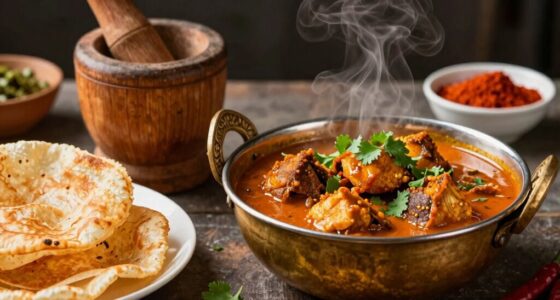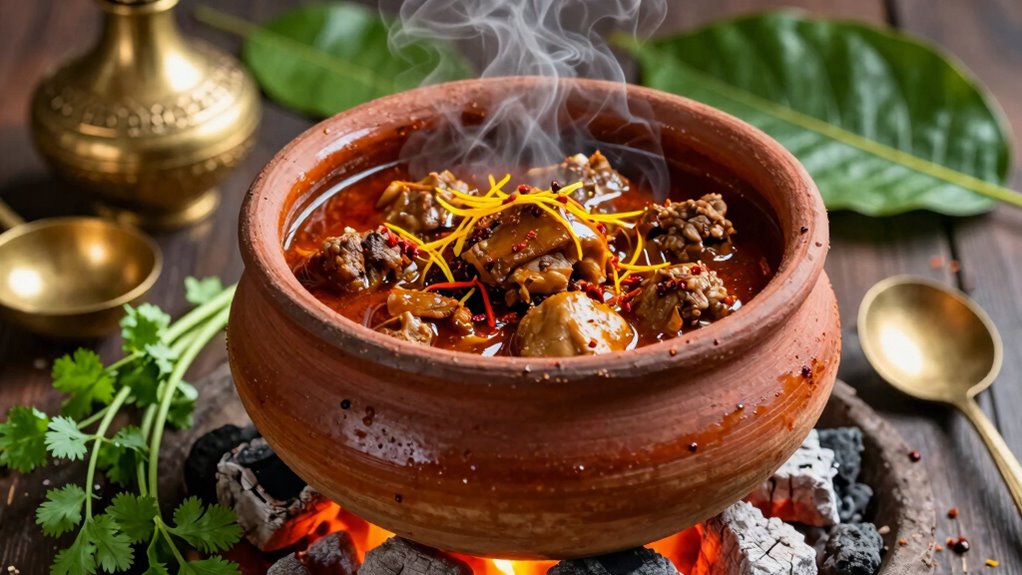

Awadhi cuisine’s slow-cook tradition is a carefully crafted process rooted in royalty and craftsmanship. You’ll notice it involves marinating ingredients for hours and cooking them gently in traditional clay pots, enhancing flavors and tenderness. Spices are blended precisely for a harmonious aroma and taste, creating layered dishes that showcase patience and skill. This method elevates simple ingredients into culinary art, revealing centuries of cultural heritage—continue exploring, and you’ll uncover even more about this exquisite tradition.
Key Takeaways
- Awadhi cuisine emphasizes slow-cooking methods like marination and simmering to develop deep, layered flavors.
- Traditional clay pots, or handi, are used to ensure even heat and authentic taste.
- The cuisine features unique spice blends crafted through centuries, balancing aroma, heat, and subtlety.
- Patience and precision in preparation highlight the cultural and ritual significance of each dish.
- The slow-cook tradition reflects a rich culinary heritage rooted in royal craftsmanship and artistry.
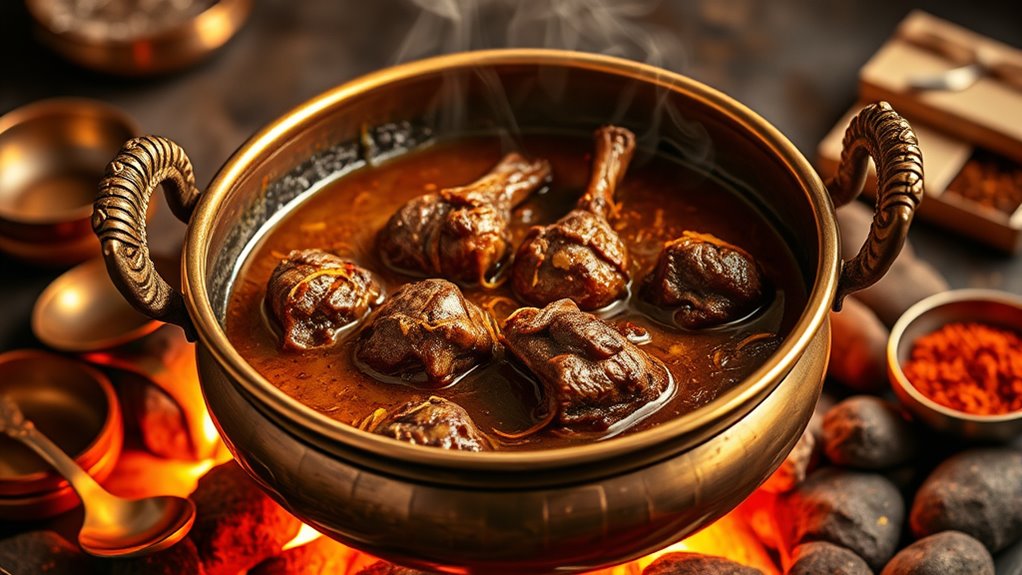
Have you ever wondered what makes Awadhi cuisine so rich and flavorful? The secret lies in its meticulous preparation, especially the use of unique spice blends and the tradition of slow-cooking that has been perfected in royal kitchens. Awadhi dishes are renowned for their depth of taste, which results from carefully crafted spice blends that balance aroma and heat. These blends aren’t just thrown together; they are the result of centuries of culinary expertise, often kept secret within royal kitchens. The spices are chosen for their specific qualities—cardamom for sweetness, cloves for warmth, and cinnamon for complexity—and are blended in precise proportions to create a harmony that’s both bold and subtle.
The slow-cook tradition is central to Awadhi cuisine. When you prepare these dishes, you’ll notice that the process involves marinating meat or vegetables for hours, allowing the flavors to penetrate deeply. Once cooked, the ingredients become tender and infused with the aromatic spice blends. This method isn’t rushed; it’s a deliberate process that emphasizes patience, ensuring each element melds perfectly. The slow cooking not only enhances flavor but also preserves the integrity of the ingredients, resulting in a rich, layered profile that’s hard to replicate with quick methods.
In royal kitchens, this approach was seen as a mark of sophistication and mastery. The chefs understood that the magic of Awadhi food comes from the slow release of flavors, which only happens when you give the ingredients enough time to develop. The use of traditional clay pots, or handi, further accentuates this process, adding earthy undertones that complement the spice blends beautifully. These pots retain heat evenly, allowing the dish to cook slowly and uniformly, which is essential for achieving the signature tenderness and aroma.
Moreover, the rituals involved in preparing Awadhi dishes reflect a deep respect for tradition. Every step, from grinding spices fresh to layering ingredients carefully, is performed with precision. This meticulousness is what elevates Awadhi cuisine beyond mere sustenance; it’s an art form rooted in history and royal patronage. When you follow this slow-cook tradition, you’re not just making food—you’re recreating a culinary heritage that values patience, craftsmanship, and balance. The result is a dish that’s complex yet harmonious, a true demonstration of the artistry of Awadhi cooking.

Cute Mini Kitchen Clay Cooking Pot – Traditional Ceramic Pot with Lid for Healthy Cooking – Multipurpose Cooking Pot Use for Home Kitchen or Restaurant- 0.6 Quarts, Small
- High-Temperature Safe: Microwave and oven safe up to 500°F
- Easy to Clean: Dishwasher safe and simple to maintain
- Health & Flavor Benefits: Enhances flavor and retains nutrients
As an affiliate, we earn on qualifying purchases.
As an affiliate, we earn on qualifying purchases.
Frequently Asked Questions
What Are the Key Spices Used in Awadhi Slow-Cooking?
You’ll find that key spices in Awadhi slow-cooking include cardamom, cloves, cinnamon, and bay leaves, which create a rich, aromatic base. You ought to focus on spice blending carefully to enhance flavor layering and depth. Using freshly ground spices and adding them at different stages of cooking helps develop complex flavors. This thoughtful approach ensures your dish captures the traditional essence of Awadhi cuisine through balanced, robust spices.
How Does Awadhi Cuisine Differ From Neighboring Culinary Traditions?
You’ll notice that Awadhi cuisine differs from neighboring traditions through its refined use of regional ingredients and a rich culinary history. Unlike other styles, it emphasizes slow-cooking techniques, delicate spices, and intricate flavors, highlighting Mughal influences. You’ll find that its dishes often feature fragrant rice, tender meats, and special masalas, creating a sophisticated culinary experience rooted in centuries-old traditions that set it apart from nearby regional cuisines.
What Traditional Utensils Are Used for Slow-Cooking in Awadhi Cuisine?
You typically use traditional clay pots and copper utensils for slow-cooking in Awadhi cuisine. Clay pots help retain moisture and distribute heat evenly, enhancing the flavors of dishes like kebabs and gravies. Copper utensils are valued for their excellent heat conduction, making them ideal for simmering and slow-cooking. These traditional tools are essential in preserving the authentic taste and cooking techniques of Awadhi dishes.
Are There Specific Occasions When Slow-Cooked Awadhi Dishes Are Served?
You’ll find slow-cooked Awadhi dishes stealing the show during festive celebrations and royal banquets, where they truly shine. It’s like the cuisine’s way of saying, “Hey, look at me, I’m special!” These occasions demand the rich, tender flavors that only slow-cooking can deliver. So, if you’re craving grandeur on your plate, plan to serve these dishes when the guest list reads like a royal guest list.
How Has Modern Technology Influenced Awadhi Slow-Cooking Techniques?
Modern appliances have profoundly influenced your Awadhi slow-cooking techniques by making culinary innovation easier and more efficient. You can now use slow cookers and electric pressure cookers to replicate traditional methods, saving time while maintaining authentic flavors. These advancements allow you to experiment with recipes, improve consistency, and enjoy the rich, tender dishes of Awadhi cuisine at home without sacrificing the essence of slow-cooked tradition.

TIMBER TASTE® World Spice Sampler Set – 5 Exotic Blends Chimichurri Chakalaka Paella Tandoori Tzatziki | Mens Gifts Spice Gift Set Foodie Cooking Kit | Gourmet Basket – Birthday Gift for Him
- Includes 5 Global Spice Blends: Exotic blends from five continents
- Enhances Any Meal: Perfect for global flavor enthusiasts
- Ideal Gift for Food Lovers: Great for birthdays and special occasions
As an affiliate, we earn on qualifying purchases.
As an affiliate, we earn on qualifying purchases.
Conclusion
Remember, patience is a virtue, especially when it comes to Awadhi cuisine. By embracing the slow-cook tradition, you reveal rich flavors and tender textures that quick methods can’t match. Each dish tells a story of time and care, transforming simple ingredients into culinary masterpieces. So, take your time and savor the process—because good things truly come to those who wait. Immerse yourself in Awadhi cooking, and you’ll experience a taste of history and tradition in every bite.

Elite Gourmet MST-250XW Electric Ceramic Slow Cooker, Adjustable Temp
- Capacity: 1.5 Quart personal size
- Safety Features: Cool-touch handles and knob
- Temperature Settings: Low, High, Keep Warm
As an affiliate, we earn on qualifying purchases.
As an affiliate, we earn on qualifying purchases.

Spicewalla Masala Indian Spice 6 Pack | Chai Masala, Tandoori Masala, Garam Masala, Chaat Masala, Chai Masala, Madras Curry Powder | Non-GMO, Indian Spices Gift Set
- Includes Six Authentic Indian Spices: Madras Curry, Tandoori, Chai, Chaat, Garam Masala, Golden Milk
- High-Quality, Simple Ingredients: No MSG, Non-GMO, Kosher, Keto & Paleo
- Freshly Ground in Small Batches: Ensures maximum freshness and flavor
As an affiliate, we earn on qualifying purchases.
As an affiliate, we earn on qualifying purchases.