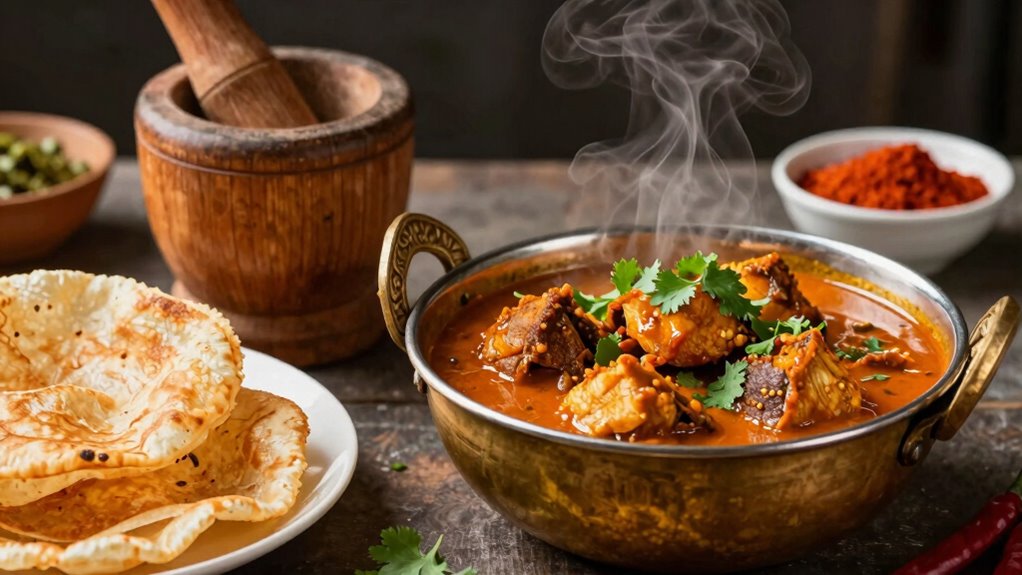

You can recognize Bengali cuisine even when you can’t see the dish because of its distinctive flavor profile, crafted through specific techniques and authentic ingredients. Slow simmering, tempering spices, and using fresh fish and mustard oil create layered, nuanced tastes that emphasize aroma, texture, and subtle spice balances. These methods preserve natural flavors and define its unique character. If you’re curious about what makes Bengali food so recognizable, keep exploring to uncover its culinary secrets.

Get kitchen staples and gadgets delivered free — and shop member deals
- Fast, free delivery on millions of items
- Access to Prime Big Deal Days deals on October 6–7
- Prime Video, Amazon Music and more included
Key Takeaways
- The use of specific ingredients like mustard oil, mustard seeds, and fresh fish creates distinctive flavors unique to Bengali cuisine.
- Traditional techniques such as tempering and slow simmering develop layered, recognizable aromas and textures.
- Subtle spice combinations balance tangy, sweet, and savory notes, defining the signature flavor profile.
- Freshness and quality of ingredients are essential for authentic taste and sensory recognition.
- The careful, precise cooking methods preserve the natural flavors and authenticity of Bengali dishes.

Bengali cuisine offers a vibrant mix of flavors that can excite your taste buds and challenge your perceptions of traditional Indian cooking. When you experience it, you’ll notice that the signature taste is unmistakable, even when you can’t see the dish. This uniqueness comes from a combination of specific cooking techniques and ingredient authenticity that define Bengali food.
First, the cooking techniques used in Bengali cuisine are distinct. You’ll find that many dishes are prepared through slow cooking, allowing the flavors to develop fully. For example, fish curries are often simmered gently, which helps preserve the delicate textures of the fish while infusing it with spices and mustard paste. You’ll also observe the skillful use of tempering, where mustard seeds, cumin, or dried red chilies are fried in hot oil to release their essential oils and aroma before adding other ingredients. This method amplifies flavor and contributes to the signature taste that’s so characteristic of Bengali dishes. Additionally, the emphasis on cooking techniques ensures that the ingredients’ natural qualities shine through. These techniques are often complemented by careful timing and temperature control, which are crucial in maintaining the authenticity of the dishes.
Bengali cooking features slow simmering and tempering, unlocking deep flavors and delicate textures in every dish.
Ingredient authenticity plays an essential role in creating this signature flavor. You’ll notice the prominence of mustard seeds, mustard oil, and fresh fish, which are staples in Bengali cooking. The use of mustard oil, in particular, imparts a sharp, pungent aroma that instantly signals Bengali cuisine. It’s not just about the ingredients but also the quality and freshness. Authentic Bengali dishes rely on freshly sourced fish, seasonal vegetables, and pure spices, often ground manually rather than pre-packaged blends. These elements come together to produce a depth of flavor that’s hard to replicate with substitutes. In fact, the quality of ingredients can make or break the authenticity of the final dish. Ensuring ingredient freshness is a vital part of maintaining the cuisine’s authenticity.
When you taste Bengali food blindfolded, you’ll recognize the subtlety of the spices and the balance between tangy, sweet, and savory notes. The use of mustard, poppy seeds, and coconut is deliberate, adding layers of complexity that are difficult to mimic without authentic ingredients and traditional techniques. The dishes don’t rely heavily on chili heat but instead focus on nuanced flavor profiles, which you’ll appreciate more as you become familiar with the cuisine’s intricacies.
Your sensory experience of Bengali cuisine is also shaped by its emphasis on simple yet precise cooking methods that highlight ingredient authenticity. Every step, from toasting spices to slow simmering, is designed to preserve the natural flavors and create a harmonious dish. This deliberate process guarantees that the signature taste remains consistent, recognizable, and uniquely Bengali. Understanding the importance of ingredient authenticity enhances your appreciation for the cuisine’s distinctive identity—one that can be felt even without sight, through its aroma, texture, and taste.
As an affiliate, we earn on qualifying purchases.
Frequently Asked Questions
What Are the Key Spices Unique to Bengali Cuisine?
You notice the unique flavor profiles in Bengali cuisine primarily from Bengali spice blends like Panch Phoron, a mix of cumin, mustard seed, fenugreek, and nigella seeds. These spices create the signature taste that sets Bengali dishes apart. Cardamom, cinnamon, and cloves also add depth, while mustard seeds give a distinctive pungency. Together, these spices form a vibrant, aromatic palette that’s instantly recognizable even when tasted blind.
How Does Bengali Cooking Differ From Neighboring Regional Cuisines?
You’ll notice that Bengali cooking differs from neighboring cuisines through its emphasis on subtle flavors and specific spices, rooted in its rich Bengali culinary history. Cultural influences from Hindu, Muslim, and colonial traditions shape its diverse dishes. Unlike some regional cuisines that favor bold, smoky tastes, Bengali food highlights freshness, sweetness, and delicate spice blends, making it uniquely recognizable even when tasted blindly.
What Traditional Cooking Methods Are Essential in Bengali Dishes?
In authentic Bengali cooking, you’ll find traditional methods like slow simmering and steaming that preserve the dish’s cultural essence. Using mustard seeds, turmeric, and panch phoron spice blends are essential for flavor. These cooking techniques support cultural preservation, ensuring each dish retains its unique taste and history. By sticking to these methods, you connect with the authentic roots of Bengali cuisine and honor its rich culinary legacy.
Are There Specific Regional Variations Within Bengali Cooking?
You’ll find regional variations within Bengali cooking that are as vibrant as a kaleidoscope. From the sweet, rich flavors of Kolkata’s Bengali festive dishes to the spicy, street-food-inspired tastes of rural Bengal, each area adds its unique twist. Coastal regions emphasize fish and coconut, while northern parts favor mustard seeds. These variations create a rich tapestry of flavors, making Bengali cuisine endlessly exciting and diverse to explore.
How Has Bengali Cuisine Evolved Over the Past Century?
Over the past century, Bengali cuisine has evolved by blending traditional flavors with modern influences, enriching its culinary storytelling. You’ll notice new ingredients and techniques, especially during Bengali festival foods, which now incorporate global spices and fusion dishes. This evolution reflects a dynamic culinary culture, inviting you to explore both cherished classics and innovative creations, making every meal a vibrant celebration of history, tradition, and contemporary taste.
authentic Bengali fish curry spices
As an affiliate, we earn on qualifying purchases.
As an affiliate, we earn on qualifying purchases.
Conclusion
You can taste the signature of Bengali cooking in every bite, in every spice, and in every aroma. You can recognize its warmth, its richness, and its boldness without a single name. You can distinguish the tradition from the modern, the subtle from the intense, and the familiar from the exotic. You can experience Bengali cooking’s essence in its flavor, its culture, and its soul—blind to the eye but clear to the palate.
As an affiliate, we earn on qualifying purchases.
As an affiliate, we earn on qualifying purchases.
Fall Picks
fall essentials
As an affiliate, we earn on qualifying purchases.