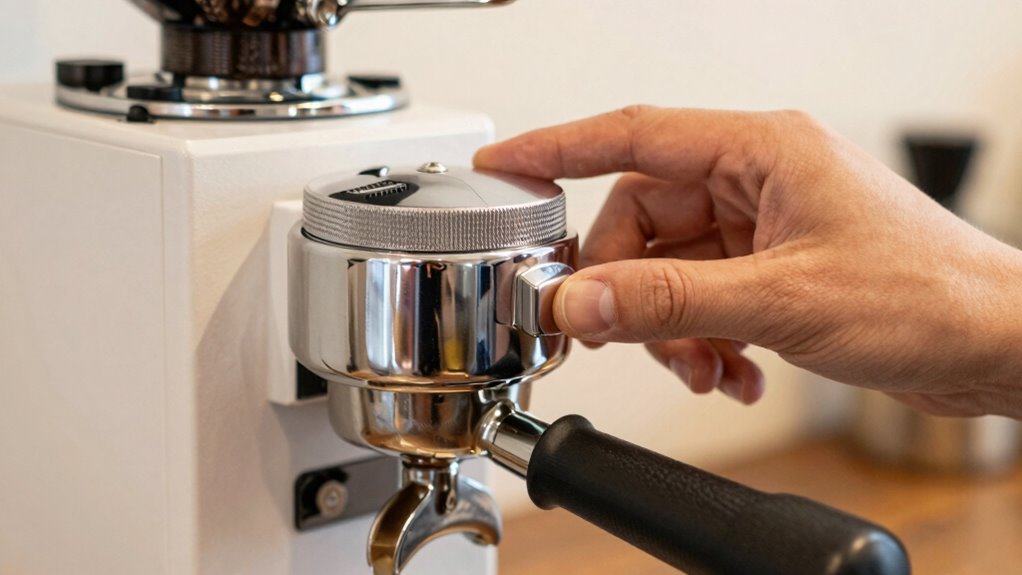

Establish a consistent grinder setting and stick to it. This habit helps stabilize extraction, making your espresso easier to dial in over time. Adjusting the grind size only when you notice flavor or shot quality changes, rather than constantly tweaking, reduces variables and saves time. Keep track of how your beans behave with that setting, especially as they age or change. Staying disciplined with this routine creates reliable results—if you want to master your espresso, there’s more to discover ahead.

Get kitchen staples and gadgets delivered free with Prime
- Fast, free delivery on millions of items
- Prime Video, Amazon Music and more included
- Member-only deals all year
Key Takeaways
- Set the grinder to a consistent initial setting for each bean type to establish a reliable baseline.
- Track grind adjustments relative to bean freshness to identify stable patterns over time.
- Avoid frequent readjustments; instead, fine-tune only after noting specific changes in bean behavior.
- Maintain a routine calibration of grinder and tamping techniques to minimize shot variability.
- Focus on developing a disciplined habit of sticking to a fixed grind setting once optimal, adjusting only as needed.
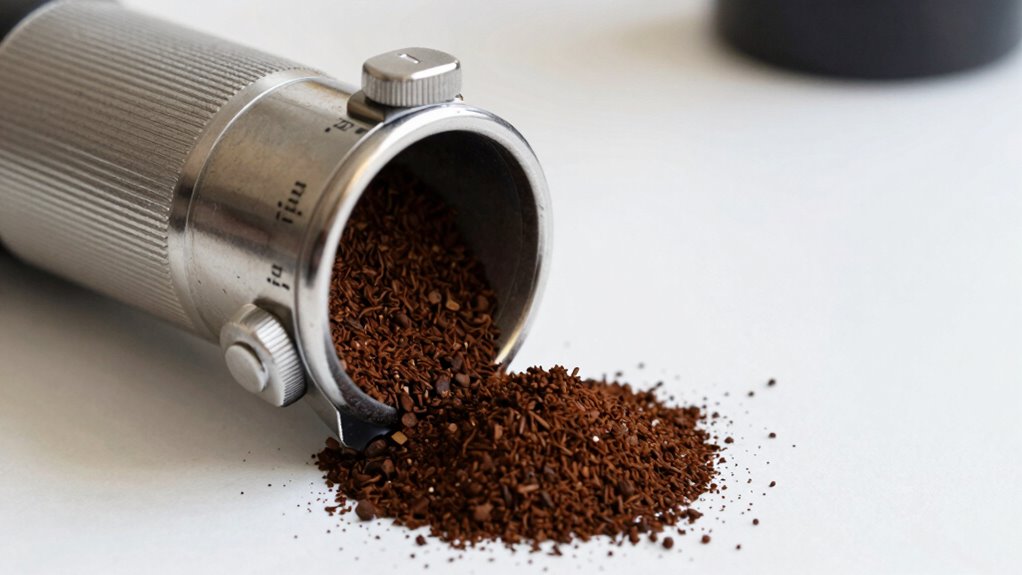
Have you ever struggled to get a consistent shot of espresso? If so, you’re not alone. The secret often lies in your grinder settings. Developing a reliable grinder habit can make dialing in your espresso much easier, especially when it comes to managing coffee bean freshness and tamping consistency. When you adjust your grinder, you’re fundamentally controlling the grind size, which has a direct impact on extraction and flavor. The goal is to find a setting that produces a uniform grind, making sure your espresso is neither under-extracted nor over-extracted. Consistency here is paramount. You want to set your grinder once, then stick to that setting, so you can focus on other variables like tamping and dosing without constantly readjusting.
Consistent grinder settings are key to reliable, flavorful espresso shots.
Coffee bean freshness plays an essential role in this process. Fresher beans tend to be more aromatic, but they can also be more challenging to dial in because their grind size may slightly vary from batch to batch. When you develop a habit of adjusting your grinder based on the freshness of your beans, you’ll notice patterns. For example, if you buy fresh beans and find your shots are pulling too fast, you might need a slightly finer grind. Conversely, older beans may require a coarser setting. By keeping track of your grind adjustments relative to the freshness of your beans, you’ll create a mental map that helps you quickly settle on the right setting each time. Developing this grind adjustment habit will improve your overall consistency and confidence in espresso making. Additionally, paying attention to grind size consistency can help you avoid unnecessary trial and error, leading to more predictable results. Recognizing and maintaining a consistent tamping pressure is also essential. Once you’ve established your ideal grind size, you want to make sure your tamping pressure remains steady. Inconsistent tamping can make even the perfect grind produce variable results. Developing a habit of tamping with the same pressure, angle, and technique minimizes the variables in your espresso shot. When your tamping is consistent, it’s easier to compensate for slight variations in grind size, leading to more reliable extractions. Incorporating routine calibration into your process can further help in maintaining your desired settings, ensuring your espresso remains consistently excellent. Combining this with a stable grinder setting means your shots will become more predictable and easier to dial in.
Ultimately, creating a grinder setting habit means paying close attention to how your beans behave and how you tamp. Stick to your set grind, be mindful of bean freshness, and maintain tamping consistency. This disciplined approach will reduce guesswork and frustration, making your espresso routine smoother and more satisfying. Over time, you’ll develop an intuitive feel for what works best, transforming what once felt like a complex art into a straightforward process.
espresso grinder with consistent grind settings
As an affiliate, we earn on qualifying purchases.
As an affiliate, we earn on qualifying purchases.
Frequently Asked Questions
How Often Should I Recalibrate My Grinder for Consistent Results?
You should recalibrate your grinder whenever you notice inconsistency in your espresso shots or after cleaning and maintenance. Regular calibration guarantees your grind size remains precise, helping with consistency troubleshooting. Typically, recalibrate every few weeks or monthly if you’re brewing frequently. Keep an eye on shot quality and adjust as needed to maintain ideal flavor. Regular calibration helps you avoid unexpected issues and keeps your espresso tasting great.
What Grinder Settings Work Best for Different Coffee Bean Types?
You should adjust your grinder settings based on bean freshness and type, as different beans require different grind sizes. For fresh beans, aim for a slightly coarser grind to prevent over-extraction, while older beans might need a finer setting. Regular grinder calibration guarantees consistency. Experiment with small adjustments, tasting each shot, to find the ideal setting for each bean type, making espresso dialing in easier and more precise.
How Do Ambient Temperature and Humidity Affect Grind Consistency?
Ambient fluctuations and humidity impact your grind consistency by causing the coffee grounds to clump or change in size. Higher humidity can make grounds stick together, leading to uneven extraction, while lower humidity helps produce more uniform grounds. To counteract this, you should adjust your grinder settings slightly and store beans in a dry, airtight container. Staying mindful of ambient conditions helps you maintain steadier grind size and achieve better espresso shots.
Can I Use a Digital Scale to Improve Grinder Setting Accuracy?
Using a digital scale can considerably improve your grinder setting accuracy, like tuning a musical instrument for perfect pitch. You can make precision adjustments by weighing your coffee dose and shot output, ensuring consistency. Calibration techniques, such as weighing each grind and shot, help you understand how small changes affect flavor. This method makes dialing in espresso easier, giving you control over extraction and ultimately better-tasting coffee every time.
What Are Signs That My Grinder Needs Cleaning or Maintenance?
If your grinder starts making unusual noise or you notice bean clogging, it’s a sign you need to clean or maintain it. Increased noise often indicates built-up residue or worn parts, while bean clogging can block the flow of coffee. Regularly inspecting and cleaning your grinder prevents these issues, ensuring consistent grind quality. If you notice these signs, take action promptly to keep your espresso tasting its best.
As an affiliate, we earn on qualifying purchases.
Conclusion
Adopting a consistent grinder setting habit is like tuning a musical instrument—you’ll find that perfect harmony in your espresso shots more easily. By sticking to a routine and making small adjustments, you’ll gain confidence and precision with each brew. Remember, every tweak is a step closer to that ideal shot. Keep practicing, stay patient, and soon, dialing in your espresso will become second nature—like riding a bike, smooth and effortless.
As an affiliate, we earn on qualifying purchases.
As an affiliate, we earn on qualifying purchases.
NFL season / tailgating Picks
team gear
As an affiliate, we earn on qualifying purchases.