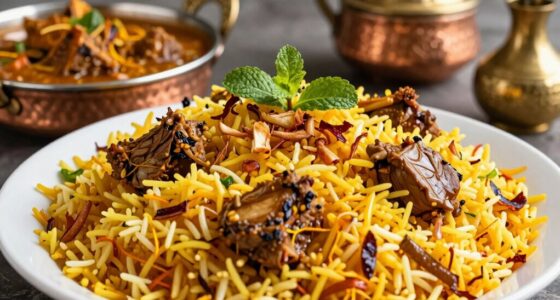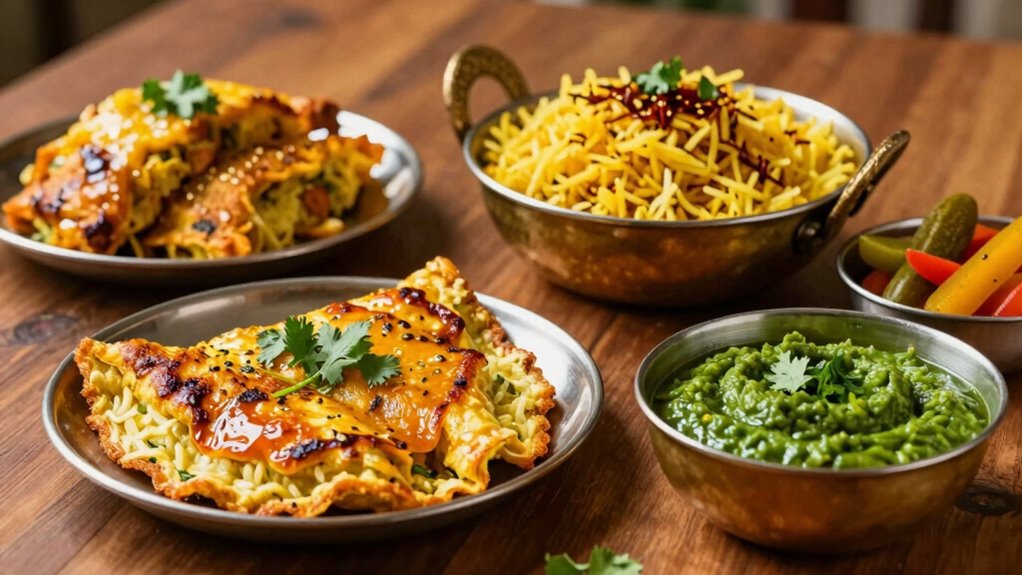

Parsi food feels both familiar and distinct because it blends traditional Persian flavors with local Indian ingredients and techniques. You can enjoy comforting dishes like rice and curries, infused with spices and ingredients like tamarind and coconut, which add subtle complexity. This harmony of cultural influences creates a cuisine that’s welcoming yet exciting. If you’re curious about how these flavors come together so seamlessly, there’s much more to uncover about this rich culinary heritage.

Get kitchen staples and gadgets delivered free — and shop member deals
- Fast, free delivery on millions of items
- Access to Prime Big Deal Days deals on October 6–7
- Prime Video, Amazon Music and more included
Key Takeaways
- Parsi cuisine blends Persian spices with Indian ingredients, creating familiar yet unique flavor combinations.
- Traditional techniques like slow cooking and tempering evoke comfort while adding distinctive depth.
- Key ingredients such as tamarind and mustard seeds provide recognizable flavors with a spicy punch.
- The cuisine reflects a rich history of migration, merging cultural influences into comforting dishes.
- Its harmonious balance of familiar staples and innovative twists makes it both comforting and distinct.
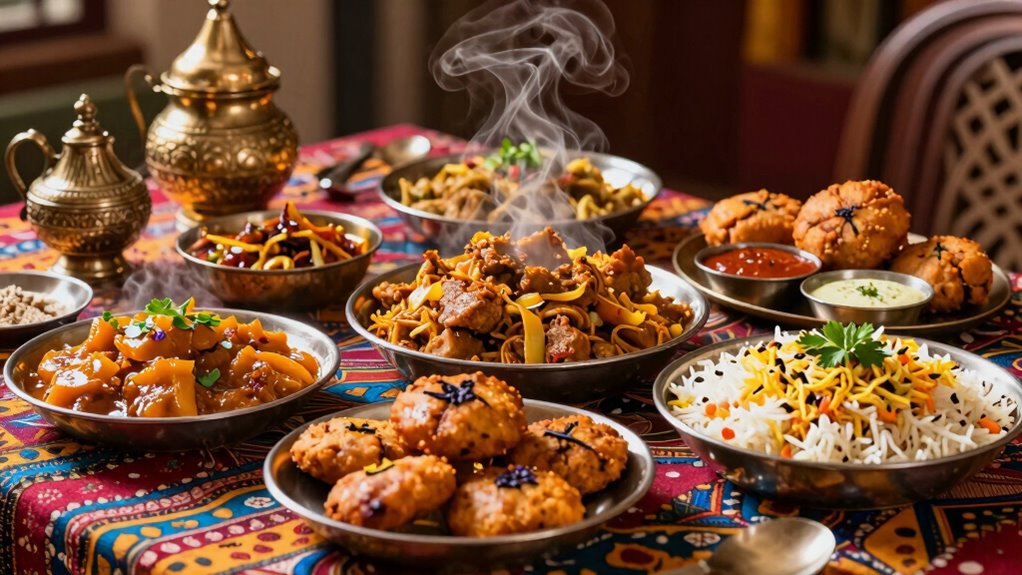
Have you ever wondered what makes Parsi cuisine both comforting and distinctive? It’s a fascinating blend of influences and techniques that create a culinary experience unlike any other. When you explore Parsi food, you immediately notice how it strikes a balance between familiarity and novelty. This duality stems from a rich tapestry of cultural influences that have shaped the cuisine over centuries. The Parsis, originally from Persia, brought with them flavors and cooking styles that are evident in dishes like dhansak or patra. These recipes incorporate Persian spices and ingredients, yet they have been seamlessly integrated with local Indian produce and traditions. As a result, the food feels both rooted in ancient Persia and adapted to the Indian palate, giving it that comforting yet unique flavor profile.
You’ll find that the culinary techniques used in Parsi cooking also play a big role in creating this distinctive yet familiar taste. Parsi chefs often employ methods like slow cooking and tempering, which deepen flavors and add layers of complexity. The art of balancing spices — not overwhelming the dish but enhancing its natural ingredients — is a hallmark of Parsi cuisine. Techniques like sautéing ingredients in ghee or mustard seeds, and the careful simmering of lentils and meats, help develop a rich, hearty flavor that feels instantly welcoming. These methods have been passed down through generations, preserving a sense of tradition while allowing for creative adaptations. The use of ingredients such as tamarind, coconut, and mustard seeds adds a tangy, spicy punch that feels familiar to Indian food lovers but with a twist that’s uniquely Parsi. Additionally, the fusion of Persian and Indian culinary traditions results in a diverse range of flavors that continue to evolve today. Cultural influences have significantly contributed to the cuisine’s unique character and its ability to adapt over time. Understanding the cultural exchange that occurred during migration helps explain how these culinary elements merged seamlessly. Moreover, the preservation of traditional cooking techniques highlights the importance of culinary heritage in maintaining authenticity. This blending of techniques and ingredients also fosters a sense of culinary innovation that keeps Parsi cuisine dynamic and exciting.
What makes Parsi food particularly interesting is how it marries these cultural influences and culinary techniques into dishes that evoke comfort yet surprise you with their subtle complexity. You might recognize the warmth of a rice dish or the richness of a meat curry, but each bite also hints at Persian origins or new flavor combinations. The result is a cuisine that feels like a culinary conversation across borders — familiar enough to feel homey, yet distinct enough to be an adventure. When you experience Parsi food, you’re tasting centuries of history, migration, and adaptation, all woven into each bite. It’s this harmonious blend of cultural influences and masterful techniques that makes Parsi cuisine both comforting and uniquely enchanting at the same time.
As an affiliate, we earn on qualifying purchases.
Frequently Asked Questions
How Did Parsi Cuisine Originate and Evolve Over Time?
You’ll find that Parsi cuisine originated from Persian influences brought by Zoroastrian immigrants to India. Over time, it evolved by blending local Indian ingredients and regional flavor variations, creating a unique culinary history. As you explore Parsi dishes, you’ll notice how they maintain Persian roots while embracing local spices and techniques, making the cuisine both familiar and distinct. This evolution reflects a rich cultural exchange that shapes the vibrant flavors you enjoy today.
What Are the Key Ingredients Unique to Parsi Dishes?
You’ll notice that key ingredients like coconut, tamarind, and ground spices give Parsi dishes their unique flavor profile. Fusion flavors shine through with ingredients like apricot, saffron, and dried fruits, creating a sweet-sour balance. Spicy twists come from green chilies and black pepper, adding warmth and depth. These ingredients blend tradition and innovation, making Parsi cuisine both familiar and distinct, inviting your taste buds into a rich culinary experience.
How Does Parsi Food Reflect Cultural Influences From Persia?
You’ll notice Parsi food reflects Persia’s influence through its use of aromatic spices and hearty rice dishes. Fascinatingly, Parsi culinary festivals showcase these Persian roots, blending them with local ingredients. Parsi cooking methods like slow braising and roasting originated from Persian traditions, creating a distinctive flavor profile. This blend of influences makes the cuisine both familiar and unique, celebrating its rich history while adapting to local tastes.
Are There Specific Parsi Dishes That Symbolize Family or Tradition?
You’ll find that Parsi dishes like Dhansak and Sali Boti symbolize family and tradition, especially during Parsi festive celebrations. These dishes are often prepared with love, passed down through generations, reflecting strong cultural roots. Parsi street food, like Kheema Pav, also connects communities and traditions. These flavors and recipes evoke a sense of belonging, making them both familiar and unique, emphasizing the importance of family and heritage in Parsi cuisine.
How Has Parsi Cuisine Adapted to Modern Culinary Trends?
Imagine a classic Parsi dish, like Dhansak, dressed up with a contemporary twist—fusion flavors blending tradition with innovation. You see, Parsi cuisine adapts by embracing modern culinary trends, incorporating elements like quinoa or vegan options, while still honoring its roots. This evolution allows you to enjoy familiar tastes with a fresh, exciting edge, making Parsi food both comforting and contemporary, perfectly suited for today’s diverse palates.
Indian and Persian cooking spices
As an affiliate, we earn on qualifying purchases.
As an affiliate, we earn on qualifying purchases.
Conclusion
As you savor Parsi food, you realize it’s like a warm hug from an old friend—comforting yet full of surprises. Its familiar spices and flavors evoke memories, while its unique twists invite your curiosity. Just as a melody that lingers long after the song ends, Parsi cuisine leaves an indelible impression—both a comfort and an adventure. In every bite, you find a story that feels both timeless and fresh, waiting to be discovered anew.
As an affiliate, we earn on qualifying purchases.
Mustard seeds for Indian cuisine
As an affiliate, we earn on qualifying purchases.
As an affiliate, we earn on qualifying purchases.
NFL season / tailgating Picks
team gear
As an affiliate, we earn on qualifying purchases.