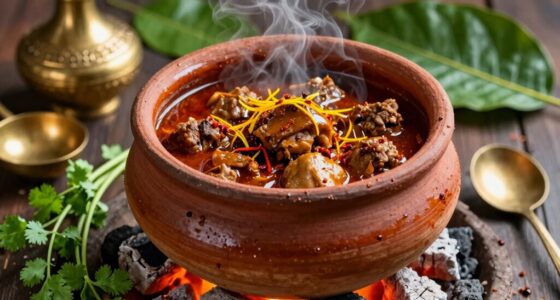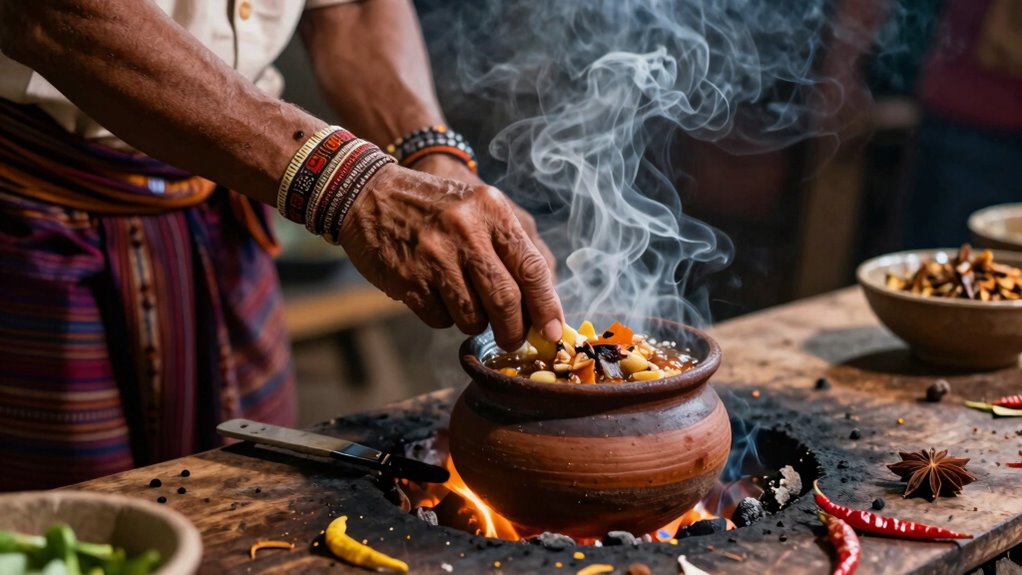

Naga cooking demonstrates how smoke and fermentation shape strong, meaningful flavors that reflect their culture’s resilience and identity. By using traditional methods like smoke-curing and fermenting foods such as bamboo shoots and soybean seeds, they honor nature’s rhythms and preserve ingredients without modern technology. These techniques also foster patience, social bonds, and ecological awareness. If you want to understand how these practices build character in their cuisine, there’s much more to discover beyond the surface.

Get kitchen staples and gadgets delivered free with Prime
- Fast, free delivery on millions of items
- Prime Video, Amazon Music and more included
- Member-only deals all year
Key Takeaways
- Smoke and fermentation techniques are integral to Naga cuisine, symbolizing patience, resilience, and cultural identity.
- These methods develop complex flavors that reflect deep respect for nature and ancestral traditions.
- Fermentation enhances nutritional value, fostering dietary resilience and social bonding through cultural rituals.
- Smoke-curing preserves food naturally, demonstrating ecological sustainability and resourcefulness.
- Together, these techniques embody Naga values of harmony with nature and cultural continuity.
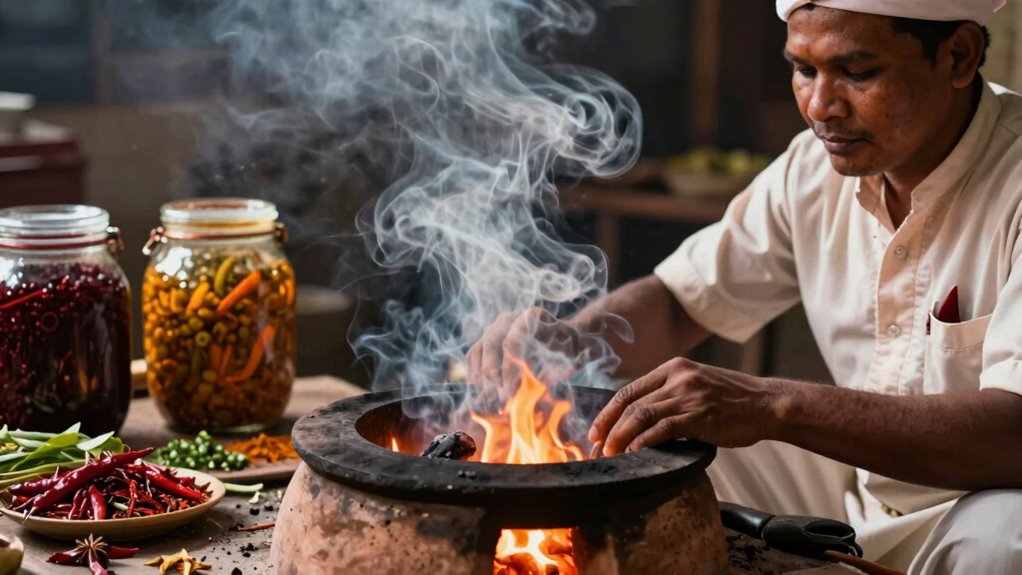
In the lush hills of northeastern India, the Naga people have perfected a culinary tradition that emphasizes the transformative power of smoke and fermentation. These methods aren’t just about flavor; they’re deeply woven into the cultural fabric of the community. When you taste Naga dishes, you’re experiencing centuries of cultural traditions that celebrate resilience, patience, and identity. The culinary techniques used in Naga cooking are deliberate and respectful of nature’s rhythms, transforming simple ingredients into complex, flavorful creations. As you observe these practices, it becomes clear that their food is more than sustenance; it’s a testament to their history and values.
Their use of smoke isn’t accidental. Instead, it’s a deliberate technique rooted in tradition that imparts a distinctive aroma and preservative quality to their food. Smoke-curing meats, fish, and even vegetables, they develop flavors that are both bold and nuanced. This method allows their food to endure long periods without refrigeration, which is essential in the region’s remote settings. You’ll notice the slow, patient process involved—an act of respect for the ingredients and the cultural significance behind each step. It’s a culinary technique that embodies a deep connection to their environment and their ancestors. Additionally, the process of smoke-curing demonstrates how traditional methods serve functional purposes while preserving cultural identity. Their use of fermentation showcases a deep understanding of natural processes that enhance both flavor and nutrition over time. This knowledge is often passed down through generations, ensuring the persistence of these vital techniques. Moreover, the careful balance of smoke and fermentation highlights the community’s commitment to sustainable practices that honor their natural surroundings and promote ecological harmony.
Fermentation plays an equally crucial role in Naga cuisine. You might see women and men alike preparing fermented foods like axone (fermented soybean seeds) or fermented bamboo shoots. These processes require patience, sometimes taking weeks or even months, but the results are worth the wait. The fermentation not only enhances flavor but also boosts nutritional value, making their diets more resilient. When you taste these fermented foods, you experience a tangy richness that speaks to the community’s ingenuity and resourcefulness. Fermentation is more than a preservation method; it’s a cultural ritual that reinforces social bonds and traditional knowledge passed down through generations. Their use of natural processes exemplifies an ecological approach to food preservation that minimizes waste and maximizes sustainability.
Together, smoke and fermentation define the character of Naga cuisine. They reflect a philosophy of harmony with nature and a respect for time-honored culinary techniques. As you explore their food, you’re invited into a world where patience and tradition create flavors that build character—both in the food and in the people who prepare it. The Naga’s culinary artistry offers a powerful lesson: that true character is forged through patience, respect, and a deep understanding of one’s cultural roots. Their food isn’t just about taste; it’s a living expression of their identity and enduring cultural traditions. Recognizing the significance of traditional food preservation techniques, such as smoking and fermentation, helps to appreciate the resilience and ingenuity of the Naga people.
As an affiliate, we earn on qualifying purchases.
Frequently Asked Questions
How Do Naga Cooking Traditions Vary Across Different Villages?
You’ll notice that Naga cooking traditions vary across villages through distinct cultural variations and local ingredients. Each village adapts traditional recipes to their environment, using unique methods of smoking and fermentation. These differences reflect their history and customs, making every village’s cuisine special. You can taste this diversity in flavors and techniques, which showcases how deeply food is tied to identity and tradition among the Naga people.
What Specific Tools Are Essential for Naga Smoking Techniques?
Think of the tools as the orchestra for Naga smoking techniques. You’ll need a sturdy smoke chamber, which acts as the heart of the process, and fermentation jars that nurture flavors over time. The smoke chamber surrounds the food with aromatic smoke, while fermentation jars help develop depth and character. Together, these tools transform simple ingredients into rich, flavorful dishes that tell a story of tradition and craft.
How Long Does Fermentation Typically Take in Naga Cuisine?
In Naga cuisine, traditional fermentation usually takes about one to two weeks, but it can extend up to a month for deeper flavors. You’ll notice the fermentation duration varies depending on the specific ingredients and environmental conditions. During this process, the flavors develop complexity as natural bacteria break down the ingredients, giving your dish authenticity and character. Patience is key to achieving the rich, smoky taste that defines Naga culinary traditions.
Are There Health Benefits Linked to Naga Fermentation Methods?
You’ll find that Naga fermentation methods offer notable health benefits, especially regarding fermentation health and Naga probiotic benefits. The natural fermentation process encourages the growth of beneficial bacteria, which can improve your gut health and boost immunity. By consuming these traditional fermented foods, you’re likely to experience enhanced digestion and better nutrient absorption. Embracing Naga practices supports your overall health, making their fermentation techniques both delicious and beneficial.
How Is Naga Cuisine Adapting to Modern Food Trends?
You’ll see Naga cuisine embracing modern food trends through fusion recipes and restaurant adaptations. Chefs incorporate local ingredients into contemporary dishes, blending traditional flavors with global influences. Many eateries are experimenting with presentation and innovative cooking techniques to attract new audiences. This evolution helps preserve Naga culinary heritage while making it more appealing to today’s diners, ensuring the rich flavors and methods continue thriving in a modern culinary landscape.
fermentation starter culture kit
As an affiliate, we earn on qualifying purchases.
As an affiliate, we earn on qualifying purchases.
Conclusion
As you explore the rich flavors of Naga cuisine, you’ll find that smoke and fermentation gently shape each dish’s personality. These traditions whisper stories of patience and resilience, inviting you to savor more than just taste—they offer a warm embrace of culture and history. Embrace these subtle nuances, and you’ll discover that the true character of their food is crafted through quiet, enduring craftsmanship. Let each bite remind you that greatness often whispers softly.
As an affiliate, we earn on qualifying purchases.
smoke and fermentation food preservation tools
As an affiliate, we earn on qualifying purchases.
As an affiliate, we earn on qualifying purchases.
Fall Picks
fall essentials
As an affiliate, we earn on qualifying purchases.