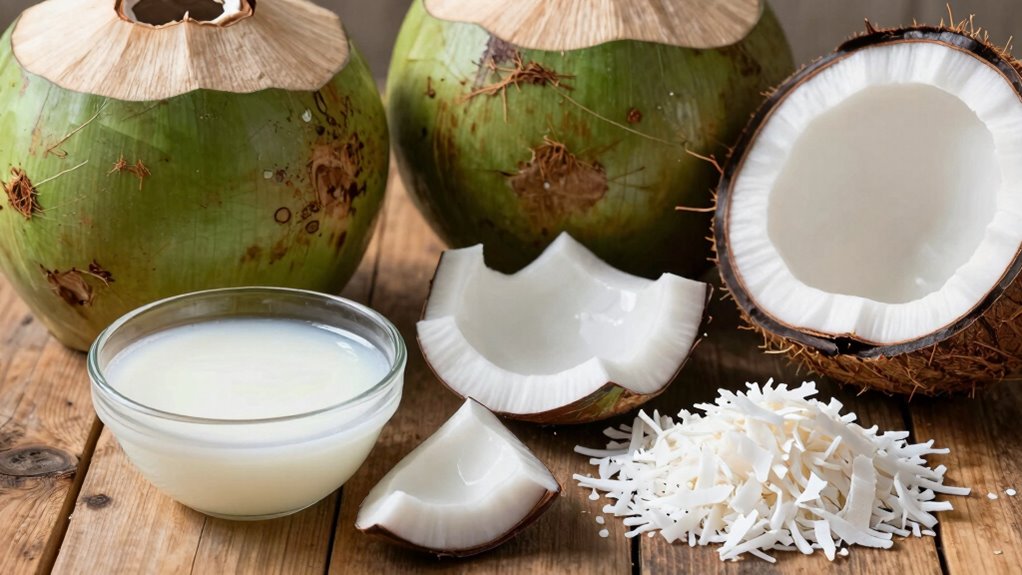

Coconut milk isn’t just one ingredient—it’s a mix of grated mature coconut flesh and water, processed differently to create various textures and flavors. Full-fat versions are rich and creamy, while light ones contain less fat. Processing affects not only taste but also nutritional content, like antioxidants and minerals. Depending on how it’s made, coconut milk can serve as a dairy substitute, a cooking ingredient, or a dessert base. Continue exploring to uncover the full diversity of coconut milk’s ingredients and uses.

Get kitchen staples and gadgets delivered free — and shop member deals
- Fast, free delivery on millions of items
- Access to Prime Big Deal Days deals on October 6–7
- Prime Video, Amazon Music and more included
Key Takeaways
- Coconut milk varies by processing, resulting in different textures, flavors, and fat contents, such as full-fat or light versions.
- It contains numerous components, including water, fats, proteins, and minerals, making it a complex ingredient.
- Different forms (canned, carton, powder) serve distinct culinary and dietary purposes.
- Processing methods influence nutrient levels and antioxidant content, affecting health benefits.
- Its versatile nature allows it to be used in various savory and sweet dishes, not just a single ingredient.
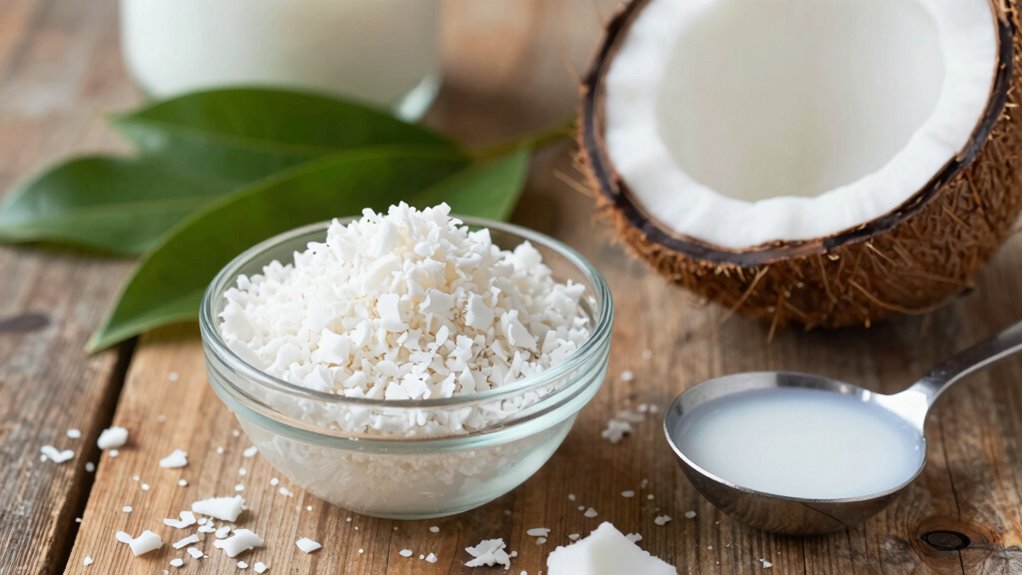
Coconut milk is primarily made from the grated flesh of mature coconuts and water, creating a rich, creamy liquid used in cooking and beverages. This versatile ingredient isn’t just one simple product; it varies depending on how it’s processed. When you buy coconut milk, you might notice differences in texture, flavor, and fat content, all of which influence its culinary uses and nutritional benefits. Full-fat coconut milk offers a luxurious, creamy consistency perfect for curries, soups, and desserts, while light versions contain less fat and work well in smoothies or lighter dishes. Understanding these variations helps you choose the right type for each recipe and dietary need.
The nutritional benefits of coconut milk are impressive when you know what to look for. It’s rich in healthy fats, especially medium-chain triglycerides (MCTs), which your body quickly converts into energy. These fats can boost your metabolism and may support weight management. Coconut milk also provides essential minerals like manganese, magnesium, and potassium, which contribute to your overall health. It’s naturally free of cholesterol and low in carbohydrates, making it suitable for certain diets. Additionally, the processing methods used to produce coconut milk can affect its nutritional profile, highlighting the importance of reading labels. It’s naturally free of cholesterol and low in carbohydrates, making it suitable for certain diets. The way coconut milk is processed can also influence its flavor and texture, helping consumers select the best product for their culinary needs. When you incorporate coconut milk into your diet, you benefit from its antioxidant properties and its potential to support immune health, thanks to compounds like lauric acid.
Coconut milk’s culinary uses are as diverse as its forms. You can blend it into smoothies for a creamy texture or use it as a dairy substitute in coffee or tea. It’s a staple in many Asian and Caribbean dishes, where it adds richness and depth to curries, stews, and rice dishes. Beyond savory recipes, coconut milk shines in desserts like panna cotta, ice cream, and puddings, thanks to its natural sweetness and velvety consistency. When you’re baking, it can replace dairy milk to create moist cakes and muffins. Additionally, coconut milk can be whipped into a dairy-free topping or used as a base for dairy-free sauces. Its ability to absorb flavors makes it an excellent carrier for spices, herbs, and sweeteners, allowing you to craft a wide range of delicious dishes. Knowing how the processing methods influence its flavor and nutritional content can help you select the best type for your culinary needs.
In essence, coconut milk isn’t one ingredient but several, each suited for different culinary purposes and nutritional needs. By understanding the variations and benefits, you can enjoy its richness while supporting your health. Whether you’re making a hearty curry, a nutritious smoothie, or a decadent dessert, coconut milk’s multiple forms provide endless possibilities to elevate your cooking.
As an affiliate, we earn on qualifying purchases.
Frequently Asked Questions
How Does the Processing Method Affect Coconut Milk Quality?
Processing techniques directly impact coconut milk quality by influencing flavor preservation and texture. If you choose methods like cold-pressing or minimal heat processing, you’ll retain more natural flavors and nutrients. Conversely, high-heat techniques can diminish flavor and reduce freshness. So, when selecting coconut milk, consider how the processing method preserves flavor, ensuring you get a richer, more authentic product that meets your taste and nutritional expectations.
Are There Any Allergens in Coconut Milk Ingredients?
Yes, there are potential allergens in coconut milk ingredients, especially for those with a coconut allergy. You should be cautious, as cross-contamination concerns can arise during processing, which may introduce traces of other allergens. Always check labels carefully, and consider choosing products labeled as allergen-free or specifically processed to minimize cross-contact risks. If you’re allergy-prone, consulting with a healthcare professional before trying coconut milk is a wise step.
What Are the Differences Between Canned and Fresh Coconut Milk?
You might think canned and fresh coconut milk are twins, but they’re more like distant cousins. Canned offers convenience, a creamy richness perfect for curries and desserts, showcasing coconut milk’s versatility. Fresh coconut milk, on the other hand, boasts a brighter, more delicate flavor for culinary uses where freshness shines. While canned is shelf-stable, fresh demands quick use. Both bring unique qualities to your kitchen adventures—so pick your weapon wisely!
How Do Additives Impact the Coconut Milk Ingredient List?
Additives in coconut milk can influence its flavor and shelf life. They often serve as flavor enhancers, making the milk taste richer or more consistent. However, preservatives impact how long the coconut milk stays fresh, preventing spoilage. When you see additives on the ingredient list, know they’re there to improve flavor and preserve quality, but they may also alter the natural taste and texture you expect from pure coconut milk.
Can Coconut Milk Ingredients Vary by Brand or Region?
Imagine shopping for coconut milk like choosing a flavor of ice cream—regional flavors and brand variations change the experience. Your favorite brand might add thickeners or preservatives, while regional varieties may include unique ingredients like pandan or turmeric. These differences reflect local tastes and regulations, so depending on where you buy, the ingredients can vary considerably. Always check labels to know exactly what’s in your coconut milk.
light coconut milk for smoothies
As an affiliate, we earn on qualifying purchases.
As an affiliate, we earn on qualifying purchases.
Conclusion
So, next time you reach for coconut milk, remember it’s not just one ingredient but a blend of water, coconut pulp, and sometimes additives. This mix creates a versatile ingredient used worldwide, with over 2 million tons produced annually. Imagine the countless cans shipped across oceans, bringing this tropical treasure to your kitchen. Knowing what’s inside helps you make better choices and appreciate the craftsmanship behind every creamy splash. Coconut milk truly is a blend of nature’s best.
As an affiliate, we earn on qualifying purchases.
dairy-free coconut milk substitute
As an affiliate, we earn on qualifying purchases.
As an affiliate, we earn on qualifying purchases.
Fall Picks
fall essentials
As an affiliate, we earn on qualifying purchases.