Jaggery, brown sugar, and honey each serve different roles in your cooking and health. Jaggery adds rich, earthy flavors and supplies minerals like iron and calcium, making it a healthier choice. Brown sugar offers milder sweetness with moisture that benefits baked goods, while honey dissolves quickly and adds moisture and a glossy finish. Knowing their unique qualities can help you choose the right sweetener for your needs, and there’s much more to discover about each one.

Get kitchen staples and gadgets delivered free with Prime
- Fast, free delivery on millions of items
- Prime Video, Amazon Music and more included
- Member-only deals all year
Key Takeaways
- Jaggery, brown sugar, and honey differ in processing, affecting their mineral content, flavor, and health benefits.
- Their distinct flavors influence their suitability for specific dishes and culinary applications.
- Jaggery provides a rich, earthy taste, while brown sugar offers milder caramel notes, and honey varies from floral to robust flavors.
- They serve different roles in recipes, with jaggery adding depth, brown sugar providing moisture, and honey acting as a natural sweetener and glaze.
- Nutritional profiles vary, with jaggery and honey offering minerals and antioxidants, unlike more processed brown sugar.
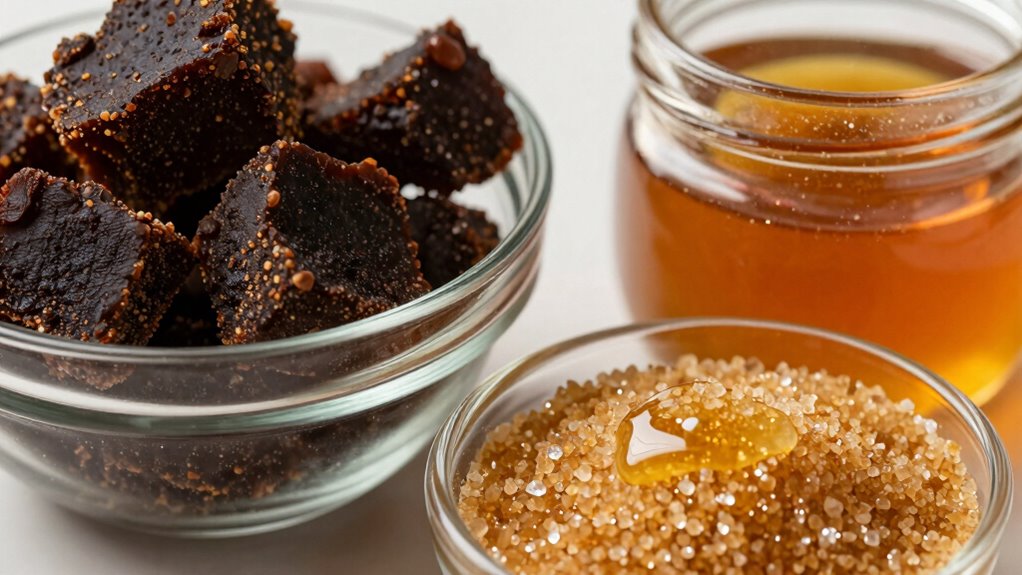
Not all sweeteners are created equal; each one serves a different purpose in your recipes or diet. Jaggery, brown sugar, and honey may all provide sweetness, but they differ markedly in how they’re processed and the flavor profiles they bring to the table. Understanding these differences helps you choose the right sweetener for your culinary needs and health goals.
Jaggery is a traditional sweetener made through natural processing, where sugarcane juice or palm sap is boiled down until it solidifies into blocks or granules. Because of its minimal processing, jaggery retains many natural minerals like iron, calcium, and magnesium, making it a slightly healthier option. Its flavor profile is rich, earthy, and caramel-like, adding depth to dishes without overpowering other ingredients. It’s often used in Indian sweets, desserts, and drinks, where its robust flavor enhances the overall taste. Unlike refined sugars, jaggery’s natural processing preserves complex flavors, giving it a distinctive character that’s hard to replicate with other sweeteners. Additionally, jaggery contains natural minerals, which can contribute to a more balanced diet compared to highly refined sugars. Moreover, jaggery may have some potential health benefits due to its mineral content and minimal processing. Its natural composition can also positively influence blood sugar levels when consumed in moderation.
Jaggery is a minimally processed, mineral-rich sweetener with a rich, earthy, caramel flavor that enhances dishes naturally.
Brown sugar, on the other hand, is usually made from refined sugar that’s been molasses- or syrup-treated to retain moisture and flavor. Its flavor profile is milder and more subdued than jaggery’s, with hints of caramel and toasty undertones. While brown sugar is processed more than jaggery, it’s still less refined than white sugar, which makes it a popular choice in baking and sauces where a slightly richer sweetness is desired. Its moisture content can influence the texture of baked goods, making them softer or chewier. Because of its processed nature, brown sugar doesn’t typically contain many minerals, but it offers a familiar sweetness that complements a wide range of recipes.
Honey differs from both jaggery and brown sugar in how it’s processed and its flavor profile. It’s a natural product created by bees from nectar, often minimally processed to preserve its natural enzymes and antioxidants. Honey’s flavor varies widely depending on the nectar source, ranging from floral and fruity to robust and earthy. Its natural processing maintains these complex flavors, making it a versatile sweetener that can add unique character to teas, dressings, or baked items. Unlike jaggery or brown sugar, honey dissolves quickly and can lend moisture and a glossy finish to baked goods. Its distinctive flavor and liquid form mean you use it differently, often adjusting recipes accordingly. Additionally, honey’s antioxidant properties may provide health benefits, setting it apart from refined sugars and syrups.
As an affiliate, we earn on qualifying purchases.
Frequently Asked Questions
Which Sweetener Is Best for Baking?
For baking, honey is your best choice because it adds moisture and enhances flavor pairs like spices and fruit. Its liquid form can improve texture differences, making baked goods tender and moist. Brown sugar also works well, providing a rich caramel flavor and chewy texture, while jaggery may alter the consistency and flavor profile. Choose honey for a subtle sweetness and better integration into batters, especially when moisture and flavor are priorities.
How Do These Sweeteners Affect Blood Sugar Levels?
Different sweetener types affect blood sugar impact in unique ways. Jaggery and brown sugar cause moderate blood sugar spikes because they contain some minerals and fiber, which slow absorption. Honey, while natural, can lead to quicker blood sugar rises due to its higher fructose content. You should consider how each sweetener influences your blood sugar levels, especially if managing diabetes or insulin sensitivity is a concern.
Are There Any Health Benefits to Using Jaggery?
You’ll find that jaggery offers health benefits like being rich in antioxidants and minerals, which can support digestion and boost immunity. Curiously, over 80% of Indian households use jaggery regularly. Its cultural significance and traditional uses make it more than just a sweetener—it’s a natural remedy, often used in seasonal illnesses and festive recipes. Incorporating jaggery can therefore enhance your health while honoring tradition.
Can Honey Substitute Brown Sugar in Recipes?
Yes, you can substitute honey for brown sugar in recipes. Honey offers a unique flavor profile and adds moisture, enhancing the dish’s culinary versatility. Keep in mind, honey is sweeter and more liquid than brown sugar, so reduce other liquids in your recipe and adjust the quantity accordingly. This swap can create a richer, more complex flavor, especially in baked goods and dressings, making your dish stand out.
Which Sweetener Has the Highest Antioxidant Content?
You’ll find honey has the highest antioxidant content among these sweeteners. Its antioxidant comparison to jaggery and brown sugar shows honey’s rich polyphenols and flavonoids, which offer notable nutritional benefits. These antioxidants help combat free radicals, supporting your overall health. So, if you’re looking for a sweetener with superior antioxidant properties, honey stands out, providing both natural sweetness and added health advantages.
As an affiliate, we earn on qualifying purchases.
Conclusion
Remember, each sweetener brings its own unique qualities to the table. For instance, using honey in a baking recipe might add moisture and a floral note, whereas brown sugar could lend a richer, caramel flavor. Imagine a baker substituting honey for brown sugar—without adjusting for moisture, the cake might turn out dense or overly moist. So, choose your sweetener wisely based on the flavor, texture, and health benefits you’re aiming for in your culinary creations.
As an affiliate, we earn on qualifying purchases.
As an affiliate, we earn on qualifying purchases.
Halloween Picks
halloween
As an affiliate, we earn on qualifying purchases.