
When you cook with fresh fruit, it softens quickly, releasing juices and creating delicate textures, while dried fruit absorbs liquids, swells, and develops a chewy, jam-like consistency. Fresh fruit offers bright, subtle flavors, whereas dried fruit concentrates flavors, becoming richer and often caramel-like. Longer cooking intensifies dried fruit’s flavor and chewiness, while fresh fruit remains tender but can turn mushy if overdone. Exploring these differences reveals how each type impacts your dish’s final texture and taste.

Get kitchen staples and gadgets delivered free with Prime
- Fast, free delivery on millions of items
- Prime Video, Amazon Music and more included
- Member-only deals all year
Key Takeaways
- Fresh fruit softens quickly, releasing juices, and can become mushy if overcooked.
- Dried fruit rehydrates, swells, and develops a chewy, jam-like texture during cooking.
- Fresh fruit maintains a delicate, subtle flavor, while dried fruit intensifies and deepens in taste.
- Dried fruit requires longer cooking to rehydrate and fully develop its concentrated flavors.
- The choice affects dish texture: fresh for tenderness, dried for chewiness and richness.
When choosing between fresh and dried fruit for cooking, understanding how each type influences flavor and texture is essential. The way fruit behaves in a pan depends heavily on its initial state, especially its fruit texture and flavor concentration. Fresh fruit retains its moisture, giving dishes a juicy, tender quality that’s ideal for light sauces, salsas, or desserts. Dried fruit, on the other hand, has had most of its water content removed, which concentrates its flavors and alters its texture considerably.
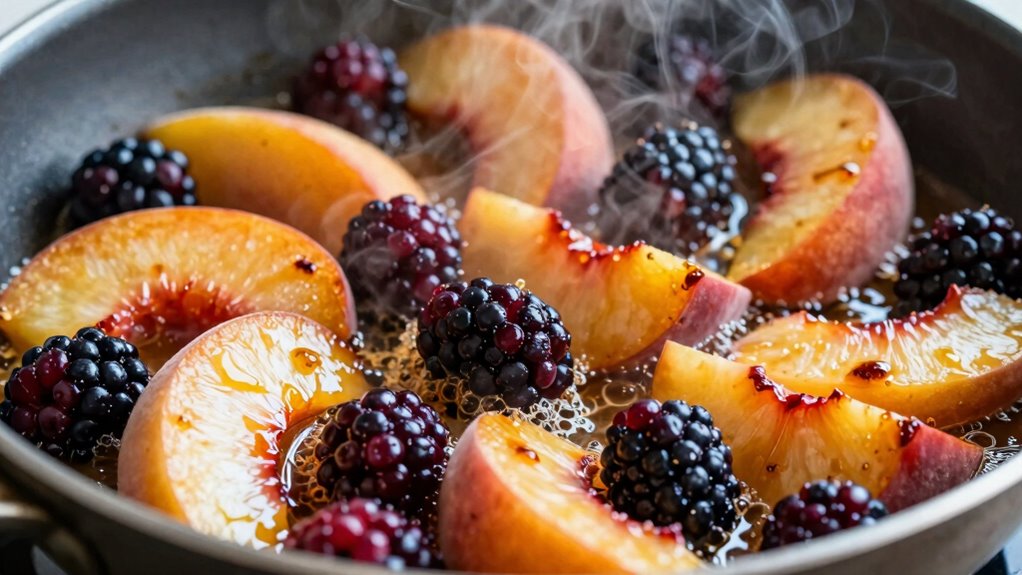
In the pan, fresh fruit tends to soften quickly, releasing its natural juices. You’ll notice a gentle bubbling as the fruit breaks down, creating a sauce that’s vibrant and fresh. Because fresh fruit is mostly water, it doesn’t thicken much on its own unless you add a thickening agent. Its fruit texture remains tender but can become mushy if cooked too long, so timing is key. The flavor of fresh fruit is often bright and delicate, providing a subtle sweetness that complements other ingredients without overpowering them.
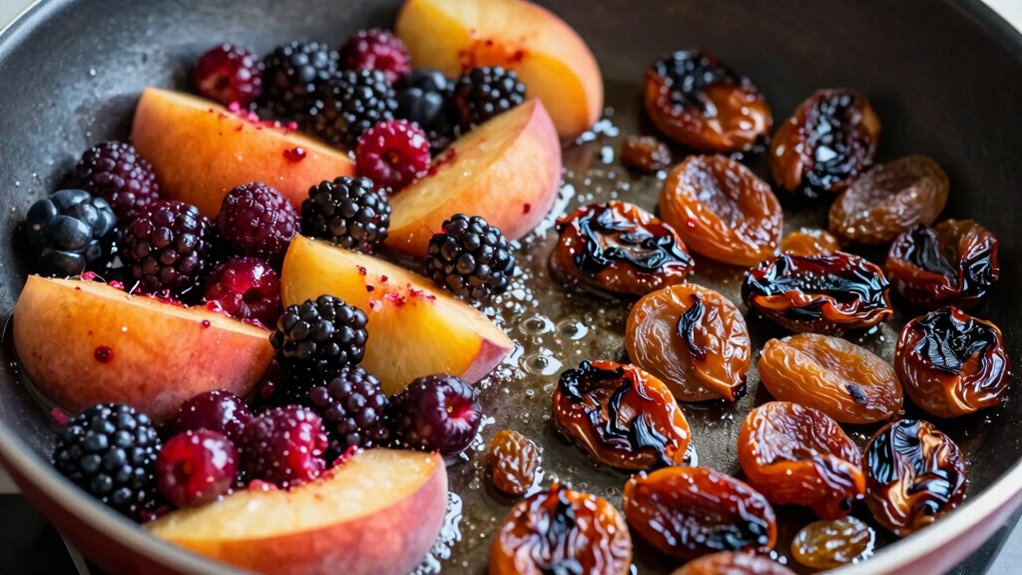
Dried fruit, however, behaves quite differently. Its dried state means it’s more resistant to breakdown, and it releases a concentrated burst of flavor as it absorbs liquids. When you cook dried fruit, it rehydrates, swelling as it absorbs moisture, which can create a chewy, jam-like consistency. Its fruit texture becomes more pliable but retains a certain chewiness, adding a different mouthfeel to your dish. Because dried fruit packs a concentrated flavor punch, it can profoundly influence the taste of your recipe, often adding depth and richness. Expect a more intense sweetness and a complex, sometimes caramel-like flavor as the sugars caramelize during cooking. Additionally, understanding the rehydration process of dried fruit can help you better predict how it will behave in your dishes. Recognizing the flavor concentration of dried fruit is crucial for balancing sweetness and depth in your recipes.
The choice between fresh and dried fruit depends on what you want to achieve. If you aim for a light, fresh-tasting dish with delicate textures, fresh fruit is your best bet. For recipes where you want a deep, intense flavor with a chewy or jammy consistency, dried fruit is ideal. Keep in mind that dried fruit often needs longer cooking times to fully rehydrate and release its flavor, whereas fresh fruit cooks quickly and easily. By understanding how each type transforms in the pan, you can better control your dish’s final flavor and texture, ensuring each ingredient plays its role perfectly.
As an affiliate, we earn on qualifying purchases.
Frequently Asked Questions
How Does Fruit Moisture Content Affect Cooking Times?
Fruit water content directly affects cooking duration; higher water content means it takes longer to cook, as the moisture must evaporate or soften. Fresh fruit, with more fruit water content, often requires more time to break down, while dried fruit cooks faster due to less moisture. You should adjust your cooking times accordingly, keeping an eye on texture and consistency to avoid overcooking or undercooking, depending on the fruit’s water content.
Can Dried Fruit Be Rehydrated for Better Texture?
Think of dried fruit as a sponge craving a drink—yes, it can be rehydrated for better texture. You can use rehydration techniques like soaking in warm water, juice, or alcohol. This process restores moisture, making the fruit plump and tender, which enhances its texture and flavor. Rehydration not only improves mouthfeel but also reveals new culinary possibilities, transforming dried fruit into a juicy, more versatile ingredient.
Do Fresh and Dried Fruits Have Different Nutritional Impacts?
You’ll find that fresh and dried fruits differ in nutritional impact—dried fruits pack a higher nutritional density because they’re concentrated, offering more vitamins, minerals, and calories per serving. However, dried fruits often have lower antioxidant levels due to processing and storage. While dried fruits are nutrient-dense, be mindful of added sugars. Fresh fruits provide more hydration and antioxidants, making them a lighter, more antioxidant-rich choice for daily consumption.
How Does Sugar Concentration Differ Between Fresh and Dried Fruits?
Like a sponge soaking up water, dried fruits pack a higher sugar concentration than fresh ones, making them sweeter. This increased sugar level intensifies the sweetness, often leading to sugar crystallization when cooked. As a result, dried fruits contribute a richer, more intense flavor to dishes, whereas fresh fruits offer a milder sweetness. You’ll notice that dried fruits, with their concentrated sugars, tend to be far sweeter in the pan.
Are There Specific Dishes Better Suited for Fresh or Dried Fruit?
You’ll find that certain dishes shine with fresh fruit, offering bright flavors and juicy textures perfect for salads or salsas. Dried fruit works better in baked goods or hearty stews, where its concentrated sweetness and chewy texture add depth. Consider flavor pairing and texture variations when choosing between fresh and dried. Fresh fruit provides crispness and vibrancy, while dried enhances richness and complexity, tailoring your dish to the desired taste experience.
dried fruit rehydration products
As an affiliate, we earn on qualifying purchases.
As an affiliate, we earn on qualifying purchases.
Conclusion
Ultimately, whether you choose fresh or dried fruit, remember that each brings its own magic to your cooking. Fresh fruit offers vibrant juiciness and delicate flavors, like a lively symphony, while dried fruit delivers concentrated sweetness with a richness that lingers. Like two sides of the same coin, they both elevate your dishes—depend on what your recipe needs, and let your palate be the guiding star. After all, in the grand orchard of culinary choices, variety is the spice of life.
fruit cooking sauces and concentrates
As an affiliate, we earn on qualifying purchases.
As an affiliate, we earn on qualifying purchases.
fruit texture and flavor enhancement tools
As an affiliate, we earn on qualifying purchases.
As an affiliate, we earn on qualifying purchases.
Columbus Day / Indigenous Peoples' Day Picks
long weekend sales
As an affiliate, we earn on qualifying purchases.