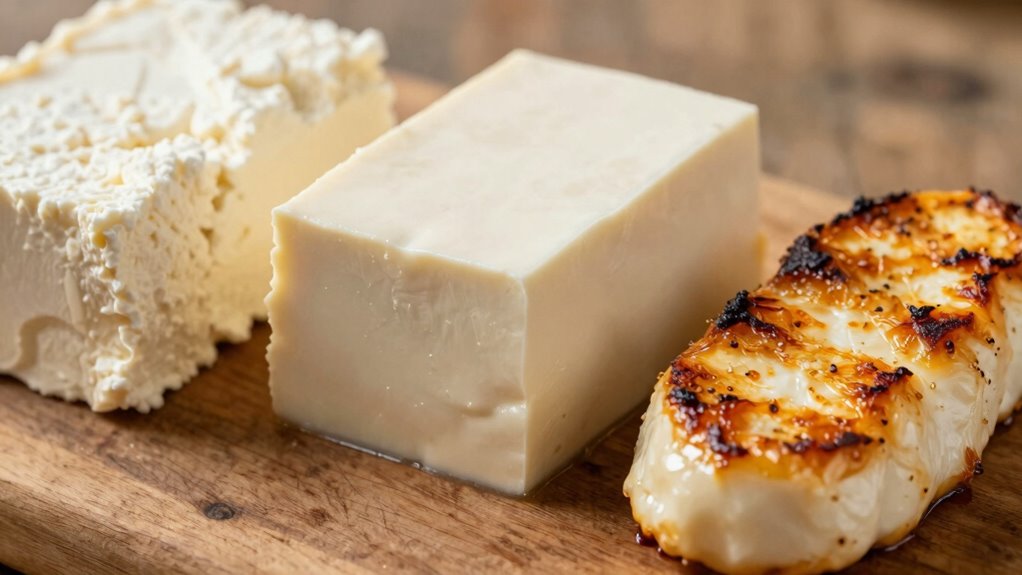

You’ll notice paneer, tofu, and halloumi behave differently when cooked because of their unique structures. Paneer is firm and crumbly, retaining shape and forming a crispy crust, while tofu varies from soft to firm, absorbing flavors and changing texture. Halloumi’s high melting point means it resists melting and stays chewy. Knowing these differences helps you cook each perfectly. Keep exploring, and you’ll discover how to bring out their best in your dishes.
Key Takeaways
- Paneer, tofu, and halloumi have different compositions: dairy versus soy, affecting melting points and cooking behavior.
- Paneer’s low moisture and high protein help it develop a crispy exterior without melting.
- Halloumi’s high melting point allows it to withstand high heat without losing shape.
- Tofu’s neutral flavor and variable textures adapt to diverse cooking methods, influencing how it reacts to heat.
- Their nutritional profiles and moisture content determine how each responds during frying, grilling, or baking.
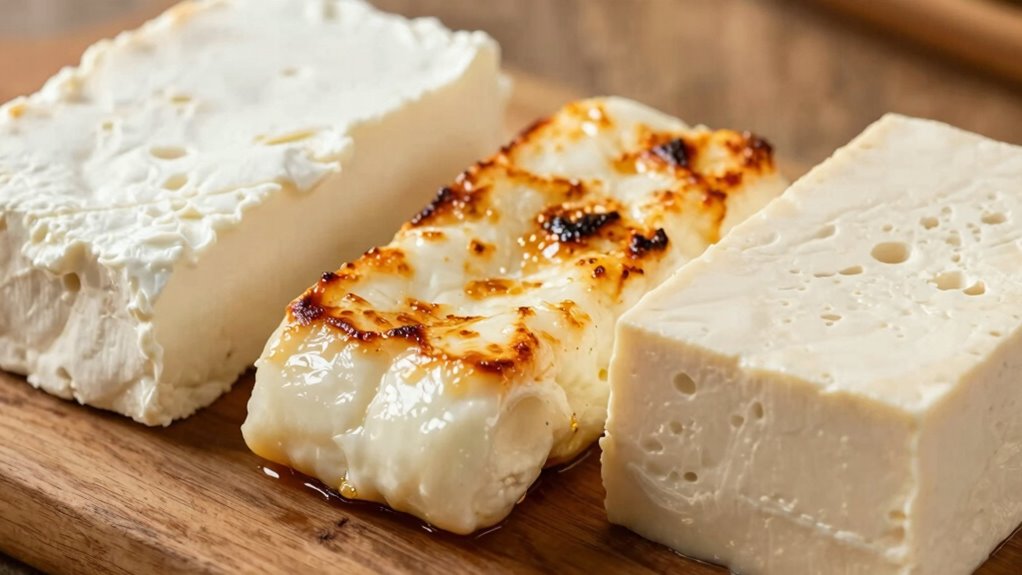
When you’re exploring plant-based and vegetarian options, paneer, tofu, and halloumi stand out as versatile cheeses and cheese substitutes that can elevate any dish. Their culinary versatility is one of the reasons they’re so popular: each offers unique textures and flavors, making them suitable for a wide range of cooking styles. But what really sets them apart is how they cook differently, which is influenced by their structural and compositional differences. Understanding these distinctions helps you select the right ingredient for your recipes, whether you’re frying, grilling, or simmering.
Paneer is a fresh Indian cheese made from curdled milk, usually with lemon juice or vinegar. Its high protein content and low moisture make it a firm, crumbly cheese that holds its shape well during cooking. When you cook paneer, it develops a deliciously crispy exterior while remaining soft inside. Its culinary versatility shines in dishes like curries, skewers, or even grilled sandwiches. Nutritionally, paneer is rich in protein and calcium but also contains a fair amount of fat, which contributes to its rich, creamy texture. Because it doesn’t melt easily, paneer is ideal for recipes where you want the cheese to retain its shape. Additionally, its ability to absorb spices makes it a favorite for flavor-packed dishes. Furthermore, its resistance to melting makes it especially suitable for high-heat cooking methods.
Tofu, on the other hand, is made from soybeans and comes in various textures—from silken to extra firm. Its neutral flavor allows it to absorb marinades and spices effortlessly, making it incredibly adaptable in different cuisines. When you cook tofu, its culinary versatility is evident—firm varieties can be pan-fried, baked, or grilled without falling apart, while softer types are great for smoothies or sauces. Unlike paneer, tofu has a lower fat content and is a good source of plant-based protein and iron, but it does have a different nutritional profile that’s often appreciated by vegans and vegetarians. Tofu’s ability to soak up flavors and its varying textures give you lots of creative options in the kitchen. Its versatility in cooking methods makes it a staple ingredient for many plant-based dishes. Additionally, its global popularity is partly due to its sustainable production, which reduces environmental impact compared to dairy-based options.
Halloumi is a semi-hard cheese from Cyprus, made from a mixture of goat’s and sheep’s milk. Its high melting point makes it suitable for grilling or frying, where it develops a golden crust while staying intact. When you cook halloumi, it’s the crisp exterior paired with its chewy interior that makes it stand out. Its culinary versatility is evident in dishes like grilled skewers or salads, where it adds a salty, savory punch. Nutritionally, halloumi is high in protein and calcium but also contains more fat and salt than tofu or paneer. Its ability to withstand high heat without melting is a key reason it’s favored for grilling, giving it a different cooking experience compared to the others. Furthermore, its firm texture and high melting point make it ideal for grilled cheese dishes.
In essence, each of these cheeses and cheese substitutes brings its own cooking behavior rooted in their structural and nutritional differences. Recognizing how they cook allows you to use them more effectively, ensuring your dishes come out just right—whether crispy, tender, or grilled to perfection.

KSJONE Stainless Steel Square Paneer Maker/Mould/Strainer Perfect for Making Delicious Tofu, Stainless Steel Paneer Maker with Top Pressing Lid – Size 5.11"W x 5.11"L x 2.3"H inches
- Material: Made of stainless steel
- Cuisine: Perfect for Indian paneer
- Design: Supports water drainage with pressure plate
As an affiliate, we earn on qualifying purchases.
As an affiliate, we earn on qualifying purchases.
Frequently Asked Questions
How Do Storage Methods Affect Each Cheese’s Texture?
Storage methods greatly influence each cheese’s texture. Properly sealed, they maintain storage longevity and prevent moisture loss, which preserves texture. For example, storing paneer in water keeps it moist, while tofu benefits from airtight containers to prevent drying. Halloumi, if stored correctly, retains its firmness. Improper storage causes dehydration or spoilage, altering textures and reducing freshness. So, always store these cheeses appropriately to keep their ideal textures intact.
Can These Cheeses Be Used Interchangeably in Recipes?
You can sometimes swap these cheeses, but their unique textures and flavors impact the outcome. For example, paneer’s mild flavor pairs well with rich curries, tofu absorbs flavors easily, and halloumi’s firm, salty profile suits grilling. When considering cultural uses, adhere to traditional pairings for authentic results. While they may substitute in some recipes, understanding their flavor pairings ensures your dish stays true to its origin.
Are There Specific Spices That Complement Each Cheese?
You can enhance each cheese with specific spices for flavor. For paneer, try cumin, turmeric, or garam masala for a warm, aromatic touch. Tofu pairs well with soy sauce, ginger, or five-spice powder for depth. Halloumi’s flavor shines with oregano, mint, or chili flakes to add zest. These spice pairings act as flavor enhancements, elevating your dishes and making each cheese’s taste profile stand out beautifully.
What Are the Best Cooking Techniques for Each Type?
You’ll want to master different techniques to unleash each cheese’s potential. For paneer, sear it quickly to preserve its firm structure and enhance marinating flavors. Tofu benefits from marinating beforehand and a gentle cooking process to prevent crumbling, with precise cooking timing to keep it tender. Halloumi shines when grilled or fried until crispy, revealing its unique texture. Each method reveals a distinct character—just wait and see.
How Do Nutritional Contents Vary Among Them?
You’ll notice that nutritional comparison among paneer, tofu, and halloumi shows distinct differences. Paneer is high in saturated fat and protein, offering good calcium and vitamin A, which support bone health. Tofu is low in calories and fat, rich in plant-based protein, and contains iron and magnesium, making it heart-healthy. Halloumi provides protein and calcium but is also high in sodium and fat, so moderation benefits your overall health.

Tofu Press Stainless Steel, Tofu Maker and Paneer Press with Cloth, Pink
- Complete Tofu Press Kit: Includes stainless steel press, towel, drip tray
- Optimized Moisture Removal: Effective pressure distribution for firm tofu
- Premium Food-Grade Material: Made from BPA-free, corrosion-resistant 304 stainless steel
As an affiliate, we earn on qualifying purchases.
As an affiliate, we earn on qualifying purchases.
Conclusion
So, next time you toss these cheese imposters into your pan, remember—they’re basically culinary cousins with wildly different personalities. Paneer’s stubbornness, tofu’s blank slate, and halloumi’s squeaky attitude will keep you on your toes. But hey, if your dinner turns out a bit unpredictable, at least you can enjoy the chaos. Who needs predictability when you’ve got these gastronomic divas stealing the show? Happy cooking—and good luck taming them!

Kryssos Halloumi Cheese, 8.8 oz
- Origin: Cyprus
- Milk Type: Sheep, Goat, Cow
- Pasteurized: Yes
As an affiliate, we earn on qualifying purchases.
As an affiliate, we earn on qualifying purchases.