The type of rice you choose affects more than just texture; it influences flavor, aroma, and nutritional value too. For example, fragrant varieties like Basmati and jasmine add distinctive aroma, while wild rice offers more protein and antioxidants. Proper preparation, such as rinsing or soaking, can maximize these benefits. Your choice can support healthier eating and better meal quality. Stay with us to discover how to select and prepare rice for best taste and health benefits.
Key Takeaways
- Different rice types offer varying nutritional benefits, impacting overall health beyond just texture.
- Cooking techniques and preparation methods influence nutrient retention and flavor profiles.
- Selecting rice like wild or brown rice can enhance protein, antioxidants, and dietary fiber intake.
- Proper storage preserves rice quality, ensuring optimal nutritional value over time.
- The choice of rice affects meal flavor, health benefits, and how well it fits specific dietary needs.
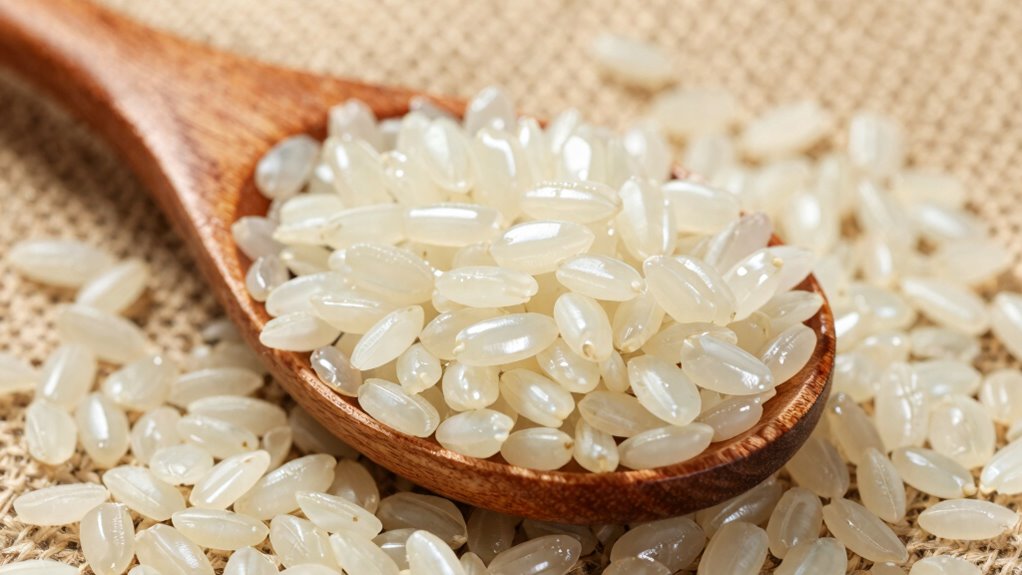
White rice, on the other hand, cooks faster and has a softer, more neutral flavor, making it versatile for many dishes. However, because it’s been stripped of the bran and germ, it has fewer nutrients. If your goal is quick preparation, white rice fits the bill, but it’s advisable to complement it with nutrient-rich ingredients to balance your meal. Basmati and jasmine rice are fragrant options that bring unique aroma and flavor, but they also require specific cooking techniques to maximize their aroma and fluffiness. Rinsing these varieties before cooking removes excess surface starch, preventing clumping and ensuring a light, airy texture. Additionally, understanding the nutritional differences among rice types can help you make healthier choices tailored to your dietary needs. Proper preparation is also key to preserving or enhancing these nutritional qualities, making each meal both tasty and wholesome. Then there’s wild rice, technically a grass, which needs a longer cooking time and more liquid. It offers a chewy texture and a nutty flavor, perfect for hearty salads or side dishes. Its nutritional benefits include higher protein content and antioxidants, making it a smart choice for health-conscious eaters. When you choose different rice types, adjusting your cooking techniques accordingly is *crucial* — whether it’s soaking, rinsing, or simmering — to get the best texture and flavor. Proper preparation not only enhances your dish but also preserves or enhances the nutritional benefits. For instance, soaking brown rice before cooking reduces cooking time and helps retain more nutrients, while steaming white rice keeps it fluffy and prevents overcooking. Being mindful of the specific cooking methods for each variety ensures you maximize their unique qualities and health benefits. Additionally, exploring sustainable rice options can contribute positively to environmental conservation efforts. Incorporating proper storage techniques for rice can also help maintain its freshness and prevent spoilage, ensuring your rice stays delicious and safe to eat. Making informed choices about rice is essential to nutrient retention during cooking, which can vary greatly depending on the method used. Ultimately, the rice you choose shapes your entire meal experience. Being mindful of the specific cooking techniques for each variety allows you to maximize flavor, texture, and health benefits. It’s a simple change that can make a significant difference in your diet and cooking satisfaction. When you select the right rice and prepare it properly, you’re not just making a meal—you’re making a smarter, healthier choice that benefits your body and your taste buds.

Iberia Jasmine Long Grain Fragrant Rice, 18 Pound
- Naturally Sourced Globally: Harvested from US, Brazil, India, Thailand, Vietnam
- Easy to Cook: Add to cold water, boil, cover, simmer 15-20 mins
- Delicious & Aromatic: Long, fluffy grains with natural fragrance
As an affiliate, we earn on qualifying purchases.
As an affiliate, we earn on qualifying purchases.
Frequently Asked Questions
How Does Rice Variety Affect Nutritional Content?
Different rice varieties impact your nutritional intake markedly. Brown rice retains more nutrients because of minimal rice processing, preserving the grain’s bran and germ. White rice undergoes more processing, stripping away fiber and vitamins. Choosing whole grain options supports better grain preservation and provides more fiber, vitamins, and minerals. So, your selection of rice variety directly affects your diet’s nutritional quality, emphasizing the importance of reading labels and understanding processing methods.
Can Rice Type Impact Blood Sugar Levels?
Choosing different rice types is like selecting a different path through a forest—each affects your journey, especially your glycemic response. White rice can cause quick spikes in blood sugar, making blood sugar regulation harder, while brown or wild rice offers a steadier release of energy. So, your choice impacts how your body manages blood sugar, influencing overall health and energy levels. Opt wisely to keep your blood sugar balanced.
What Rice Is Best for Gluten-Free Diets?
For gluten-free diets, opt for naturally gluten-free rice like jasmine, basmati, or wild rice. Rice cultivation and grain processing guarantee these options are safe and free from gluten contamination. Avoid processed rice products that might contain additives. You should always check labels to confirm. These varieties provide a versatile, safe base for meals, offering different flavors and textures while maintaining the gluten-free standard.
Are There Environmental Differences Between Rice Types?
Yes, there are environmental differences between rice types. For example, some rice varieties like basmati or jasmine are often grown in regions with sustainable rice farming practices, while others may involve higher pesticide use. Conventional rice farming can impact the environment more due to intensive pesticide use and water consumption. Organic or sustainably farmed rice reduces pesticide use and minimizes environmental harm, making it a better choice for eco-conscious consumers.
How Do Rice Choices Influence Cooking Time?
Your choice of rice acts like a silent conductor, dictating cooking time through its unique composition. Long-grain rice, with its slender grains, absorbs water more slowly, lengthening cooking times, while short-grain rice absorbs quickly, reducing it. Your preferred cooking method also plays a role—stovetop, rice cooker, or instant pot—all influence how fast rice absorbs water. Ultimately, selecting the right rice guarantees your dish reaches perfect tenderness without unnecessary waiting.

Golden Crown Premium High Protein Wild Rice, Naturally Aged Gluten + GMO Free Vegan, Tasty and Delicious Low in Calories Grains, Great Source of Fiber and Rich in Magnesium – 24 oz (1.5Lb)
- Rich, Nutty Flavor: Naturally flavorful with chewy texture
- High Protein Content: 3 times more protein than white rice
- Nutrient-Rich Grain: Contains magnesium, phosphorus, zinc
As an affiliate, we earn on qualifying purchases.
As an affiliate, we earn on qualifying purchases.
Conclusion
Choosing the right rice can transform your meals beyond just texture, impacting flavor and nutrition. Did you know that whole grain rice retains more antioxidants and nutrients, offering health benefits you might be missing? By selecting better rice options, you’re not only elevating your dishes but also making healthier choices. So next time you cook, remember—your rice choice truly makes a difference. Small changes like this can lead to a more vibrant, nourishing diet for you and your loved ones.

Alipis 1 Set of Wooden Rice Bucket Rice Steamed Cask Wooden Sushi Bowl Hangiri Sushi Oke Mixing Tub with Lid for Home Kitchen Restaurant 20cm
- Multi-purpose Serving Bowl: Ideal for rice, tofu, and sushi
- Versatile for Various Occasions: Suitable for home, hotel, restaurant, parties
- Durable and Well-crafted: Polished surface with refined craftsmanship
As an affiliate, we earn on qualifying purchases.
As an affiliate, we earn on qualifying purchases.

Lifewit Rice Dispenser 25 Lbs, Airtight Storage with Measuring Cup, Grey
- Large Capacity: Holds 25.4lb (11.3kg) of rice
- Airtight Seal: Keeps rice fresh and smell-proof
- Durable Material: Made of premium BPA-free PP
As an affiliate, we earn on qualifying purchases.
As an affiliate, we earn on qualifying purchases.