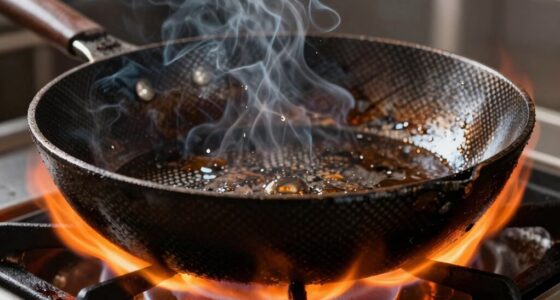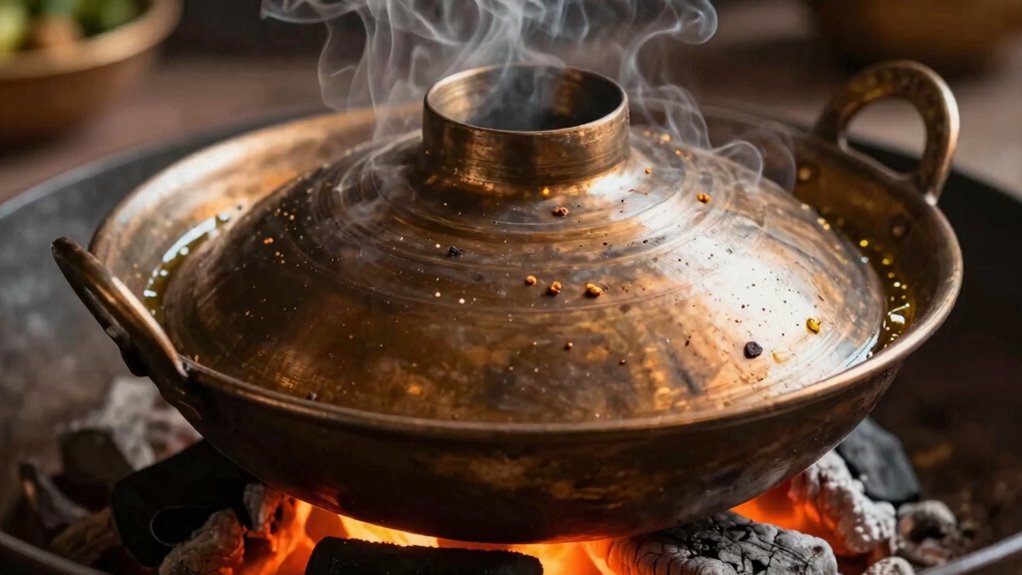
The unique shape of a kadai, with its round, deep, and flared sides, makes it ideal for Indian cooking. It allows you to easily toss, stir, and simmer ingredients, ensuring even heat distribution and authentic flavors. Its depth minimizes splattering during high-heat tasks like frying or making curries. This traditional shape supports various cooking methods, blending cultural history with modern functionality. Keep exploring to discover how this shape enhances every dish you prepare.

Get kitchen staples and gadgets delivered free with Prime
- Fast, free delivery on millions of items
- Prime Video, Amazon Music and more included
- Member-only deals all year
Key Takeaways
- The deep, rounded shape allows for even heat distribution, essential for authentic Indian cooking techniques.
- Curved walls facilitate easy stirring, tossing, and mixing of ingredients for rich textures.
- The shape minimizes splattering during high-heat frying and sautéing.
- Its versatility supports a wide range of dishes like curries, stir-fries, and deep-fried snacks.
- Traditional design combined with modern materials enhances durability and ease of use across cooking methods.
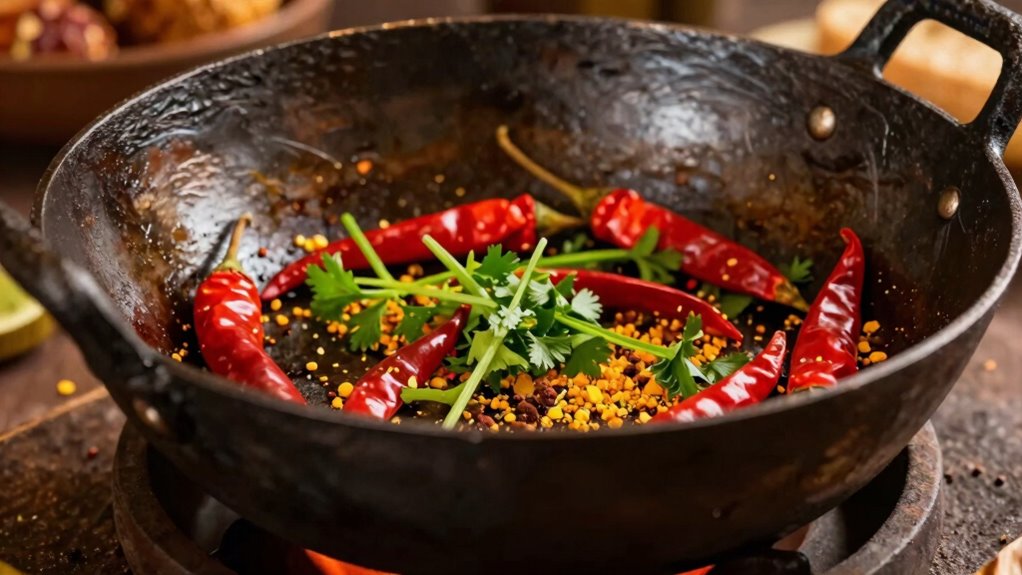
The unique shape of a kadai offers distinct advantages in Indian cooking, making it a versatile and essential utensil in many kitchens. Its round, deep, and slightly flared sides are designed to handle a variety of cooking techniques, from frying to simmering. Unlike flat-bottomed pots, a kadai’s curved walls allow you to toss ingredients easily, ensuring even cooking and preventing spillage. This shape makes it particularly effective for preparing dishes that require constant stirring or tossing, like stir-fries, curries, and deep-fried snacks. Because of its design, a kadai distributes heat uniformly, which is critical for achieving the right texture and flavor in Indian recipes. Its traditional use is rooted in centuries of culinary history, making it a symbol of authentic Indian cooking. In traditional cookware, a kadai has long been favored for its practicality. Its shape is rooted in centuries of culinary tradition, making it a trusted choice for cooks who prioritize authenticity. You’ll notice that many recipes specify using a kadai precisely because of its ability to handle the complex flavors and textures unique to Indian cuisine. The depth of a kadai also minimizes splattering, making it easier to cook with high heat without creating a mess. The handle placements and the depth allow you to lift and shake ingredients with ease, giving you full control over the cooking process. When you consider modern kitchenware, a kadai still holds its relevance. Today’s designs often incorporate materials like non-stick coatings, stainless steel, or cast iron, which enhance durability and ease of cleaning. These innovations make it easier for you to maintain the utensil and prolong its lifespan. Despite the advances, the fundamental shape remains unchanged because it’s functionally superior for many Indian dishes. Modern kitchenware brands have adapted the traditional kadai form to suit contemporary needs, blending tradition with innovation. This means you can enjoy the benefits of a traditional cookware design while taking advantage of modern features like induction compatibility or ergonomic handles. Additionally, the shape of a kadai allows for better heat retention, which is crucial for slow-cooking recipes. Incorporating the versatile design of a kadai can also help in efficiently managing different cooking styles within a single utensil. Its multifunctional utility makes it an indispensable tool for a variety of cooking techniques, saving space and investment in the kitchen. The traditional shape also facilitates the preparation of larger quantities of food, making it ideal for family meals or gatherings. Moreover, the heat distribution characteristic ensures consistent results across different cooking methods. Ultimately, the shape of a kadai offers practical advantages that bridge the gap between traditional cookware and modern kitchenware. Its design facilitates authentic Indian cooking techniques, ensuring that you can prepare dishes with rich textures and vibrant flavors. Whether you’re cooking on a traditional stove or a modern induction hob, a kadai’s shape supports your culinary creativity, making it an indispensable tool in any kitchen. Its versatility and efficiency make it more than just a utensil; it’s a cornerstone of Indian cooking that adapts seamlessly to contemporary lifestyles.
As an affiliate, we earn on qualifying purchases.
Frequently Asked Questions
How Does the Kadai Shape Influence Cooking Time?
The kadai shape improves cooking efficiency by increasing surface area, which allows heat to distribute evenly across your ingredients. This shape helps you cook faster because the wide, shallow design ensures more contact between food and heat, reducing cooking time. Plus, the curved sides let you stir and toss ingredients easily, preventing sticking or burning, making your cooking process smoother and more effective.
Can Kadai Shape Be Used for Baking or Only Frying?
Think of the Kadai shape as a versatile artist’s palette, not just for frying but also for baking. While traditionally used for deep frying and sautéing, its rounded sides and wide opening lend themselves to roasting and baking tasks. Its shape supports traditional cooking techniques, but with a bit of culinary creativity, you can turn a Kadai into a makeshift oven, making it a multifunctional tool in your kitchen.
Is the Kadai Shape Suitable for All Types of Indian Dishes?
Yes, the kadai shape is highly versatile for many Indian dishes due to its traditional cookware design. You can sauté, fry, simmer, and even make curries or stir-fries comfortably in a kadai. Its deep, rounded shape allows for even heat distribution and easy stirring, making it suitable for a wide variety of recipes. This traditional design enhances flavor and guarantees consistent results across different types of Indian cuisine.
How Does the Shape Affect Heat Distribution?
The shape of a kadai impacts heat distribution by promoting even cooking across its broad, curved surface, which helps prevent hot spots. Its ergonomic design guarantees comfortable handling and stirring, while the material’s durability maintains consistent heat retention. You’ll notice that this shape allows for quick heat transfer, making it ideal for stir-frying and simmering Indian dishes. Overall, the kadai’s shape enhances cooking efficiency and results.
Are There Specific Materials Best Suited for Kadai-Shaped Cookware?
You’ll want to choose materials that guarantee compatibility with the kadai shape and provide durability. Cast iron and carbon steel are ideal because they withstand high heat and distribute it evenly, enhancing cooking performance. Non-stick coatings can also work but may not offer the same longevity. Look for materials that resist warping and corrosion, ensuring your kadai remains reliable and efficient for years to come.
As an affiliate, we earn on qualifying purchases.
Conclusion
With its rounded, deep embrace, the kadai becomes your culinary compass, guiding flavors to mingle and dance like a vibrant Bollywood scene. Its shape cradles ingredients, allowing heat to wrap around and infuse every bite with richness. When you cook with a kadai, you’re wielding more than just a pan—you’re orchestrating a symphony of taste and tradition that turns everyday ingredients into a flavorful masterpiece, making every meal a celebration of Indian culinary artistry.
As an affiliate, we earn on qualifying purchases.
As an affiliate, we earn on qualifying purchases.
NFL season / tailgating Picks
team gear
As an affiliate, we earn on qualifying purchases.