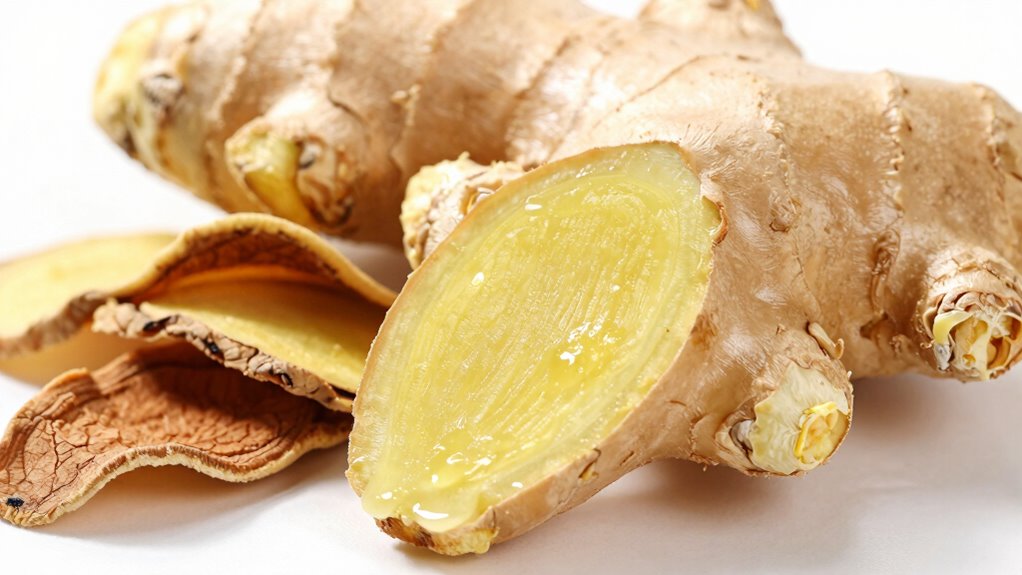

Fresh ginger has a bright, pungent aroma with a zesty, slightly sweet flavor, making it ideal for adding vibrancy to dishes and boosting health benefits. Dry ginger, on the other hand, tastes sharper, more concentrated, and provides a deeper, warming spice. Their flavors differ because of moisture content and processing, which also influence their medicinal strength. Want to discover how these differences can impact your cooking and health? Keep exploring to learn more.

Get kitchen staples and gadgets delivered free — and shop member deals
- Fast, free delivery on millions of items
- Access to Prime Big Deal Days deals on October 6–7
- Prime Video, Amazon Music and more included
Key Takeaways
- Fresh ginger has a bright, zesty flavor with a slightly sweet undertone, while dry ginger offers a sharper, more concentrated heat.
- Fresh ginger delivers complex, aromatic notes, whereas dry ginger has a more intense, spicy taste due to dehydration.
- The moisture content in fresh ginger provides a milder, more nuanced flavor compared to the bold, pungent taste of dry ginger.
- Dry ginger’s concentrated flavor makes it more potent and fiery than the fresh variety.
- The taste difference influences their culinary uses, with fresh ginger suited for vibrant dishes and dry ginger for spice blends.
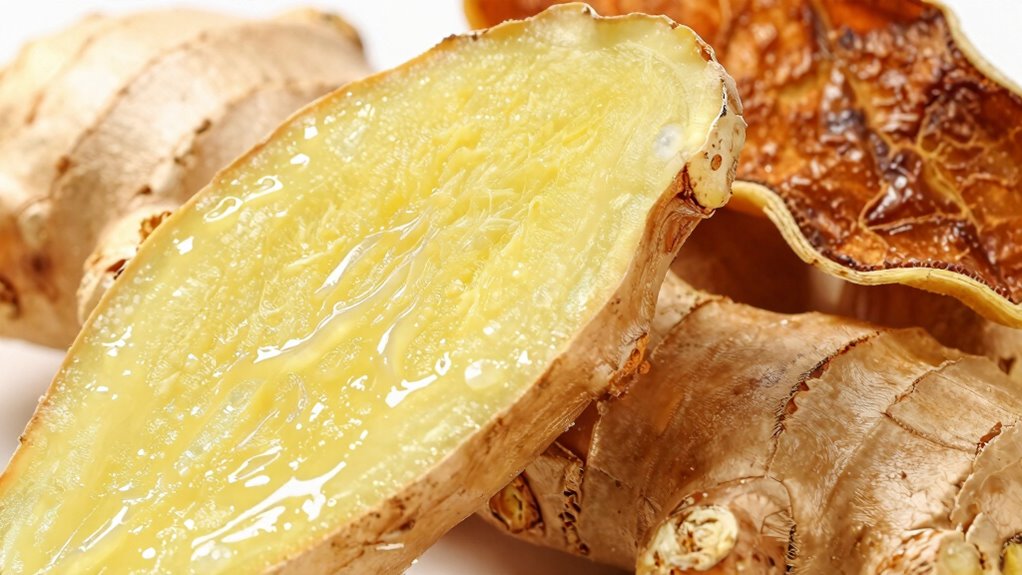
When choosing between fresh ginger and dry ginger, understanding their differences can help you make the best choice for your cooking or health needs. Fresh ginger is known for its vibrant, pungent aroma and juicy texture, making it a popular ingredient in a wide variety of dishes. Its culinary versatility shines through in everything from teas and salads to stir-fries and baked goods. The fresh root adds a zesty kick and a slightly sweet undertone that enhances flavors without overpowering them. Besides its culinary appeal, fresh ginger also offers notable medicinal benefits, such as aiding digestion, reducing inflammation, and boosting immunity. Its active compounds, like gingerol, are more potent when the root is fresh, making it a go-to option for health-conscious cooks. Additionally, active compounds like gingerol are sensitive to processing and tend to diminish during drying or cooking, which can affect the medicinal potency. Fresh ginger’s moisture content also makes it more perishable, so proper storage and timely use are essential to preserve its quality. Dry ginger, on the other hand, has a more concentrated flavor profile with a sharper, more intense heat. It’s often used in spice blends, powders, or capsules because of its long shelf life and concentrated potency. Its culinary versatility lies in its ability to add depth and warmth to curries, baked treats, and beverages. Because it’s dried and sometimes ground into powder, dry ginger is easier to store and measure, making it a convenient choice for recipes that require precise spice levels. Medicinally, dry ginger retains many health benefits, but some of the more delicate compounds found in fresh ginger diminish during drying. Nonetheless, it still provides anti-inflammatory properties and can help alleviate nausea, yet its medicinal effects tend to be milder compared to fresh ginger. You’ll notice that fresh ginger tends to deliver a more complex flavor, with a bright, tangy freshness that can elevate many dishes. Its high moisture content means it’s more perishable, so you’ll want to use it relatively quickly after purchase. Dry ginger, with its concentrated flavor and longer shelf life, suits spice blends and powdered formulations, but it doesn’t quite pack the same fresh, vibrant punch. When it comes to medicinal benefits, fresh ginger is often preferred for its higher gingerol content, which offers stronger health effects. Dry ginger still provides health benefits, but its potency is diminished by the drying process. Ultimately, your choice depends on your recipe and health goals: fresh for a lively, aromatic flavor and stronger medicinal effects, or dry for convenience and a more intense spice note.
As an affiliate, we earn on qualifying purchases.
Frequently Asked Questions
How Long Does Fresh Ginger Stay Fresh in the Fridge?
Fresh ginger stays fresh in the fridge for about 3 to 4 weeks when properly stored. For ginger storage, keep it in a resealable plastic bag or airtight container to prevent moisture loss. To preserve its flavor, avoid exposing it to excess air or heat. Check regularly for signs of spoilage like mold or a sour smell. Proper storage helps maintain its zest and aroma longer, ensuring great flavor preservation.
Can Dry Ginger Be Substituted for Fresh in Recipes?
Yes, you can substitute dry ginger for fresh in recipes, but keep in mind that dry ginger has a more concentrated ginger flavor. Use about half the amount of dry ginger as you would fresh, since it’s more potent. Dry ginger works well in baked goods and spice blends, adding a warm, pungent flavor. Adjust quantities carefully to achieve the desired taste, especially in culinary uses where ginger’s flavor is key.
What Are the Health Benefits of Fresh Versus Dry Ginger?
Like a treasure chest revealing its secrets, fresh ginger offers more potent health benefits. It’s rich in ginger cultivation’s most active compounds, such as gingerol, which boost immunity and reduce inflammation. Different ginger varieties may vary in medicinal properties, but fresh ginger generally provides higher antioxidant levels than dry ginger. While dry ginger still offers health perks, especially in digestion, fresh ginger’s vibrant compounds make it the superior choice for wellness.
How Do Drying Methods Affect Ginger’s Flavor Profile?
Drying methods impact ginger’s flavor profile by altering its flavor concentration. Sun-drying emphasizes a sweeter, milder taste, while oven or dehydrator techniques preserve a more intense, pungent flavor. These drying techniques concentrate the ginger’s essential oils, making the flavor sharper and more robust. Depending on your preferred taste, you can choose a drying method that enhances the ginger’s natural qualities, whether for cooking or medicinal use.
Is Dried Ginger More Potent Than Fresh Ginger?
Dried ginger is generally more potent than fresh ginger because the drying process concentrates its ginger flavor and active compounds. When you compare the potency, dried ginger delivers a stronger punch in recipes and remedies. Its concentrated nature makes it ideal for adding a robust ginger flavor, especially in spice blends or teas. So, if you need a more intense ginger taste, dried ginger’s your best choice for a potent flavor.
As an affiliate, we earn on qualifying purchases.
Conclusion
So, next time you reach for ginger, consider the difference in flavor and potency between fresh and dry. Some say dry ginger is just a concentrated version of fresh, but evidence suggests they offer distinct benefits and tastes, not just a scaled-up flavor. Trust your palate and recipe needs—sometimes, fresh provides brightness, while dry offers depth. Ultimately, experimenting with both will reveal which suits your dishes best. Don’t be afraid to explore their unique qualities!
As an affiliate, we earn on qualifying purchases.
As an affiliate, we earn on qualifying purchases.
NFL season / tailgating Picks
team gear
As an affiliate, we earn on qualifying purchases.