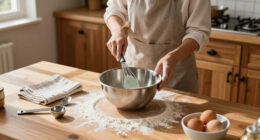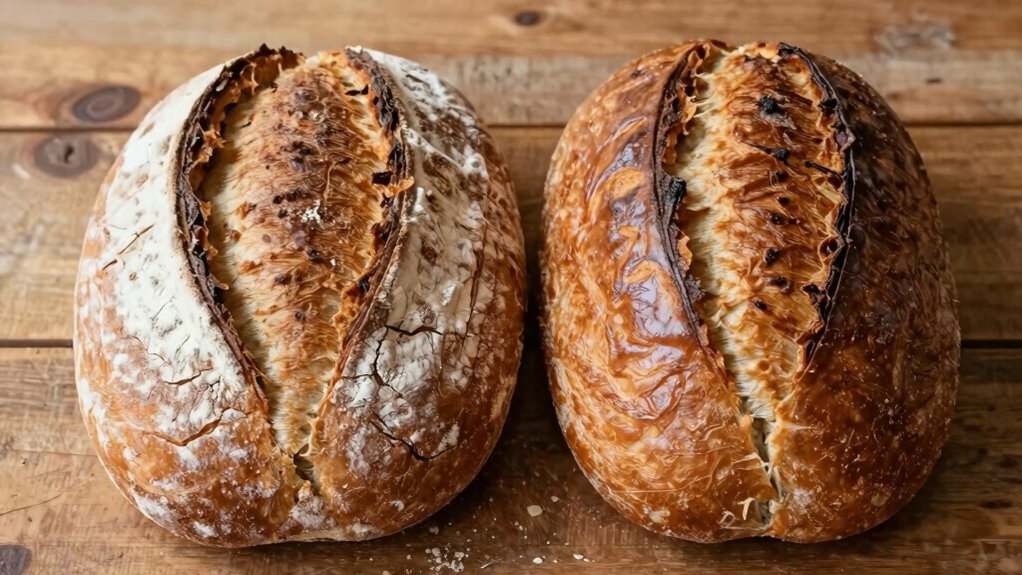
Homemade bread stales faster because it doesn’t have preservatives or protective packaging, which helps store-bought bread stay fresh longer. Without preservatives, the natural enzymes and starches in your bread break down more quickly, causing it to become firm and dry. Additionally, without airtight wrapping, moisture evaporates faster, speeding up staling. Proper storage can slow this process, but understanding why homemade bread ages quicker reveals the natural factors involved—keep going to discover more.

Get kitchen staples and gadgets delivered free with Prime
- Fast, free delivery on millions of items
- Prime Video, Amazon Music and more included
- Member-only deals all year
Key Takeaways
- Homemade bread lacks preservatives and protective packaging, leading to quicker moisture loss and faster staling.
- The use of fresh ingredients and higher moisture content accelerates natural staling processes.
- Without chemical additives, natural enzymes and starch retrogradation happen more rapidly, softening the bread over time.
- Proper storage in commercial bread slows staling, while homemade bread exposed to air dries out faster.
- Gluten network development and its subsequent breakdown influence the rate at which homemade bread becomes stale.
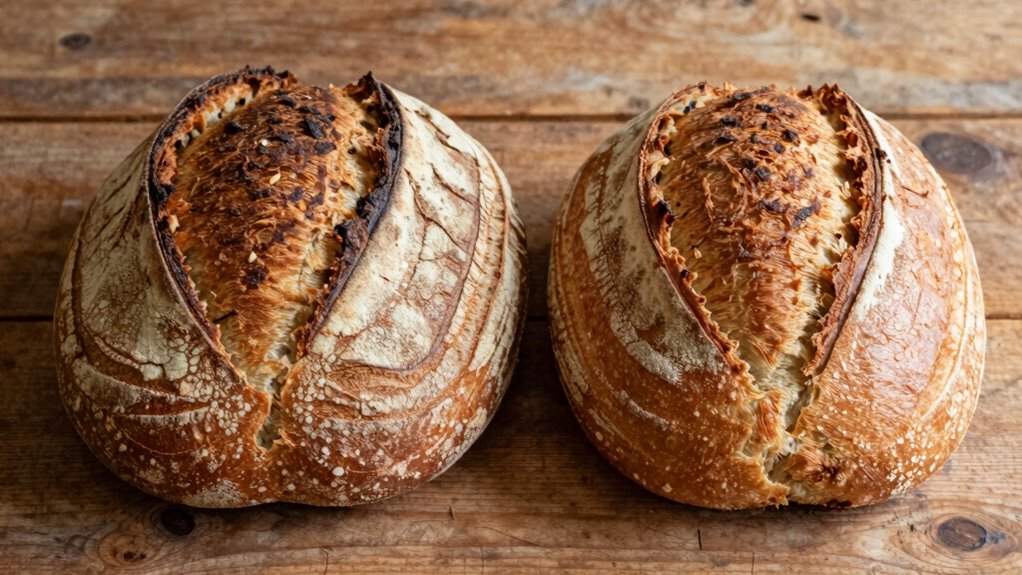
Homemade bread tends to go stale faster than store-bought varieties because it lacks the preservatives and packaging that help extend shelf life. When you bake bread at home, you’re working with fresh ingredients and no added chemicals, which means the bread’s natural properties influence how quickly it loses its freshness. One key factor in this process is gluten development. During baking, gluten proteins form a network that gives bread its structure and chewiness. Proper gluten development is essential for a good loaf, but it also affects how the bread stales. As bread cools, the gluten network traps moisture, but over time, this moisture migrates out, leading to a firmer, drier crumb. This process accelerates the staling because the gluten structure starts to break down and loses its elasticity, making the bread seem stale faster.
Homemade bread stales quickly due to natural gluten networks and lack of preservatives.
Ingredient freshness plays a significant role in how quickly homemade bread stales. When you use fresh flour, water, and other ingredients, the bread initially tastes better and has a softer texture. However, this freshness also means the moisture content is higher, which can lead to quicker staling if the bread isn’t stored properly. Store-bought bread often contains preservatives that slow down moisture migration and microbial growth, helping it stay soft longer. In contrast, homemade bread relies solely on the natural moisture within the ingredients, which gradually evaporates or migrates away from the crumb, making the bread dry and hard sooner. Additionally, the absence of preservatives means that the natural enzymes and starches in homemade bread are more active, contributing further to the rapid staling process.
Furthermore, the absence of packaging in homemade bread exposes it to air, which hastens moisture loss. Without a protective barrier, the bread’s surface dries out, leading to a stale texture. Proper storage methods, like wrapping in a cloth or airtight container, can slow this process but can’t completely prevent it. The bread’s moisture content naturally diminishes over time, and because homemade bread doesn’t contain preservatives, there’s nothing to inhibit the staling process. The natural starches in the bread also retrograde more quickly without chemical agents, further contributing to the firming of the crumb. The moisture content of homemade bread is a critical factor, as higher moisture levels can sometimes promote mold growth if not stored properly, which adds another layer to how quickly it deteriorates.
In addition, the natural enzymes present in homemade bread continue to break down starches and proteins after baking, which can influence how quickly the bread loses its freshness. In essence, your homemade bread stales faster because it’s made with fresh ingredients that have higher moisture content and no preservatives to hinder moisture loss. Gluten development, while crucial for texture, also influences how quickly the bread dries out as the gluten network weakens over time. To prolong freshness, you need to be mindful of storage, but ultimately, the natural qualities of homemade bread mean it’s best enjoyed fresh and soon after baking.
airtight bread storage container
As an affiliate, we earn on qualifying purchases.
As an affiliate, we earn on qualifying purchases.
Frequently Asked Questions
How Does Bread Storage Temperature Affect Staling?
You’ll notice that storage temperature affects bread staling because cooler temperatures slow moisture loss, keeping bread fresher longer. After bread cools, store it in airtight storage containers to prevent it from drying out. If you refrigerate bread, it can become stale faster due to crystallization of starch molecules, so for longer shelf life, keep it at room temperature in a sealed container. Proper cooling and storage are key to maintaining freshness.
Do Preservatives in Store Bread Prevent Staling?
Yes, preservatives in store bread, like artificial preservatives and mold inhibitors, help prevent staling. These additives slow down the moisture loss and enzyme activity that cause bread to become stale. By maintaining moisture and inhibiting mold growth, store-bought bread stays fresher longer than homemade bread, which typically lacks these preservatives. However, some prefer homemade bread for its natural ingredients, despite its shorter shelf life.
Can Freezing Bread Slow Down Staling?
Freezing bread can slow down staling, extending its freshness by up to three months. Did you know that bread’s staling process is primarily due to starch retrogradation? Using effective freezing techniques, like tightly wrapping your bread to prevent moisture loss, helps preserve its texture and flavor. When you want fresh-tasting bread later, freezing is a smart method to maintain bread freshness and keep it tasting great longer.
Does Bread Type Influence Staling Speed?
Yes, bread type influences staling speed. For example, bread with thicker crusts or ingredient variations like added fats or sugars tend to stay fresh longer. Homemade bread often lacks preservatives, causing it to stale faster. Store-bought bread usually includes additives that slow staling. The specific ingredients and crust thickness affect moisture retention, so understanding these factors helps you predict how quickly your bread will go stale.
How Does Moisture Content Impact Bread Staling?
Moisture content directly impacts bread staling by affecting moisture migration within the crumb. As the bread loses moisture, the crumb becomes firmer, leading to increased crumb firmness and a stale texture. In homemade bread, uneven moisture distribution accelerates staling because moisture migrates from the crumb to the crust or evaporates, making it stale faster. Store-bought bread often has preservatives that slow moisture migration, maintaining freshness longer.
As an affiliate, we earn on qualifying purchases.
Conclusion
So, next time you bake your own bread, remember it’ll likely go stale faster than store-bought. That’s because homemade bread usually lacks the preservatives and packaging that help prolong freshness. But isn’t the fresher taste and aroma worth it? You can always try storing it properly or freezing slices for later. After all, isn’t enjoying warm, homemade bread worth a little extra effort and shorter shelf life?
As an affiliate, we earn on qualifying purchases.
bread staling prevention products
As an affiliate, we earn on qualifying purchases.
As an affiliate, we earn on qualifying purchases.
Columbus Day / Indigenous Peoples' Day Picks
long weekend sales
As an affiliate, we earn on qualifying purchases.