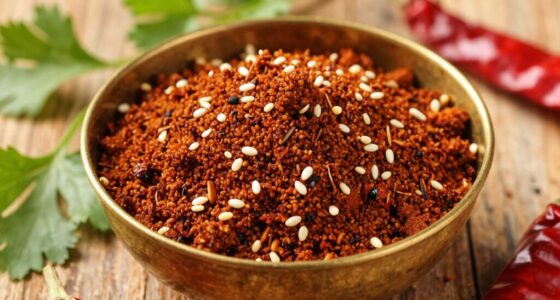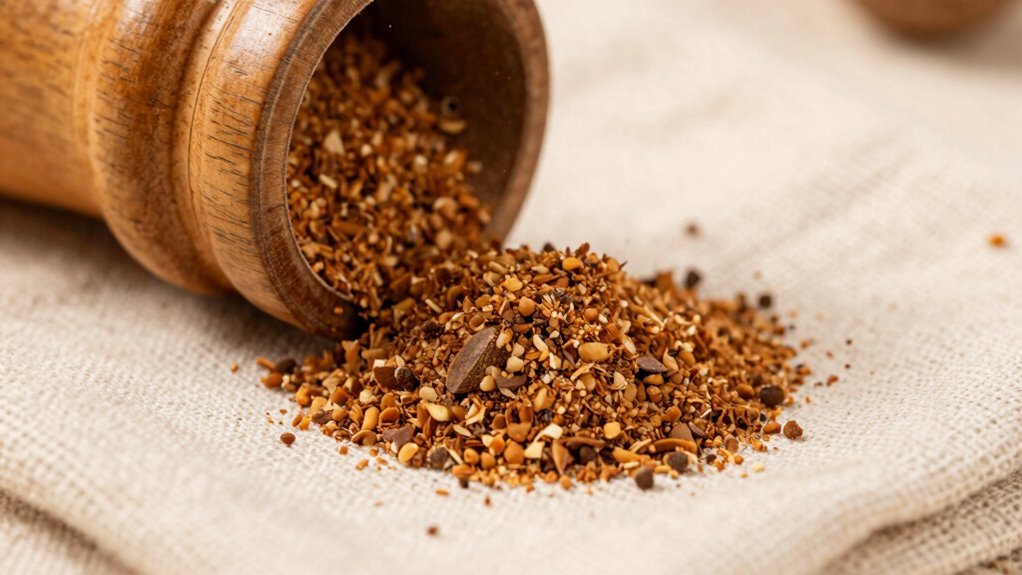

To avoid a soapy taste when using nutmeg, measure carefully and start with a small pinch or light grate from fresh seeds. Incorporate it gradually into dishes that include complementary spices like cinnamon or ginger, tasting as you go. Avoid overdoing it, as too much can overpower flavors or cause bitterness. Remember, moderation is key. If you’d like more tips on perfecting your nutmeg use, keep exploring for detailed guidance.
Key Takeaways
- Start with a small pinch or light grate to control flavor intensity.
- Use fresh grated nutmeg from whole seeds instead of pre-ground for better flavor.
- Combine nutmeg with complementary spices like cinnamon or ginger to enhance taste.
- Add nutmeg gradually, tasting as you go to prevent overpowering or soapy flavors.
- Avoid excessive amounts and focus on balanced seasoning to maintain a pleasant, aromatic flavor.

Ever wondered how to make your dishes richer and more flavorful? Nutmeg is a wonderful spice that can elevate your cooking, but it’s easy to go overboard or use it improperly, resulting in a bitter, soap-like taste. The key is understanding its proper culinary uses and recognizing its health benefits so you can enjoy its full potential without risking unpleasant flavors. Nutmeg isn’t just a flavor enhancer; it also offers health benefits, such as antioxidants that support your immune system and anti-inflammatory properties that may help reduce soreness and swelling. Incorporating it thoughtfully into your recipes allows you to enjoy these benefits while adding warmth and depth to your dishes.
When using nutmeg, start small. A pinch or a light grate is usually enough to impart a subtle, aromatic flavor. Because it’s potent, too much can quickly overpower your dish and produce that soapy taste you want to avoid. Nutmeg’s culinary uses are diverse—sprinkle it into baked goods like cookies, cakes, and muffins for a comforting spiciness. It works beautifully in creamy desserts like custards and puddings, adding a hint of complexity. You can also add a dash to savory dishes such as creamy pasta sauces, roasted vegetables, or even hearty stews to give them a warm, nutty undertone. When using nutmeg, always grate it fresh from a whole nutmeg seed if possible. Pre-ground nutmeg tends to lose its flavor faster, and fresher grating helps you control the amount, reducing the risk of overpowering your dish.
Another tip is to combine nutmeg with complementary spices like cinnamon, cloves, or ginger, which enhances its flavor without making it taste soapy. Use it in moderation—remember, a little goes a long way—and taste as you go to adjust the amount accordingly. If you’re experimenting with new recipes, start with a small amount and build up gradually. This approach ensures you enjoy its aromatic qualities without the bitter aftertaste. Nutmeg is especially popular during the fall and winter months, adding cozy notes to beverages like eggnog or mulled wine, but it can be equally delightful year-round in various recipes.

Professional Nutmeg Grinder with Sharp Blade for Whole Nutmeg, Powder Finish, Stainless Steel Nutmeg Grater – ZOLMER®
✔️ FINEST GRINDING RESULTS – The stylish nutmeg grater with storage has precise grinder and extra-sharp stainless steel…
As an affiliate, we earn on qualifying purchases.
As an affiliate, we earn on qualifying purchases.
Frequently Asked Questions
Can Nutmeg Be Used in Savory Dishes Safely?
Yes, you can safely use nutmeg in savory dishes when you use it sparingly. Nutmeg offers health benefits like anti-inflammatory properties and aids digestion, making it a great addition. Its warm, nutty flavor pairs well with ingredients like cheese, vegetables, and meats. Just remember to balance the nutmeg flavor pairing carefully, as too much can overpower your dish and cause an unpleasant soapy taste.
How Long Does Nutmeg Flavor Last in Recipes?
Nutmeg’s flavor lasts about 1 to 2 hours in recipes, but its aroma can linger longer. To maximize flavor longevity, add nutmeg during the cooking process rather than at the end. Proper spice preservation, like storing it in an airtight container away from light, helps maintain its potency. Keep in mind, freshly grated nutmeg provides the most vibrant flavor, so use it soon after grating for the best taste experience.
Is Store-Bought Nutmeg as Potent as Fresh Grated?
Store-bought nutmeg isn’t as potent as freshly grated, but it still offers a good flavor. When you buy pre-ground nutmeg, you’re getting store-bought freshness that’s less intense and may lose potency faster over time. Freshly grated nutmeg releases a burst of aromatic oils, making your dishes more vibrant. To maximize flavor, grate your nutmeg just before using, and store it in an airtight container to preserve its potency.
Can Nutmeg Be Used as a Natural Remedy?
Yes, you can use nutmeg as a natural remedy. Its medicinal properties include anti-inflammatory, digestive, and sleep-enhancing effects. Traditionally, people have used it for alleviating pain, indigestion, and insomnia. However, use it in moderation, as large amounts can be harmful. Incorporate small quantities into teas or baths for these benefits, but always consult a healthcare professional before relying on nutmeg for medicinal purposes.
What Are the Signs of Nutmeg Overdose?
If you experience nutmeg overdose symptoms, you might feel nausea, dizziness, hallucinations, or rapid heartbeat, which are signs of nutmeg toxicity. In severe cases, overdose symptoms can include seizures, severe abdominal pain, or even hallucinations. If you suspect an overdose, seek medical help immediately. Remember, consuming large amounts of nutmeg can be dangerous, so always use it in moderation to prevent toxicity.

Watkins Gourmet Organic Spice Jar, Ground Nutmeg, 2 8 Ounce
Superior quality, gourmet spices and herbs grinder for family recipes, premium pantries, and more
As an affiliate, we earn on qualifying purchases.
As an affiliate, we earn on qualifying purchases.
Conclusion
Now that you know how to wield nutmeg like a culinary wizard, you can reveal its warm, aromatic magic without turning your dishes into soap. Think of it as adding a sprinkle of sunset to your recipes—just the right touch to brighten and deepen flavors. With a little care, nutmeg becomes your secret ingredient, transforming ordinary bites into memorable moments. So go ahead, sprinkle away, and let your taste buds dance in a symphony of spice.

McCormick Gourmet Organic Baking Variety Pack (Cloves, Saigon Cinnamon, Ginger, Nutmeg), 0.05 lb
Four top McCormick Gourmet Organic Baking spices: Ground Cinnamon, Nutmeg, Ginger and Cloves
As an affiliate, we earn on qualifying purchases.
As an affiliate, we earn on qualifying purchases.

Norpro Nutmeg Grater, 5.5in/14cm
Measures: 5.5" x 2.5" x 1.25" / 14cm x 6cm x 3cm
As an affiliate, we earn on qualifying purchases.
As an affiliate, we earn on qualifying purchases.