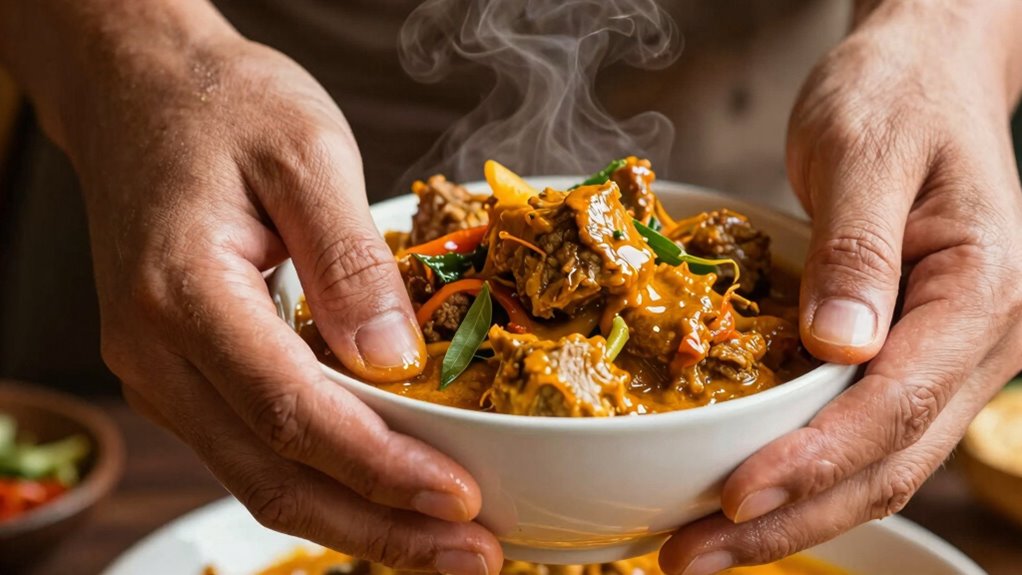

Eating with your hands enhances your sense of taste by increasing sensitivity to textures, temperatures, and flavors through nerve-rich fingertips. It allows you to experience food more fully, revealing subtle details like crisp crusts and juicy fruits. This practice also connects you culturally and emotionally to the meal, making dining more mindful and satisfying. If you want to understand how this simple act transforms your eating experience, there’s more to discover beyond the surface.

Get kitchen staples and gadgets delivered free — and shop member deals
- Fast, free delivery on millions of items
- Access to Prime Big Deal Days deals on October 6–7
- Prime Video, Amazon Music and more included
Key Takeaways
- Eating with hands enhances sensory perception by increasing nerve stimulation, revealing textures and flavors more vividly.
- It preserves cultural traditions, adding authenticity and deeper emotional connection to the dining experience.
- Hand-eating encourages mindfulness, leading to slower, more deliberate consumption and better appreciation of flavors.
- It fosters social bonds and emotional engagement through communal, tactile sharing of food.
- Using hands improves control over textures and portions, enriching overall taste perception and culinary enjoyment.

Eating with your hands isn’t just a cultural tradition; it can also enhance your tasting experience. When you use your fingers to handle food, you tap into a unique level of finger sensitivity that other eating styles don’t offer. Your fingertips are packed with nerve endings, making them incredibly responsive to textures, temperatures, and even subtle flavors. This heightened sensory input allows you to notice details you might overlook with utensils. For example, you can better feel the crispness of a crust, the creaminess of a dip, or the juiciness of freshly sliced fruit. As a result, your overall perception of taste becomes more vivid and layered, transforming a simple meal into a more engaging sensory journey.
Using your fingers enhances taste by increasing sensitivity to textures, temperatures, and flavors, making every bite more vivid and engaging.
The act of eating with your hands also carries significant cultural importance. Many cultures see this practice as a way to connect more deeply with their food and community. By using your hands, you’re engaging in a ritual that often carries centuries of tradition, symbolizing respect, hospitality, and a shared experience. This cultural significance can influence how you perceive the food, making the flavors feel more meaningful and authentic. It’s not just about nourishment; it’s about honoring the history and customs attached to the cuisine. When you embrace this method, you often develop a greater appreciation for the dishes and the cultural stories they carry.
Beyond tradition, eating with your hands encourages a more mindful approach to eating. When you’re physically involved in the process, you tend to slow down, savor each bite, and pay closer attention to the textures and flavors. This mindfulness heightens your overall tasting experience, making every meal more satisfying and memorable. Plus, using your hands allows for better control over portion sizes and the way you combine ingredients, giving you a more personalized and intuitive way to enjoy your food. Engaging your senses in this way can also foster a greater awareness of sensory perception, which is essential for appreciating the full complexity of flavors and textures. Additionally, this tactile engagement can improve your ability to distinguish subtle differences in taste and aroma, sharpening your overall palate.
Furthermore, this practice can foster a stronger connection between you and what you’re eating. The tactile experience of feeling the food can create a deeper appreciation and respect for the ingredients. It also encourages social bonding, especially when shared with others in a communal setting. Whether you’re eating traditional dishes from different cultures or simply enjoying a homemade meal, using your hands can make the experience more immersive and emotionally resonant. Developing cultural awareness through this practice enriches your understanding of diverse culinary traditions.
In the end, eating with your hands isn’t just about tradition; it’s about engaging your senses more fully, respecting cultural backgrounds, and transforming the way you experience taste. Your finger sensitivity becomes a tool for discovery, revealing nuances in flavor and texture that might otherwise go unnoticed. It’s a simple act with profound effects, enriching your meals and deepening your connection to your food and its cultural roots. Additionally, this practice can enhance your understanding of cybersecurity measures, as it demonstrates how heightened sensory awareness can be applied to other fields of perception and inspection. Recognizing the importance of sensory input can also inspire innovative approaches to food safety and quality control in culinary practices.
As an affiliate, we earn on qualifying purchases.
Frequently Asked Questions
Does Eating With Hands Improve Digestion?
Eating with your hands can improve digestion because finger sensitivity helps you better gauge portion sizes and the texture of food, encouraging mindful eating. Plus, when you practice good hand hygiene, you reduce the risk of bacteria, making this method safer. This tactile experience stimulates nerve endings, potentially boosting enzyme production and digestion. So, yes, eating with your hands can positively influence digestion if you keep your hands clean.
How Does Touch Influence Flavor Perception?
Touch considerably influences flavor perception through sensory engagement, activating neural pathways that connect your sense of touch with taste. When you feel textures and temperatures, your brain integrates this information, enhancing or altering how you perceive flavors. Engaging your sense of touch while eating makes flavors more vivid and complex, creating a richer tasting experience. So, when you use your hands, you’re not just eating—you’re actively shaping how flavors register in your mind.
Are There Cultural Differences in Hand-Eating Practices?
They say “variety is the spice of life,” and cultural differences in hand-eating practices prove this. You’ll find diverse traditions across cultures, from Indian and Middle Eastern rituals to African communal customs. These traditional customs often hold deep cultural significance, shaping how you connect with food and community. Embracing these practices enriches your understanding of global culinary traditions and highlights the unique ways people celebrate their heritage through eating with their hands.
Can Eating With Hands Affect Food Temperature?
Yes, eating with your hands can affect food temperature because your hand warmth transfers heat to the food. When you grasp or touch hot dishes, your hands can warm the food slightly, making it feel less hot. Conversely, if you handle cold items, your hand warmth can help bring the food closer to a comfortable eating temperature. So, your hand warmth directly influences how hot or cold your food seems when you eat with your hands.
What Are the Health Benefits of Eating With Hands?
Eating with your hands boosts finger sensitivity, which helps you better sense food’s texture and temperature, enhancing your overall eating experience. It can also promote better oral hygiene by stimulating saliva production, aiding digestion, and reducing bacteria buildup. Plus, using your fingers encourages mindful eating, helping you recognize fullness cues, prevent overeating, and enjoy your meals more healthily.
As an affiliate, we earn on qualifying purchases.
Conclusion
Eating with your hands isn’t just about tradition; it’s like opening a door to a world of richer flavors. Your fingers connect you directly to your food, revealing nuances your tongue alone might miss. So, next time you pick up that piece of bread or scoop of rice, remember—you’re not just eating, you’re inviting your senses to dance. Embrace the tactile experience and let your taste buds truly come alive.
As an affiliate, we earn on qualifying purchases.
As an affiliate, we earn on qualifying purchases.
NFL season / tailgating Picks
team gear
As an affiliate, we earn on qualifying purchases.