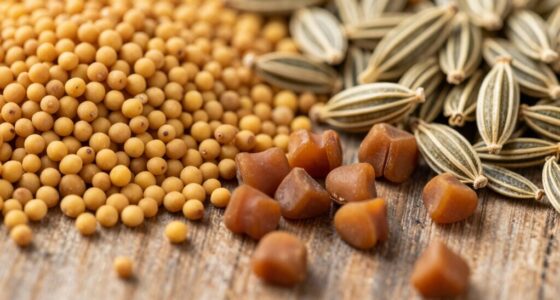
Coriander is more versatile than most cooks realize. You can use its seeds to add warmth and citrusy aroma to meats, stews, and baked goods. Fresh coriander leaves brighten up salsas and garnishes, while toasting seeds enhances their flavor. Its history spans ancient civilizations, showing how adaptable it is across cuisines like Indian and Mediterranean. Exploring its many forms and uses can open up exciting new flavors in your cooking—if you keep exploring, you’ll discover even more possibilities.
Key Takeaways
- Coriander’s flavor varies from warm citrusy notes in seeds to bright herbaceousness in fresh leaves, enabling diverse culinary applications.
- It is used across numerous cuisines, from Indian and Mediterranean to Latin American, showcasing its broad cultural versatility.
- Toasted seeds deepen flavor, while fresh leaves add brightness, allowing for different techniques and flavor layers in cooking.
- Coriander seamlessly pairs with ingredients like meats, spices, and herbs, enhancing a wide range of savory and baked dishes.
- Its rich history and adaptability encourage experimentation, making it a valuable ingredient for culinary innovation.

Have you ever underestimated coriander’s versatility in the kitchen? It’s a spice that often gets pigeonholed into specific cuisines or dishes, but its true potential extends far beyond what many realize. When you explore its flavor pairing, you’ll discover coriander’s incredible ability to complement a wide array of ingredients, from savory to sweet. Its warm, citrusy aroma pairs beautifully with everything from grilled meats and hearty stews to fresh salads and even baked goods. Whether you sprinkle it into a curry or blend it into a marinade, coriander adds a bright, complex note that elevates the overall dish. Its subtle earthiness balances spices like cumin and chili, creating a harmonious flavor profile that enhances rather than overpowers. Understanding coriander’s culinary history can deepen your appreciation for its versatility. Originally cultivated in ancient civilizations such as Egypt and India, coriander has been a staple in traditional cooking for thousands of years. Its long history of use across diverse cultures highlights its adaptability and broad appeal. Over time, different regions have embraced coriander, incorporating it into their unique flavor profiles—think of the fresh, herbaceous notes in Mediterranean dishes or the spicy warmth in Indian curries. Recognizing this culinary history encourages you to experiment with coriander in new ways, blending it into dishes that might seem unconventional at first glance. Additionally, exploring culinary history can inspire you to incorporate coriander into innovative recipes that celebrate its global roots. Incorporating spice versatility into your cooking can help you discover new flavor combinations and techniques. When you start experimenting with coriander, you’ll see how easy it is to incorporate into your everyday cooking. Toasting the seeds enhances their flavor, bringing out a nuttier, more intense aroma that can be used as a finishing touch or ground into spice blends. Fresh coriander leaves, or cilantro, offer a bright, herbaceous contrast that works well in salsas, dressings, and garnishes. Both forms have their place, and knowing when to use each can dramatically change the outcome of your dishes. You might also consider combining coriander with other herbs and spices to create complex layers of flavor. For example, pairing it with garlic, ginger, and turmeric can give your dishes a warm, aromatic depth that’s hard to beat. Incorporating culinary uses of coriander can also help you discover new and exciting ways to bring this spice into your cooking repertoire. In the end, coriander isn’t just a supporting player; it’s a versatile ingredient that can transform your cooking. Its rich culinary history and adaptable flavor pairing make it a valuable addition to your spice rack. By exploring how different cultures have used coriander, you’ll find endless opportunities to experiment and develop your palate. So, the next time you reach for spices, remember that coriander can do much more than you think, opening up new culinary horizons and enriching your dishes with its unique, multifaceted character.
As an affiliate, we earn on qualifying purchases.
Frequently Asked Questions
Can Coriander Be Used as a Natural Remedy for Health Issues?
Yes, coriander can be used as a natural remedy for health issues. You might find it helpful in herbal healing and traditional remedies, as it’s believed to aid digestion, reduce inflammation, and combat bacteria. Incorporate coriander into teas or meals to leverage its health benefits. However, always consult a healthcare professional before relying on it for medical purposes, especially if you have allergies or health conditions.
What Are Some Common Mistakes When Cooking With Coriander?
You often make the mistake of overusing coriander, overpowering dishes with its strong flavor. To avoid this, focus on proper flavor pairing, combining coriander with complementary spices like cumin or turmeric. Also, pay attention to storage tips: keep coriander in airtight containers away from sunlight to retain its freshness. Remember, a little goes a long way—so add coriander gradually, tasting as you go, to achieve the perfect balance.
How Does Coriander Affect Different Dietary Restrictions?
Coriander can suit various dietary restrictions because of its diverse flavor pairing and cultural variations. If you’re vegetarian or vegan, it adds freshness to plant-based dishes. For gluten-free diets, coriander works well in seasoning blends or sauces. Its use in different cuisines, like Indian or Latin American, shows its adaptability. Just make sure you’re not allergic, as coriander may cause reactions in some individuals. Its versatility makes it a valuable ingredient across diets.
Are There Any Safety Concerns With Consuming Coriander?
You should be cautious with coriander if you have coriander allergies, as it can cause reactions ranging from mild to severe. Also, check for pesticide residues, especially if you buy non-organic coriander, to avoid potential health risks. Wash the herb thoroughly, and consider organic options. If you’re unsure about allergies or pesticide exposure, consult a healthcare professional before adding coriander to your diet.
What Are Innovative Ways to Incorporate Coriander Into Desserts?
You might think coriander’s flavor pairing is limited, but try adding ground coriander to your whipped cream or mixing chopped fresh coriander into fruit salads for a unique twist. For innovative desserts, explore coriander-infused syrups in panna cotta or coriander-spiced chocolate truffles. These unique coriander recipes challenge traditional uses, offering a fresh flavor profile that complements citrus, berries, or even coconut, making your desserts both memorable and delightfully unexpected.
As an affiliate, we earn on qualifying purchases.
Conclusion
Now that you see coriander’s true colors, it’s like discovering a secret garden bursting with endless possibilities. With each sprinkle, it transforms dishes into vibrant tapestries of flavor, dancing effortlessly between savory, citrusy, and earthy notes. Don’t let its humble appearance fool you—coriander is your versatile passport to culinary adventure. Embrace this herb, and watch your cooking bloom into a kaleidoscope of delicious surprises, turning every meal into a masterpiece waiting to be savored.
As an affiliate, we earn on qualifying purchases.
As an affiliate, we earn on qualifying purchases.