There are many types of salt, each with unique flavors, textures, and uses. Fine table salt dissolves quickly and works well in baking, while coarse kosher salt is great for seasoning meats. Finishing salts like flaky sea salt add crunch and flavor bursts, and Himalayan pink salt offers mineral-rich depth. Knowing how each type impacts your dishes can elevate your cooking. If you want to explore more about making confident salt choices, keep going.
Key Takeaways
- Different salts vary in flavor, texture, and best uses, from flaky finishing salts to fine table salts.
- Finishing salts add crunch and burst of flavor, while fine salts dissolve quickly for even seasoning.
- Himalayan pink salt and sea salts contain trace minerals, offering slight health benefits and unique flavors.
- Processing methods affect mineral content and additives, influencing health and culinary qualities of the salt.
- Choosing the right salt enhances flavor, presentation, and health considerations in cooking.
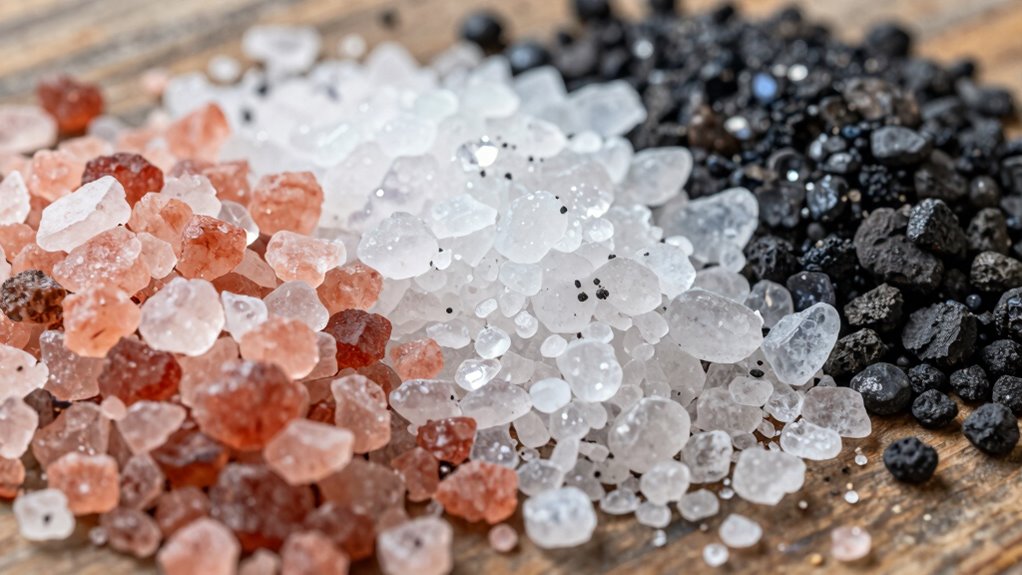
Salt comes in many different types, each with unique flavors, textures, and uses. Understanding these differences helps you choose the right salt for your cooking and health needs. Different salts can enhance flavors in various ways, making your dishes more vibrant and balanced. For example, finishing salts like flaky sea salt add a crunchy texture and a burst of flavor when sprinkled on top of dishes. Meanwhile, fine table salt dissolves quickly, making it perfect for baking and seasoning during cooking. By selecting the appropriate salt, you can elevate your meals and achieve the desired flavor profile.
Different salts offer unique flavors and textures to enhance your cooking and overall dish presentation.
When it comes to flavor enhancement, the type of salt you use can make a noticeable difference. Kosher salt, with its large, coarse grains, offers a mild, clean flavor that’s ideal for seasoning meats or vegetables. Its texture also makes it easy to pinch and sprinkle, providing control over salt levels. On the other hand, Himalayan pink salt has a slightly mineral-rich taste, adding depth to your dishes, especially when used as a finishing salt. These subtle flavor differences can help you create complex, well-rounded flavors, but it’s important to weigh health considerations as well. Additionally, the mineral content of different salts can influence their taste and nutritional profile.
Health considerations play a significant role in your choice of salt. While all salts contain sodium, some types have trace minerals that can offer minor nutritional benefits. For example, Himalayan pink salt and sea salts retain minerals like magnesium and potassium, which could support your electrolyte balance. Additionally, choosing salts with fewer additives, like anti-caking agents, can contribute to a more natural diet. However, regardless of the type, excessive salt intake can lead to health issues like high blood pressure or heart problems. It’s wise to use salt sparingly and be mindful of your overall sodium consumption. Opting for unprocessed salts with fewer additives can also reduce your exposure to anti-caking agents and preservatives found in table salt.
In the end, selecting the right salt involves balancing flavor enhancement with health considerations. Fine table salt remains a versatile choice for everyday use, but exploring different types like sea salt or Himalayan salt can bring new dimensions to your cooking. Remember, the processing methods of salt can influence its mineral content and health effects, so understanding these processes can help you make better choices. When you understand the unique characteristics of each salt type, you can confidently incorporate them into your culinary routines, making each meal more enjoyable and health-conscious.
As an affiliate, we earn on qualifying purchases.
Frequently Asked Questions
How Does Salt Impact Overall Health and Nutrition?
Salt impacts your health and nutrition by maintaining electrolyte balance and supporting nerve and muscle function. Consuming the right mineral content helps prevent dehydration, cramping, and imbalances. Too much salt can lead to high blood pressure, while too little may cause weakness. You should aim for moderation, choosing natural and unprocessed salts when possible, to optimize your overall health and guarantee your body gets essential minerals.
Are Natural Salts Always Healthier Than Refined Salts?
You get what you pay for, and that’s true with salts too. Natural salts often have higher mineral content and unique flavor profiles, making them seem healthier. However, refined salts are usually more processed and can contain added anti-caking agents. While natural salts may offer some benefits, they aren’t automatically healthier. It’s essential to evaluate mineral content and how much you use, rather than assuming one type is always better.
What Are the Best Salts for Seasoning Versus Cooking?
For seasoning, you want salts with bold flavor enhancement, like flaky sea salt or Himalayan pink salt, which add texture and depth. For cooking, choose versatile salts such as kosher or table salt, which dissolve easily and provide consistent seasoning. These salts offer culinary versatility, allowing you to control flavor without overpowering your dishes. Ultimately, select salts based on the desired flavor impact and cooking method.
Can Salt Types Affect Food Preservation?
Yes, salt types can affect food preservation. Different salts, through their unique salt flavor profiles, influence how well food resists spoilage. For instance, coarse salts promote salt crystallization, creating an effective barrier against bacteria and mold. Fine salts dissolve quickly, making them suitable for brining. Choosing the right salt type enhances preservation, ensuring your food stays fresh longer while adding subtle flavor nuances.
How Should I Store Different Types of Salt?
You should store different salt types in airtight containers to prevent moisture absorption, which can cause clumping. Salt’s crystal structure and mineral content variations influence how it reacts to humidity, so keep fine salts separate from coarser ones. Store salt away from heat and sunlight to preserve flavor and quality. Proper storage guarantees your salt maintains its unique properties and remains fresh for culinary use.
As an affiliate, we earn on qualifying purchases.
Conclusion
Just like choosing the right salt can elevate your culinary creations, understanding the different types helps you make informed decisions in life. Imagine picking the perfect salt for a dish—each one adds its own unique touch. Similarly, embracing variety and knowledge can transform ordinary moments into memorable experiences. So, next time you reach for salt, remember it’s a small choice with a big impact—just like the choices that shape your life’s flavor.
As an affiliate, we earn on qualifying purchases.
As an affiliate, we earn on qualifying purchases.