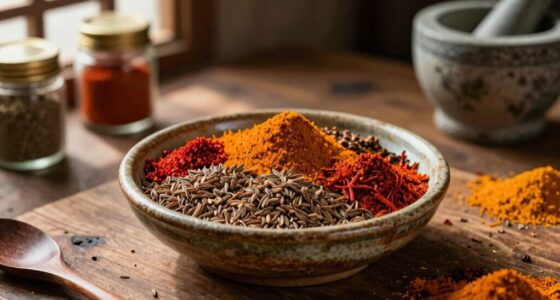
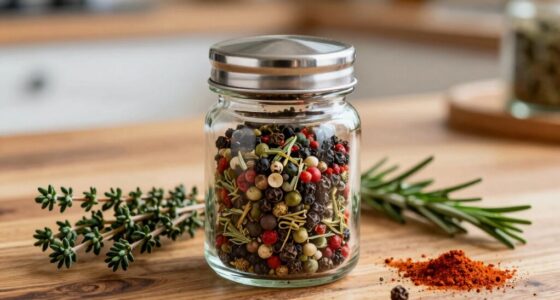
You’ll notice that heat from spices like chili peppers and black pepper provides a fiery, tongue-tingling sensation, while warmth from cinnamon or nutmeg offers a subtle, comforting depth that evokes tradition. Aroma, on the other hand, is the immediate scent that transports you to specific regions and influences how you perceive flavors. Understanding these differences helps you craft more balanced dishes. Keep exploring to reveal the full complexity spices can bring to your cooking.

Get kitchen staples and gadgets delivered free with Prime
- Fast, free delivery on millions of items
- Prime Video, Amazon Music and more included
- Member-only deals all year
Key Takeaways
- Heat in spices refers to a fiery sensation from compounds like capsaicin, stimulating taste buds with a sharp, pungent spiciness.
- Warmth is a subtle, comforting feeling from spices like cinnamon and nutmeg, adding depth and emotional resonance.
- Aroma involves the scent compounds that evoke specific regional or cultural olfactory memories, influencing flavor perception.
- Heat is often associated with physical sensation, while warmth and aroma are more about sensory and emotional experiences.
- Cultural context shapes how each element—heat, warmth, and aroma—is used and perceived in different cuisines.
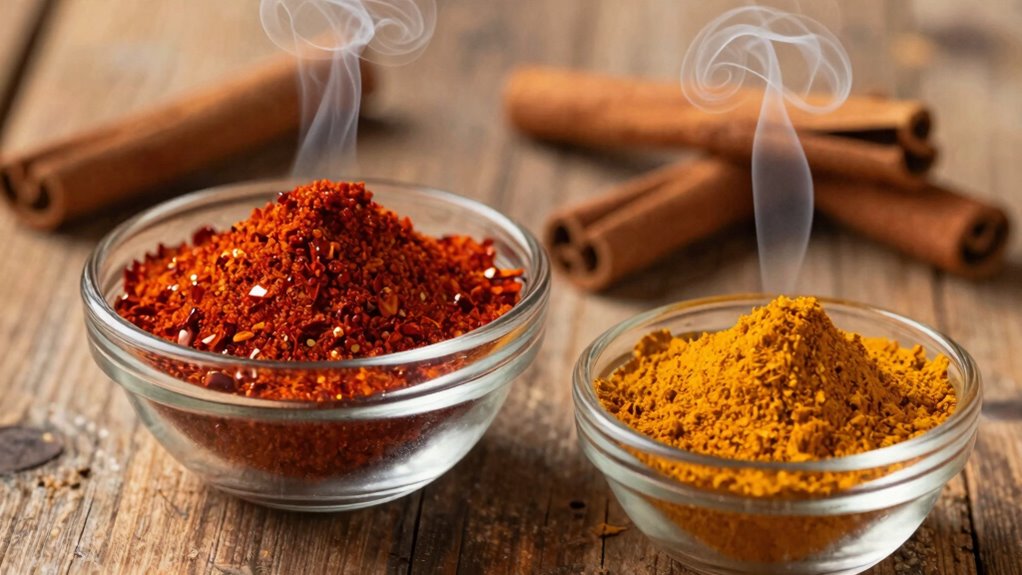
Spices have the power to transform simple dishes into flavorful masterpieces by adding heat, warmth, and aroma. These elements are what make spices so versatile and essential in cooking around the world. When you consider the different ways spices influence your food, it’s helpful to understand how heat, warmth, and aroma each contribute to the overall experience. Each plays a distinct role in shaping culinary flavor profiles and reflects cultural spice uses that have evolved over centuries.
Spices transform dishes with heat, warmth, and aroma, shaping flavors and cultural culinary traditions worldwide.
Heat in spices isn’t just about burning or spice intensity; it’s about the fiery kick that makes your taste buds tingle. Chilis and black pepper exemplify this, bringing a sharp, pungent sensation that can elevate a dish from bland to exciting. The level of heat varies across cuisines, from the fiery curries of India to the mildly spiced dishes of the Mediterranean, showing how cultural spice uses influence what people consider the perfect balance of heat. This element can also serve functional purposes, like aiding digestion or acting as preservatives in certain food traditions.
Warmth, on the other hand, is more subtle and comforting. It’s the gentle, simmering undertone that adds depth to a dish without overwhelming it. Spices like cinnamon, nutmeg, and cloves provide this sense of warmth, often associated with cozy, hearty meals. Warmth in spices contributes to complex flavor layers and can evoke emotional responses tied to tradition and comfort. In many cultures, warm spices are used during festive seasons or in slow-cooked dishes to evoke a sense of home and nostalgia, illustrating how cultural spice uses shape culinary flavor profiles. Additionally, the sensory experience created by warm spices can influence how a dish is perceived and enjoyed. Recognizing the chemical properties of warm spices helps in understanding their role in flavor development. Exploring the chemical composition of these spices reveals how their aromatic oils and compounds enhance taste and aroma.
Aroma is perhaps the most immediate and evocative aspect of spices. When you open a jar of turmeric or cumin, it’s the scent that instantly transports you—whether to a bustling Indian market or a fragrant Middle Eastern kitchen. Aromatic spices are *indispensable* for creating memorable dishes because they engage your senses before the first bite. The aroma influences your perception of flavor, making a dish seem more inviting and flavorful. Different cultures emphasize aroma differently; for example, the fragrant herbs of Provence or the smoky aroma of paprika highlight the importance of aroma in defining regional culinary identities. Recognizing the aromatic qualities of spices can help you craft more balanced and appealing dishes that resonate with cultural traditions.
As an affiliate, we earn on qualifying purchases.
Frequently Asked Questions
How Do Spices Develop Their Unique Aroma Over Time?
You notice how spices develop their unique aroma over time through aroma compound evolution. As they age, chemical reactions alter their flavor profile, creating new scent layers. Exposure to air, light, and heat accelerates these changes, making the aroma richer or sometimes duller. By understanding these processes, you can better predict how a spice’s aroma will evolve, enhancing your cooking and storage techniques.
Can Heat Levels in Spices Be Adjusted During Cooking?
Think of cooking as a symphony—your spice flavor can be fine-tuned like an instrument. Yes, you can adjust heat levels during cooking, controlling how intensely spices release their flavors. Using different cooking techniques, such as simmering for subtlety or sautéing for boldness, lets you manage the heat’s impact. Keep tasting and tweaking, and you’ll master the art of balancing spice heat to suit every dish perfectly.
What Cultural Factors Influence the Perception of Spice Warmth?
Cultural factors deeply influence how you perceive spice warmth, shaped by cultural rituals and culinary traditions. In some cultures, spicy foods symbolize celebration or hospitality, making warmth feel welcoming rather than intense. Others might associate heat with medicinal benefits or specific rituals, altering your perception. Your cultural background molds your tolerance and appreciation for spice warmth, making it a personal and shared experience rooted in tradition and social customs.
Are There Health Benefits Associated With Specific Spice Aromas?
Did you know that some spice aromas, like cinnamon and ginger, may boost your immune system? Spice aroma therapy is gaining popularity because these aromatic spice benefits include anti-inflammatory and antioxidant properties. You can enjoy these health perks simply by incorporating aromatic spices into your meals or using essential oils derived from them. This approach makes it easy to harness the natural wellness benefits of spice aromas daily.
How Do Storage Methods Affect a Spice’s Heat and Aroma?
Storage techniques profoundly impact a spice’s heat and aroma. When you store spices in airtight containers, away from light and heat, you preserve their freshness and intensify their flavor. On the other hand, improper storage exposes spices to moisture and air, causing loss of potency and aroma. To keep your spices vibrant and flavorful, focus on freshness preservation through proper storage methods, ensuring they retain their heat and aromatic qualities longer.
cinnamon and nutmeg ground spices
As an affiliate, we earn on qualifying purchases.
As an affiliate, we earn on qualifying purchases.
Conclusion
Now that you understand the dance between heat, warmth, and aroma in spices, you hold the brush to paint your culinary masterpiece. Think of heat as the fiery spark igniting your dish, warmth as the comforting embrace, and aroma as the irresistible whisper calling everyone to the table. With this knowledge, every sprinkle becomes a secret spell, transforming simple ingredients into a symphony of flavors. Embrace these nuances, and let your cooking tell a story that lingers long after the last bite.
aromatic spice blends for cooking
As an affiliate, we earn on qualifying purchases.
As an affiliate, we earn on qualifying purchases.
As an affiliate, we earn on qualifying purchases.
Halloween Picks
halloween
As an affiliate, we earn on qualifying purchases.