

After lunch, your body reacts to the food you eat, especially high-carb meals, causing blood sugar to spike quickly. Your body releases insulin to absorb the glucose, which often results in a sharp drop in blood sugar levels. This rapid fluctuation makes you feel tired, sluggish, and less alert. Foods high in simple carbs and processed ingredients contribute to these swings. If you want to understand how to avoid these energy crashes, there’s more to discover.

Get kitchen staples and gadgets delivered free with Prime
- Fast, free delivery on millions of items
- Prime Video, Amazon Music and more included
- Member-only deals all year
Key Takeaways
- Consuming high-carb meals causes blood sugar spikes followed by rapid drops, leading to fatigue.
- Quick insulin response to absorb glucose can result in low blood sugar levels, causing energy dips.
- Simple, processed carbs trigger abrupt blood sugar fluctuations, increasing post-meal tiredness.
- Heavy or unbalanced meals slow digestion, contributing to feelings of heaviness and sleepiness.
- Hormonal shifts from certain foods promote sleepiness, intensifying post-lunch energy crashes.
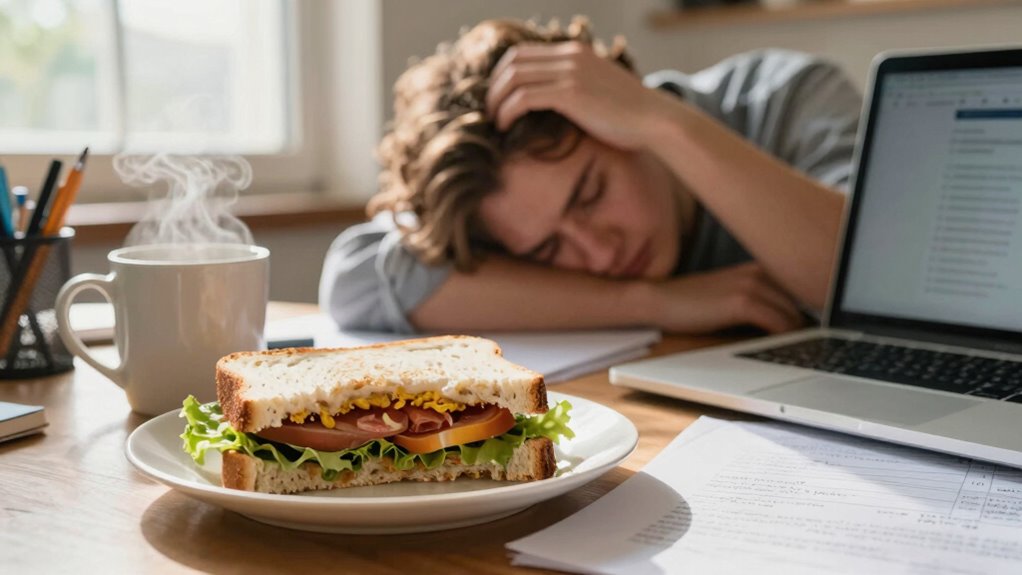
After lunch, many people experience a sudden dip in energy levels, leaving them feeling sluggish or sleepy. This post-meal slump is common, and it happens because your body reacts to the food you’ve just eaten. When you consume a meal, especially one rich in carbohydrates, your body undergoes metabolic fluctuations that influence your energy. These fluctuations are closely tied to blood sugar levels, which rise sharply after eating and then fall rapidly. This rapid drop can make you feel tired and less alert, contributing to that familiar crash.
Your body’s main goal after eating is to break down the food into usable energy. When you eat carbs, your blood sugar spikes as glucose floods into your bloodstream. In response, your pancreas releases insulin, a hormone that helps cells absorb glucose for energy or storage. This process is crucial, but it can also cause your blood sugar to decline quickly once the insulin does its job. If your meal was high in simple carbs or processed foods, this spike and subsequent drop happen more abruptly. The rapid decline in blood sugar levels can leave you feeling drained, as your brain and muscles temporarily lack the fuel they need.
This fluctuation isn’t just about blood sugar; it also influences your overall metabolism. After a meal, your metabolism ramps up to digest and process the food, but if the meal is unbalanced or too heavy, it can lead to sluggish digestion. This can make you feel heavy and sleepy rather than energized. Additionally, certain foods trigger the release of hormones that promote sleep, such as serotonin and melatonin, further intensifying feelings of fatigue. The combination of hormonal shifts and blood sugar fluctuations creates a perfect storm for an energy crash. Understanding metabolic fluctuations can help you make better food choices to maintain your energy. Moreover, choosing foods that promote stable blood sugar levels can help prevent these post-meal dips.
A balanced diet that includes complex carbohydrates and nutrients like fiber and healthy fats supports a more gradual increase and decrease in blood sugar, preventing sharp dips. Your activity level and meal choices can either mitigate or worsen this effect. Opting for balanced meals with complex carbs, healthy fats, and protein can help stabilize blood sugar and keep your energy steady. These foods digest more slowly, preventing sharp spikes and dips. Incorporating regular physical activity after lunch can also promote better digestion and blood circulation, helping to maintain your alertness. Understanding how metabolic fluctuations influence blood sugar is key to avoiding post-lunch slumps. Making smarter food choices and incorporating movement can help you stay energized and productive throughout the day.
As an affiliate, we earn on qualifying purchases.
Frequently Asked Questions
Can Specific Foods Prevent Post-Lunch Energy Crashes?
Yes, specific foods can help prevent post-lunch energy crashes. You should focus on meal composition that promotes blood sugar stability, like including lean proteins, healthy fats, and fiber-rich carbs. Avoid sugary or highly refined foods, as they cause blood sugar spikes followed by crashes. Eating balanced meals keeps your energy steady throughout the afternoon, helping you stay alert and productive without the slump that often follows lunch.
How Does Hydration Influence Post-Meal Energy Levels?
Hydration plays a vital role in maintaining your post-meal energy levels by supporting digestion and electrolyte balance. When you’re well-hydrated, your body processes food more efficiently, preventing fatigue caused by dehydration. Drinking enough water helps regulate blood flow and guarantees your electrolytes stay balanced, which keeps your energy steady. If you skip hydration, your digestion slows, and energy crashes become more likely, leaving you tired after lunch.
Does Sleep Quality Affect Post-Lunch Tiredness?
Sleep quality acts like the silent architect of your post-lunch energy; when your sleep patterns are disrupted, rest quality suffers, making you more prone to tiredness. Poor sleep leaves your body drained, amplifying drowsiness after meals. Conversely, good sleep restores your energy reserves, helping you bounce back faster. So, if you want to dodge that post-lunch slump, prioritize consistent sleep and aim for restorative rest.
Are Certain Age Groups More Prone to Energy Crashes After Lunch?
Yes, certain age groups are more prone to energy crashes after lunch. Older adults often experience age-related fatigue and hormonal fluctuations that can make them feel more sluggish post-meal. Younger individuals might recover faster due to more stable energy levels. Hormonal changes, especially in middle age, can also impact energy regulation. So, your age influences how sharply you might experience post-lunch tiredness.
Can Exercise Timing Impact Post-Lunch Energy Dips?
Think of your energy levels as a garden that needs careful watering; timing matters. Exercising right after lunch can sometimes drain your energy, especially if your meal was heavy or carb-heavy, leading to a crash. To avoid this, consider scheduling physical activity either before lunch or a few hours afterward. Focus on meal composition—balanced with proteins and healthy fats—to sustain your energy and prevent dips.
As an affiliate, we earn on qualifying purchases.
Conclusion
So, next time you feel that sudden slump after lunch, remember it’s not just about food—it’s your body’s way of balancing energy and digestion. Like a car slowing down at a toll booth, your energy dips as your body shifts focus. Embrace these moments as natural pauses rather than setbacks. With mindful choices, you can turn this crash into a gentle pit stop, ready to rev up again, keeping your day smooth and energized.
As an affiliate, we earn on qualifying purchases.
As an affiliate, we earn on qualifying purchases.
Halloween Picks
halloween
As an affiliate, we earn on qualifying purchases.