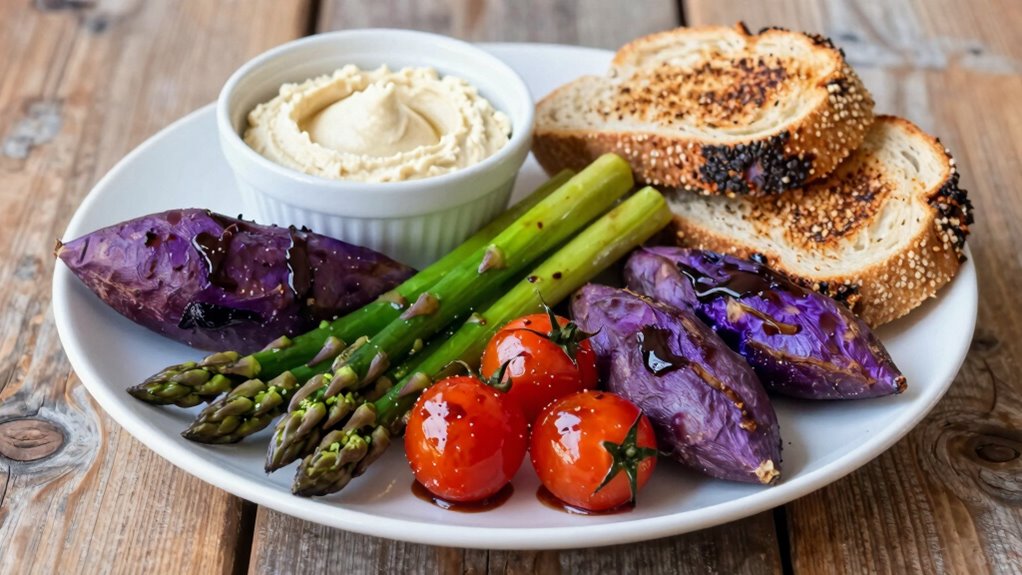

To build a more satisfying vegetarian meal, focus on hearty plant-based proteins like beans, lentils, tofu, or tempeh. Enhance flavor with herbs, spices, citrus, and aromatics to make dishes taste irresistible. Incorporate colorful vegetables and whole grains to add texture, fiber, and nutrients. Experiment with grilling, roasting, or marinating to boost flavor and variety. Want to know more tips to elevate your plant-based meals? Keep exploring for inspiring ideas.

Get kitchen staples and gadgets delivered free with Prime
- Fast, free delivery on millions of items
- Prime Video, Amazon Music and more included
- Member-only deals all year
Key Takeaways
- Incorporate a variety of plant-based proteins like beans, lentils, and tofu for satiety and balanced nutrition.
- Use herbs, spices, and citrus to enhance flavor and make dishes more indulgent.
- Combine colorful vegetables and whole grains to add texture, nutrients, and complete the meal.
- Experiment with cooking techniques such as grilling and roasting to boost flavor and keep meals interesting.
- Focus on nutrient-dense ingredients and proper seasoning to create satisfying, healthful, flavorful dishes.
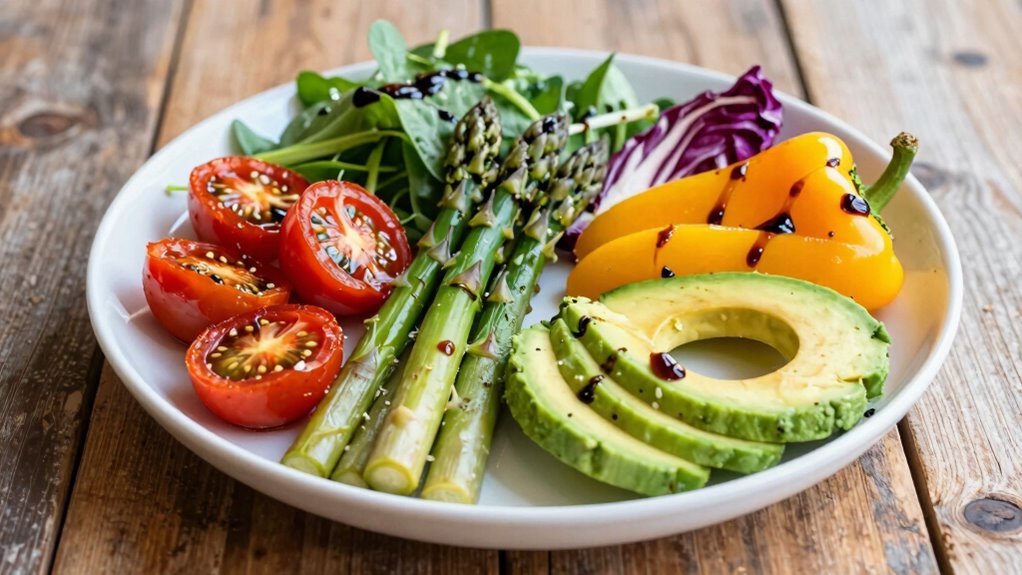
Creating a satisfying vegetarian meal isn’t just about replacing meat with plant-based options; it’s about building a balanced plate that fuels and satisfies your body. The key lies in choosing the right ingredients that pack a nutritional punch and keep your taste buds engaged. Plant-based proteins should be at the forefront of your planning. Foods like beans, lentils, chickpeas, tofu, tempeh, and edamame provide the essential amino acids your body needs, ensuring your meal is both hearty and nourishing. Incorporating these options helps you feel full longer and prevents that snacking cycle that often accompanies lighter, less balanced meals.
But simply adding plant-based proteins isn’t enough. Flavor enhancement plays an *indispensable* role in making vegetarian dishes appealing and satisfying. Without enough seasoning or bold flavors, even the most nutritious ingredients can fall flat. Use herbs, spices, citrus, garlic, and aromatic vegetables to elevate the taste. For example, a lentil curry with cumin and coriander or a stir-fried tofu with ginger and soy sauce can transform simple ingredients into a flavorful experience. These flavor boosts not only make your meal more enjoyable but also help you forget about missing meat, as the rich, complex tastes create a sense of indulgence.
Pairing your proteins with a variety of colorful vegetables adds texture, vitamins, and fiber, making your meal more balanced. Roasted sweet potatoes, sautéed greens, bell peppers, and cherry tomatoes contribute different flavors and nutritional benefits. Whole grains like quinoa, brown rice, or barley serve as excellent carriers for your plant-based proteins, providing extra fiber and sustained energy. Combining these components thoughtfully creates a meal that’s both satisfying and nutritionally complete. Incorporating nutrient-dense ingredients can further optimize your meals for both health and satisfaction. Additionally, exploring variety in cooking techniques** can keep your meals exciting and prevent flavor fatigue. Engaging in diverse preparation methods** not only enhances flavor but also introduces new textures, keeping meals interesting over time.
Another smart move is to experiment with different cooking techniques. Grilling, roasting, sautéing, or marinating can add new dimensions of flavor and texture, making each meal feel fresh and exciting. For example, marinating tofu in a spicy sauce before grilling can give it a smoky, savory edge that’s hard to beat. These techniques also help enhance the natural flavors of your ingredients, making your plant-based proteins more appealing and satisfying. Incorporating proper seasoning can elevate even simple dishes to a whole new level, ensuring they remain flavorful and engaging.
Ultimately, building a more satisfying vegetarian meal involves balancing nutrition, flavor, and texture. By focusing on plant-based proteins, elevating the taste with thoughtful flavor enhancement, and combining a variety of vegetables and grains, you create dishes that are nourishing, flavorful, and truly satisfying. Incorporating nutrition-focused ingredients can further optimize your meals for both health and satisfaction. This approach not only supports a healthy diet but also keeps your meals exciting and enjoyable every time you sit down to eat.
As an affiliate, we earn on qualifying purchases.
Frequently Asked Questions
How Can I Add More Protein to Vegetarian Meals?
To add more protein to your vegetarian meals, incorporate plant-based proteins like beans, lentils, tofu, and tempeh. You can also use dairy alternatives such as Greek yogurt, almond milk, or cheese made from nuts. These options boost your protein intake and make your meals more satisfying. Mixing different sources guarantees you get a variety of amino acids, keeping your diet balanced and nutritious.
What Are Quick Vegetarian Dinner Ideas?
Looking for quick vegetarian dinner ideas that satisfy your cravings? Why not whip up a veggie quesadilla with vegan cheese options or toss a colorful stir-fry using fresh vegetables and plant-based snacks? These meals are fast, flavorful, and versatile. You can also prepare a hearty salad topped with nuts or beans. With minimal prep and cooking time, you’ll enjoy a delicious, satisfying dinner in no time.
How Do I Make Vegetarian Meals More Filling?
To make vegetarian meals more filling, focus on proper meal portioning by including a balance of protein, fiber, and healthy fats. Incorporate ingredients like beans, lentils, or tofu to boost protein, and add whole grains like quinoa or brown rice for extra fiber. Flavor enhancement with spices and herbs can make the meal more satisfying without extra calories. These strategies help you feel full longer and enjoy the meal more.
Are There Any Common Vegetarian Ingredient Substitutions?
Think of vegetarian ingredient substitutions as your culinary toolbox. Yes, you can swap out dairy with plant-based cheeses or try tofu alternatives to boost protein. These options not only mimic traditional flavors but also add variety and texture to your meals. Experiment with different brands and styles to find what works best for your taste buds. With these swaps, you’ll keep your dishes exciting and satisfying every time.
How Can I Incorporate More Variety Into My Vegetarian Diet?
To add more variety to your vegetarian diet, explore diverse vegetarian snack options like hummus with veggie sticks or fruit and nut mixes. Incorporate different cuisines to keep meals exciting and experiment with new ingredients. Plan your vegetarian meal prep ahead of time to guarantee a range of flavors and textures. This approach keeps your diet interesting, helps you discover new favorites, and ensures you’re consistently satisfied and energized.
As an affiliate, we earn on qualifying purchases.
Conclusion
By embracing these smart strategies, you’re crafting vegetarian meals that satisfy both your hunger and your cravings. Think of it like building a sturdy bridge—each ingredient adding strength and balance. Just as a well-tuned orchestra creates harmony, your meal becomes a delightful symphony of flavors and textures. So, channel your inner chef and take charge, knowing that with thoughtful choices, your plate can be both fulfilling and nourishing—truly a masterpiece in the making.
As an affiliate, we earn on qualifying purchases.
As an affiliate, we earn on qualifying purchases.
Halloween Picks
halloween
As an affiliate, we earn on qualifying purchases.