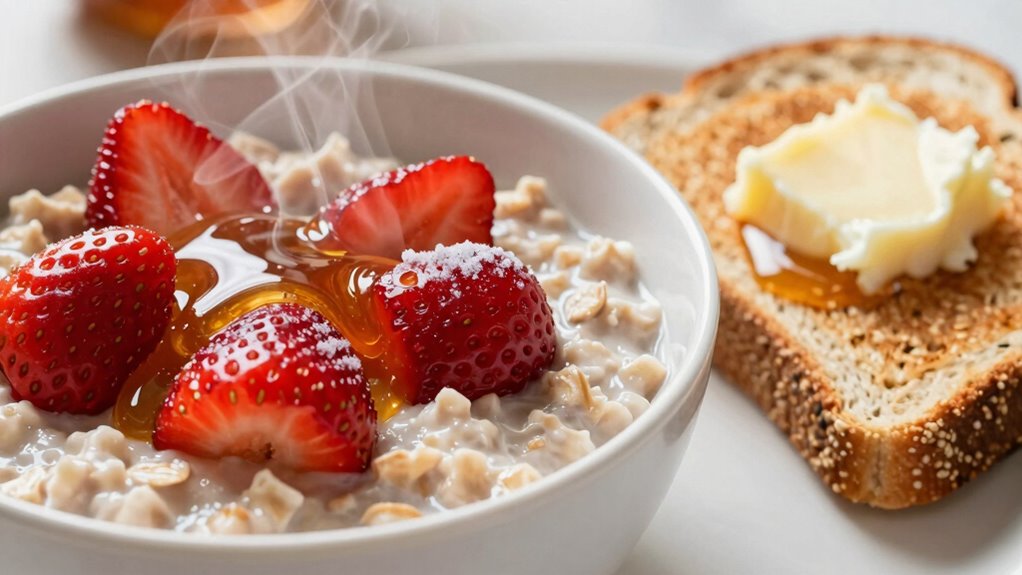

Sugar spikes in your meals happen when you eat refined carbs and sugars, causing rapid blood sugar increases. Your body releases insulin to lower these levels, often leading to a crash that makes you tired, irritable, or hungry. Choosing balanced foods with fiber, healthy fats, and complex carbs slows digestion and keeps your energy steady. If you want to understand how everyday ingredients influence your mood and focus, keep exploring these ways to stabilize blood sugar.

Get kitchen staples and gadgets delivered free with Prime
- Fast, free delivery on millions of items
- Prime Video, Amazon Music and more included
- Member-only deals all year
Key Takeaways
- Refined sugars and simple carbs cause rapid blood sugar spikes, leading to energy crashes and mood swings.
- Using sugar substitutes like stevia and monk fruit can help manage blood sugar levels without spikes.
- Incorporating fiber, protein, and healthy fats slows digestion and prevents sudden blood sugar increases.
- Whole grains and complex carbs promote steady energy and reduce post-meal sugar spikes.
- Mindful portion sizes and meal timing are crucial for maintaining balanced blood sugar throughout the day.

Have you ever noticed how your energy crashes after certain meals? That sudden slump can be frustrating, especially when you’re trying to stay productive or just enjoy your day. One common culprit behind these dips is the spike in blood sugar levels caused by eating foods high in refined sugars or simple carbohydrates. When you consume such foods, your blood sugar shoots up rapidly, prompting your body to release insulin to lower it. This quick drop can leave you feeling tired, irritable, or even hungry again shortly after eating.
To better manage these fluctuations, many people turn to sugar alternatives. These substitutes, like stevia, erythritol, or monk fruit, are often marketed as healthier options because they don’t cause the same rapid blood sugar rise. Using sugar alternatives in your meals can help with blood sugar management, especially if you’re trying to maintain steady energy levels or control diabetes. However, it’s important to remember that not all sugar substitutes impact blood sugar levels equally. Some may have minimal effects, while others might trigger cravings or gastrointestinal issues. Reading labels and understanding how each sugar substitute affects your body can help you make smarter choices.
Sugar alternatives like stevia and monk fruit can support blood sugar control but vary in effects—choose wisely and read labels.
Balancing your meals with fiber, protein, and healthy fats also plays a vital role in blood sugar management. These nutrients slow down digestion and the absorption of sugars, preventing those sudden spikes. For example, adding nuts, seeds, or avocado to your meals can help stabilize your blood sugar. Similarly, choosing whole grains over refined grains ensures a slower release of glucose into your bloodstream. When you incorporate these into your diet, you’re less likely to experience the energy crashes associated with high-sugar meals. Additionally, incorporating complex carbohydrates can further aid in maintaining consistent blood sugar levels. Incorporating healthy eating habits can also significantly improve your overall blood sugar control. Mindful portion sizes and meal timing are essential components of a balanced diet, helping to prevent unwanted fluctuations and promote overall well-being.
As an affiliate, we earn on qualifying purchases.
Frequently Asked Questions
Can Sugar Spikes Occur With Low-Sugar Foods?
Yes, sugar spikes can occur with low-sugar foods, especially if they contain hidden ingredients or sugar alcohols. These additives can still cause your blood sugar to rise, even if the product seems healthy. Always check labels carefully, as sugar alcohols like sorbitol or maltitol may be hidden in sugar-free treats. Your body might react unexpectedly, leading to sugar spikes despite the low-sugar label.
How Quickly Do Sugar Levels Typically Spike After a Meal?
On average, blood glucose levels spike within 15 to 30 minutes after a meal. This rapid increase triggers your insulin response, which helps regulate blood glucose. Notably, high-carb foods can cause sharper spikes, even if they seem low in sugar. You might not notice the rise, but your body reacts quickly, emphasizing the importance of balanced meals to maintain stable blood glucose levels and prevent energy crashes.
Are Natural Sweeteners Safer Than Added Sugars?
Natural alternatives are generally safer than added sugars because they often contain fewer processed ingredients and have a lower glycemic impact. When comparing sweetness, natural sweeteners like honey or maple syrup offer a different sweetness profile than refined sugars, often requiring less to achieve the same taste. However, it’s crucial to take into account moderation, as some natural options still contain sugars that can spike your blood sugar levels.
Do Sugar Spikes Affect Mood and Energy Levels?
You might notice mood swings and energy crashes after sugar spikes—research shows blood sugar fluctuations can cause these rapid shifts. When you consume sugary foods, your body’s insulin response dynamics kick in, often leading to quick drops in blood sugar levels. This rollercoaster can leave you feeling irritable, tired, or anxious. So, managing your sugar intake helps keep your mood stable and energy levels consistent throughout the day.
Can Exercise Prevent Sugar Spikes After Meals?
Yes, exercise can help prevent sugar spikes after meals. When you stay active, your muscles improve insulin response, which aids in blood sugar regulation. Even a quick walk after eating helps your body use glucose more efficiently, preventing sharp increases in blood sugar levels. Regular physical activity supports overall metabolic health, making it easier to keep blood sugar stable and avoid those uncomfortable sugar spikes.
As an affiliate, we earn on qualifying purchases.
Conclusion
Knowing that a single soda can cause your blood sugar to spike by up to 40% shows how easily sugar sneaks into your meals. By making smarter choices—like swapping processed snacks for whole foods—you can keep those spikes in check. Remember, reducing sugar intake isn’t about deprivation; it’s about taking control of your health. Small changes today can lead to lasting benefits, helping you feel energized and balanced every day.
As an affiliate, we earn on qualifying purchases.
As an affiliate, we earn on qualifying purchases.
Halloween Picks
halloween
As an affiliate, we earn on qualifying purchases.