

Carbohydrates aren’t the real issue; it’s how you balance your meals that makes all the difference. If you combine carbs with fiber, healthy fats, and protein, you help stabilize your blood sugar and avoid crashes. Focusing on food quality and pairing foods properly prevents spikes and curb cravings. Instead of avoiding carbs altogether, learn how to build better meals for sustained energy and better health. Keep exploring to discover smarter ways to improve your meal choices.

Get kitchen staples and gadgets delivered free — and shop member deals
- Fast, free delivery on millions of items
- Access to Prime Big Deal Days deals on October 6–7
- Prime Video, Amazon Music and more included
Key Takeaways
- The quality and combination of carbs with fiber, protein, and fats determine blood sugar stability, not carbs alone.
- Balanced meals with high-fiber, low-GI foods prevent spikes and crashes, promoting steady energy.
- Pairing carbs with healthy fats and proteins slows digestion and reduces cravings.
- Focusing solely on carb quantity ignores the importance of meal composition for blood sugar control.
- Incorporating nutrient-dense, balanced ingredients supports long-term health and appetite regulation.
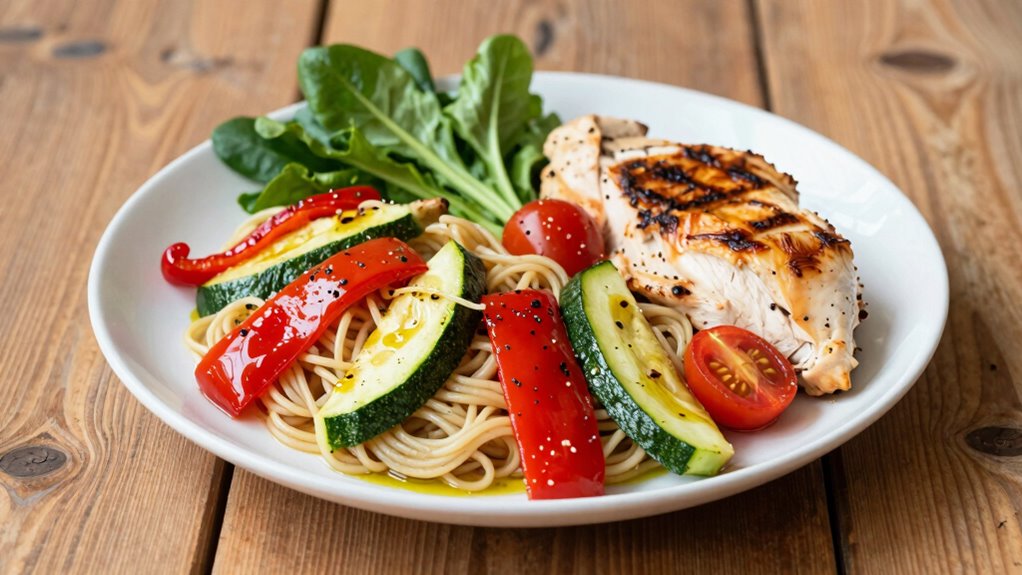
Have you ever wondered how to create meals that keep your energy steady and your cravings in check? The secret isn’t just about cutting carbs; it’s about balancing your meal composition, especially focusing on your fiber intake and understanding the glycemic index of the foods you eat. Carbohydrates are essential for energy, but not all carbs are created equal. Refined carbs, like white bread and sugary snacks, spike your blood sugar quickly, leading to crashes that leave you hungry and craving more. Instead, prioritize complex carbs, which release energy more slowly and help stabilize blood sugar levels.
Balance your carbs with fiber and healthy fats to stabilize blood sugar and curb cravings naturally.
Incorporating enough fiber into your meals plays a crucial role in maintaining this balance. Fiber, especially soluble fiber, slows down digestion, leading to a more gradual release of glucose into your bloodstream. This not only keeps your energy levels steady but also helps control appetite. When your meals are rich in fiber—think vegetables, legumes, whole grains, and fruits—you’re less likely to experience those sudden hunger pangs. Fiber also promotes fullness, making it easier to resist overeating or snacking on unhealthy options later. Additionally, understanding the glycemic index of foods can guide you in making smarter carbohydrate choices. A good grasp of meal composition can help you create more satisfying and balanced meals that support your health goals.
Understanding the glycemic index (GI) of foods is another key to smarter carb choices. The GI ranks carbs based on how quickly they raise your blood sugar. Foods with a high GI cause rapid spikes, followed by crashes, which can trigger more cravings and energy dips. Conversely, low-GI foods, like oats, sweet potatoes, and most vegetables, digest more slowly, providing sustained energy and reducing the likelihood of overeating. When planning your meals, aim for a balance by combining higher-GI foods with low-GI options and adding healthy fats and proteins—these further slow digestion and help keep your blood sugar stable.
A common mistake is focusing solely on carbohydrate quantity rather than quality and meal composition. Instead of obsessing over carbs alone, look at your entire meal. Pairing carbs with fiber, protein, and healthy fats creates a more balanced plate. This approach prevents blood sugar spikes, keeps you feeling full longer, and curbs those pesky cravings. It’s not about eliminating carbs but about choosing the right ones and combining them wisely.
high fiber low glycemic index foods
As an affiliate, we earn on qualifying purchases.
As an affiliate, we earn on qualifying purchases.
Frequently Asked Questions
How Do I Identify a Balanced Meal?
To identify a balanced meal, look at its composition and guarantee it offers nutrient diversity. Your plate should include lean proteins, healthy fats, and fiber-rich carbs, along with plenty of vegetables. Check that portion sizes are appropriate and that you’re not overloading on one food group. A balanced meal fuels your body effectively, helping maintain energy levels and overall health. Focus on variety to meet your nutritional needs.
Are All Carbs Equally Unhealthy?
Not all carbs are equally unhealthy. You should consider the glycemic index and carb quality when choosing foods. Low-GI carbs, like whole grains and vegetables, digest slowly, helping maintain steady blood sugar levels. High-GI carbs, such as white bread and sugary snacks, spike blood sugar quickly. Focusing on quality carbs and balancing your meals can improve your health, rather than avoiding carbs altogether.
What Are Simple Tips for Better Meal Planning?
To improve your meal planning, start with simple meal prep tips like batch cooking and pre-portioning meals to save time and reduce decision fatigue. Incorporate snack substitutions such as swapping chips for veggie sticks or fruit. Visualize your plate as balanced—half with vegetables, a quarter with lean protein, and a quarter with healthy carbs. These small changes make healthier eating easier and more sustainable.
Can Meal Timing Affect Blood Sugar Levels?
Yes, meal timing can affect your blood sugar levels. Practices like intermittent fasting help regulate blood sugar by giving your body longer periods without food, reducing spikes. Carb cycling, which involves alternating high- and low-carb days, also stabilizes blood sugar and improves insulin sensitivity. Planning meals around these strategies helps you maintain steady energy and prevent blood sugar crashes, supporting overall health and better blood sugar management.
How Do Portion Sizes Influence Meal Balance?
Portion sizes can make or break your meal balance, so don’t bite off more than you can chew. Proper portion control guarantees you’re not overeating, while good nutrient distribution keeps your meals balanced with carbs, proteins, and fats. When you manage your portions wisely, you support steady blood sugar levels and overall health. Remember, slow and steady wins the race—small, balanced portions lead to better health outcomes.
As an affiliate, we earn on qualifying purchases.
Conclusion
So, next time you blame carbs for your weight gain, remember—it’s not the carbs, but your meal balance that’s truly at fault. Ironically, the very foods often blamed for sabotage are just innocent bystanders, while the real culprit is how you’re combining them. Instead of cutting carbs, focus on creating a balanced plate. Who knew that a little meal mindfulness could turn your diet from a trap into a triumph?
As an affiliate, we earn on qualifying purchases.
protein sources for blood sugar control
As an affiliate, we earn on qualifying purchases.
As an affiliate, we earn on qualifying purchases.
Evergreen bestsellers Picks
bestsellers
As an affiliate, we earn on qualifying purchases.