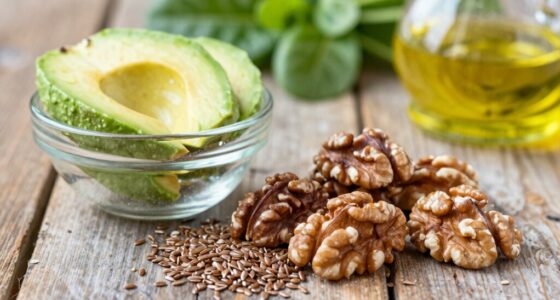

The balanced plate rule helps you eat healthily without feeling restricted by focusing on portion control and variety. Imagine filling half your plate with fruits and vegetables, a quarter with lean protein, and the rest with whole grains. It’s flexible and doesn’t require cutting out favorite treats. Instead, it encourages mindful eating and listening to your body’s signals, making healthy habits feel natural and enjoyable. Keep exploring to discover more about making this approach work for you.

Get kitchen staples and gadgets delivered free — and shop member deals
- Fast, free delivery on millions of items
- Access to Prime Big Deal Days deals on October 6–7
- Prime Video, Amazon Music and more included
Key Takeaways
- Focus on appropriate portion sizes and variety rather than strict calorie counting or food elimination.
- Fill your plate with equal parts vegetables/fruits, lean proteins, and whole grains for balance.
- Incorporate favorite treats in moderation alongside nutrient-dense foods for flexibility.
- Use mindful eating to tune into hunger and fullness cues, avoiding overeating.
- Emphasize sustainable habits by making healthy choices enjoyable and easy to integrate daily.

Maintaining a healthy diet can feel overwhelming, but the Balanced Plate Rule simplifies it by emphasizing portion control and variety. Instead of stressing over strict calorie counts or eliminating entire food groups, you focus on how much you eat and the range of nutrients you include. Portion control isn’t about deprivation; it’s about understanding serving sizes that suit your body’s needs. When you fill your plate with appropriate portions, you prevent overeating without feeling deprived. This approach helps you enjoy your favorite foods in moderation, making it easier to stick to a healthy eating pattern long-term.
Focusing on portion control and variety makes healthy eating simple and sustainable.
Nutrient diversity is another key element of the Balanced Plate Rule. It encourages you to include a variety of food groups—vegetables, fruits, lean proteins, whole grains, and healthy fats—so your body gets a broad spectrum of essential nutrients. Including a mix of foods supports nutrient absorption, and incorporating variety in your diet can help prevent nutrient deficiencies and keep your meals interesting. A diverse diet also promotes better digestion and overall gut health. Instead of obsessing over individual nutrients or avoiding entire food groups, you learn to combine different foods that complement each other. For example, pairing a colorful vegetable salad with a portion of grilled chicken and a serving of brown rice creates a balanced meal packed with fiber, vitamins, minerals, and protein. This variety not only supports your overall health but also keeps meals interesting and satisfying.
The beauty of this rule is that it doesn’t require perfection or rigid restrictions. You don’t have to eliminate your favorite treats; instead, you learn to balance them with nutrient-dense foods. By visualizing your plate—half filled with vegetables and fruits, a quarter with lean protein, and a quarter with whole grains—you create a balanced meal that’s both nourishing and enjoyable. Incorporating kitchen science principles can also help you optimize cooking methods for better nutrient retention and flavor. Understanding cooking techniques can enhance the nutritional value of your meals and make healthy eating more flavorful. Over time, this simple approach becomes second nature, guiding your choices without making eating feel like a chore.
It’s also about listening to your body’s signals. When you practice portion control, you become more attuned to hunger and fullness cues, helping you avoid mindless snacking or overeating. Incorporating nutrient diversity ensures you feel energized and satisfied, reducing cravings for processed or less nutritious options. The goal isn’t perfection but sustainability. When you adopt the Balanced Plate Rule, you develop a flexible, realistic approach to eating that prioritizes health without feeling restrictive. It turns healthy habits into a natural part of your daily routine, making nutritious eating an enjoyable and manageable part of your life.
As an affiliate, we earn on qualifying purchases.
Frequently Asked Questions
Can I Customize the Balanced Plate for Specific Dietary Needs?
Yes, you can customize the balanced plate for your specific dietary needs. Personalization strategies involve adjusting food groups and portions to suit your health goals or restrictions. For dietary modifications, you might swap ingredients or limit certain foods, ensuring your plate remains nutritious and enjoyable. By tailoring the balanced plate, you stay aligned with your unique nutritional requirements, making healthy eating both flexible and sustainable without feeling restrictive.
How Does Portion Size Vary for Different Age Groups?
Portion sizes vary considerably across age groups due to different nutritional needs. Young children require smaller portions aligned with age-specific guidelines, while teenagers and adults need larger servings to support growth and activity. As you age, portions often decrease again to maintain health. Paying attention to age-specific guidelines helps you adjust your balanced plate appropriately, ensuring everyone gets the right amount of nutrients without overeating or undernourishing.
Is the Balanced Plate Suitable for Vegetarians or Vegans?
Yes, the balanced plate works well for vegetarians and vegans. You can include plant-based options like beans, lentils, tofu, and nuts to guarantee nutrient diversity. Focus on filling half your plate with vegetables and fruits, and include whole grains and plant proteins. This approach helps you meet your nutritional needs while enjoying a variety of flavors and textures without feeling restricted. It’s a flexible, sustainable way to eat healthily.
How Do I Balance Treats or Indulgent Foods?
You can balance treats or indulgent foods by practicing treat moderation and incorporating indulgence planning into your eating habits. Enjoy your favorite treats occasionally, but limit portion sizes to prevent overindulgence. Plan indulgences ahead of time, so they become part of your balanced approach rather than unexpected splurges. This way, you satisfy your cravings without compromising your overall health and maintain a sustainable, enjoyable eating pattern.
Can This Rule Be Applied to Meal Planning for Kids?
Yes, you can apply this rule to meal planning for kids by offering balanced meals with plenty of fruits, vegetables, protein, and grains. Use snack alternatives like cut-up veggies or fruit to satisfy cravings healthily. Also, incorporate hydration strategies, ensuring they drink enough water throughout the day. This approach helps kids develop healthy eating habits without feeling restricted, making meal times more enjoyable and nutritious.
As an affiliate, we earn on qualifying purchases.
Conclusion
Think of the balanced plate as your compass, guiding you through the landscape of nourishment without feeling like a cage. It’s a steady beacon, reminding you that harmony doesn’t mean perfection but presence. As you fill your plate with color and variety, you’re painting a picture of health that’s uniquely yours. Embrace this symbol of balance, and let it inspire you to enjoy every bite—knowing you’re crafting a life rooted in gentle, sustainable well-being.
vegetable and fruit storage containers
As an affiliate, we earn on qualifying purchases.
As an affiliate, we earn on qualifying purchases.
As an affiliate, we earn on qualifying purchases.
NFL season / tailgating Picks
team gear
As an affiliate, we earn on qualifying purchases.