You need to fold gently when working with delicate batters like soufflés, meringues, and some cakes because it helps preserve air bubbles essential for a light texture. Using a machine mixer at high speeds can overmix, activating gluten too quickly and making your baked goods dense and tough. By folding carefully, you limit gluten development and keep the batter tender and fluffy. Want to know more about perfecting your technique? Keep going for expert tips.

Get kitchen staples and gadgets delivered free with Prime
- Fast, free delivery on millions of items
- Prime Video, Amazon Music and more included
- Member-only deals all year
Key Takeaways
- Gentle folding preserves air bubbles critical for lightness in delicate batters like soufflés and meringues.
- Overmixing with a machine activates gluten too quickly, leading to dense, tough baked goods.
- Folding prevents overdevelopment of gluten, maintaining tenderness and a tender crumb.
- Machine mixing can be too aggressive for fragile ingredients, disrupting the desired airy texture.
- Proper folding technique ensures even ingredient incorporation without compromising batter’s delicate structure.

When it comes to baking, understanding the right mixing method can make all the difference—especially for delicate batters. Some recipes, like soufflés, meringues, and certain cakes, require gentle folding instead of machine mixing. The key reason lies in how gluten develops in your batter. Gluten is the protein structure that gives baked goods their strength and elasticity, but if it develops too much, your final product can turn tough and dense. Overmixing is the main risk here, as vigorous stirring activates gluten formation rapidly. When you overmix, you’re essentially encouraging too much gluten development, which can ruin the tender, airy texture you’re aiming for.
Gentle folding prevents overmixing, preserving delicate textures and ensuring light, airy baked goods.
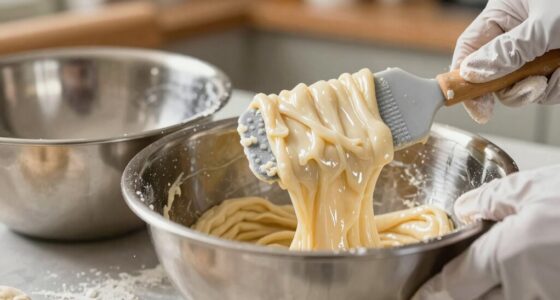
Gentle folding is designed to combine ingredients without overworking the batter. When you fold, you softly lift and turn the mixture, preserving the delicate air bubbles that give your baked good its rise. This method is especially important when working with whipped egg whites or cream, which are full of tiny air pockets. Overmixing can deflate these air bubbles, leading to a flat, dense outcome rather than the lightness you want. By using a gentle folding technique, you keep those bubbles intact, ensuring your baked item remains fluffy and tender.
Machine mixing, on the other hand, is efficient for recipes that require thorough blending, like cookie dough or bread batter, where gluten development is desired for structure. But for light, delicate batters, it’s a risk. When you use a stand mixer or hand mixer on high speeds, you not only risk overmixing but also inadvertently activate gluten too quickly. This results in a tougher texture and less tender crumb. So, understanding when to switch from machine mixing to folding is crucial. For delicate batters, always mix just enough to combine ingredients until they are evenly incorporated, then switch to gentle folding to preserve the batter’s delicate structure.
In essence, the reason some batters need gentle folding instead of machine mixing boils down to controlling gluten development and minimizing overmixing risks. By respecting these principles, you ensure your baked goods maintain their intended lightness, tenderness, and airy quality. Mastering the art of folding not only protects your batter from overworking but also elevates your baking, leading to consistently better results. So, next time you’re working with a delicate mixture, remember: gentle folding is your best tool for achieving that perfect, tender crumb.
Products Worth Considering

Cuisinart Mix It In Soft Serve Ice Cream Maker, 1.5 Quart (ICE-48)

Instant Pot Vortex Plus 6-Quart Air Fryer

Le Creuset Signature Enameled Cast Iron Round Dutch Oven, 5.5 qt, Deep Teal
As an affiliate, we earn on qualifying purchases.
Frequently Asked Questions
Can I Substitute Folding With Gentle Stirring?
You can substitute folding with gentle stirring, but it impacts the batter texture. Folding preserves airiness and delicate structure, while stirring can deflate the batter and make it denser. If you’re aiming for a light, airy result like soufflés or sponge cakes, stick to folding. For sturdier batters like cookies or muffins, gentle stirring works fine. Remember, the method you choose influences the final texture considerably.
What Tools Are Best for Gentle Folding?
You should use a silicone spatula or a wide, flexible rubber spatula for gentle folding. These tools allow you to carefully incorporate ingredients without overmixing, respecting the delicate technique variations needed for specific recipes. Their flexibility helps preserve ingredient interactions, maintaining airy textures and lightness. With these tools, you can master the art of gentle folding, ensuring your batter stays tender and perfectly mixed without deflating.
How Do I Recognize Over-Mixed Batter?
You recognize over-mixed batter by its dense, tough texture and loss of volume. Signs of over-mixing include a batter that’s overly smooth, with streaks of flour gone, and a batter that’s difficult to pour or spread. Its consistency becomes stiff and sticky, indicating you’ve incorporated too much air or gluten. To avoid this, stop mixing once your batter is just combined and smooth for the best rise and tender texture.
Does Folding Affect Batter Temperature?
Folding acts like a gentle breeze, keeping your batter’s temperature steady. When you fold carefully, it prevents heat from building up, maintaining ideal batter consistency. Unlike fast, vigorous mixing, which can generate warmth and alter texture, folding uses slow, deliberate motions. So yes, folding helps control batter temperature, ensuring your mixture remains smooth and delicate, perfect for baking.
Is Folding Suitable for All Types of Batters?
Folding isn’t suitable for all batters. You’ll want to use it mainly for delicate dough kneading or to preserve batter aeration, especially when incorporating whipped egg whites or delicate ingredients. Machine mixing can overmix and deflate the batter, so gentle folding helps maintain its lightness and texture. For sturdy doughs like bread, kneading is better. Always consider the batter’s consistency and purpose before choosing folding or machine mixing.
Conclusion
So, next time you’re baking and wonder whether to fold or mix, remember—sometimes gentle folding holds the secret to perfection. It’s not just about blending ingredients; it’s about preserving that delicate air, the subtle texture that can make or break your batter. But beware—push too hard, and all could be lost. The choice is yours, and the outcome hinges on your touch. Will you master the art before it’s too late?