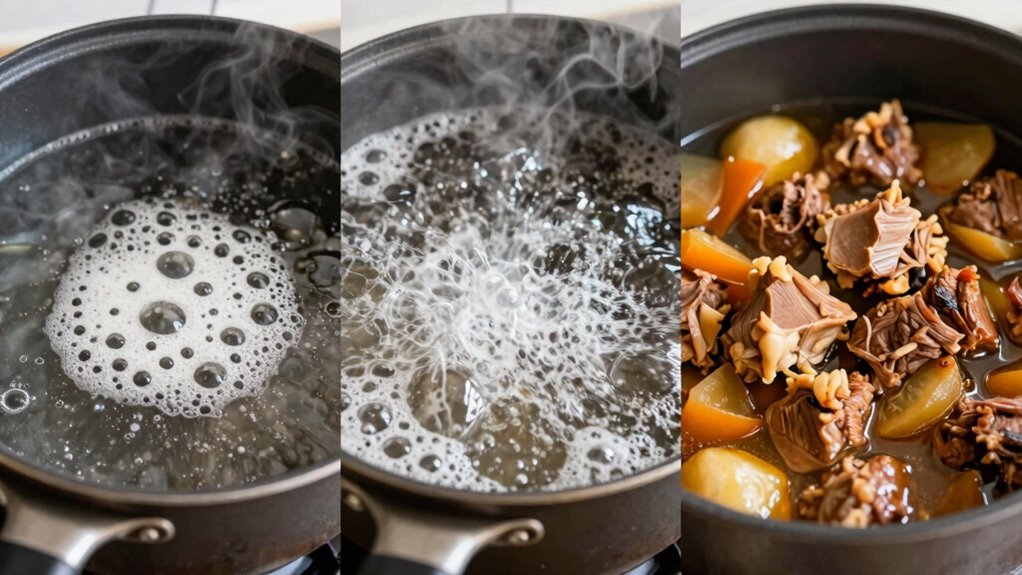
Simmering, boiling, and stewing differ mainly in temperature, bubble activity, and cooking purpose. Simmering occurs at 185-205°F with gentle bubbles, ideal for tenderizing delicate ingredients while preserving flavors. Boiling happens at 212°F with vigorous bubbles, speeding up cooking but risking over-softening. Stewing involves slow, prolonged cooking at low heat, perfect for flavorful, tender meat and vegetables. Keep exploring to discover how each method affects textures and flavors in your dishes.
Listen free for 30 days with Audible
Thousands of audiobooks and originals — cancel anytime.
As an affiliate, we earn on qualifying purchases.
Key Takeaways
- Simmering occurs at 185-205°F with gentle bubbles, while boiling is at 212°F with vigorous bubbles.
- Simmering is ideal for delicate ingredients, boiling for quick-cooking foods like pasta, and stewing for tender, slow-cooked meats.
- Simmering preserves nutrients and flavor, boiling can cause nutrient loss and over-softening, stewing yields rich, concentrated flavors.
- Simmering involves gentle, controlled heat; boiling is fast and aggressive; stewing combines slow, prolonged cooking.
- Simmering maintains ingredient structure; boiling can break down textures; stewing produces tender, flavorful dishes through extended cooking.
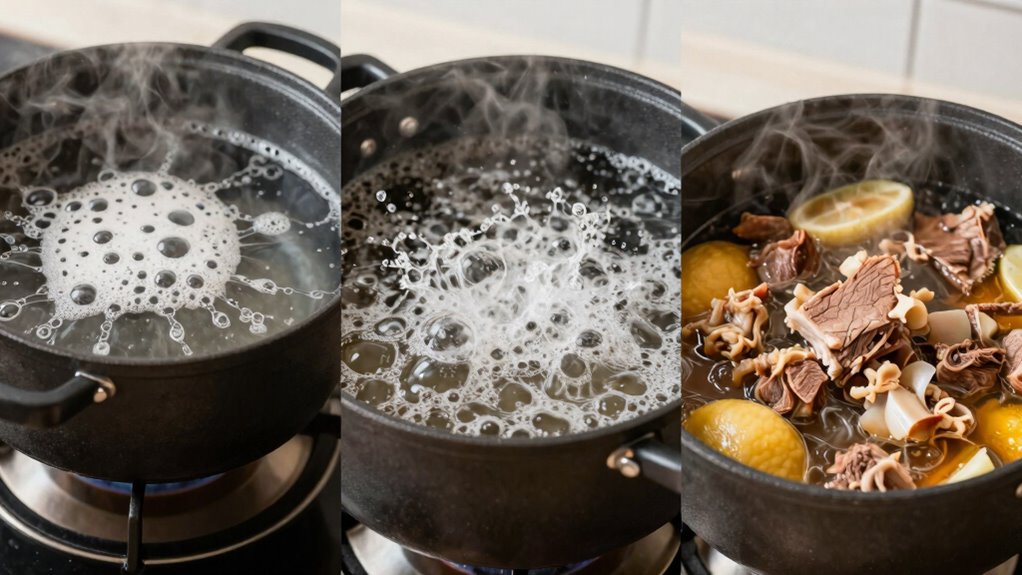
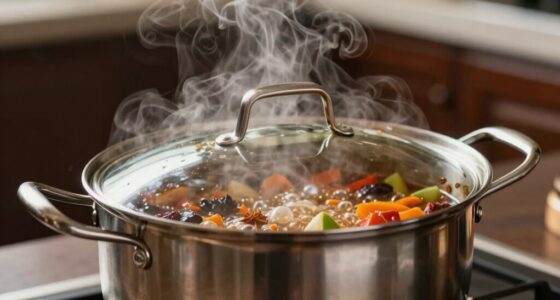
Understanding the differences between simmering, boiling, and stewing is essential for achieving the perfect cook on your dishes. These cooking techniques might seem similar at first glance, but they each serve distinct purposes and influence how your food turns out. Mastering these methods helps you control temperature and moisture, ultimately shaping the flavor development and texture of your ingredients. For example, controlling temperature is crucial for ensuring each technique produces the desired results without overcooking. Simmering involves cooking food just below the boiling point, typically around 185-205°F (85-96°C). You’ll see gentle bubbles rising slowly to the surface, but they don’t break vigorously. This method is ideal for tenderizing delicate ingredients like fish, eggs, or vegetables, and it’s often used in making soups, broths, and sauces. The low, steady heat allows flavors to meld gradually, giving your dishes a depth of flavor without overcooking. Because the temperature is controlled carefully, simmering preserves the integrity of ingredients while allowing flavors to develop naturally, resulting in a more refined taste. Additionally, simmering can help retain more nutrients compared to other high-heat methods.
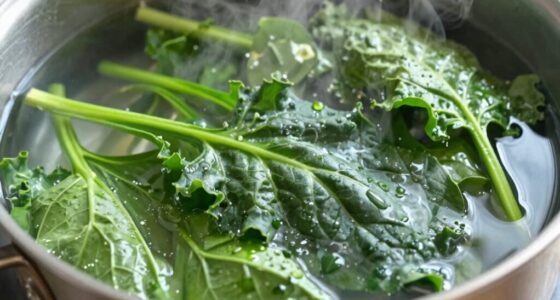
Boiling, on the other hand, occurs at a higher temperature, around 212°F (100°C), where vigorous bubbles constantly break the surface. This cooking technique is faster and more aggressive, making it suitable for boiling pasta, potatoes, or beans. However, it’s not always ideal for flavor development because the high heat can sometimes cause ingredients to break down too quickly or lose delicate flavors. If you’re not careful, boiling can lead to overcooking and a loss of texture, especially for more fragile foods. It’s best used when speed is a priority, but for dishes where flavor nuance matters, simmering often produces better results. Boiling can also cause water-soluble nutrients to leach out of vegetables, reducing their nutritional value.
Stewing combines elements of simmering and slow cooking, typically involving smaller cuts of meat or hearty vegetables cooked in liquid at a low, consistent temperature. The key is to cook ingredients slowly in enough liquid to partially submerge them, allowing flavors to concentrate and meats to become tender. Stewing promotes rich flavor development because the prolonged cooking time allows seasonings and juices to meld deeply into the ingredients. This method’s gentle heat prevents toughening of proteins and helps break down connective tissues, resulting in succulent, flavorful dishes. If you’re aiming for deeply flavorful, tender results, stewing is your go-to technique, especially for tougher cuts of meat. Proper liquid level is important in stewing, as it ensures even cooking and flavor infusion without drying out the ingredients.
As an affiliate, we earn on qualifying purchases.
Frequently Asked Questions
Can I Switch Between Simmering, Boiling, and Stewing During Cooking?
Yes, you can switch between simmering, boiling, and stewing during cooking. Doing so helps with flavor enhancement and texture control, allowing you to develop deeper flavors or tenderize ingredients. When switching, adjust the heat gradually to maintain consistent results. This technique gives you better control over your dish’s final taste and texture, making it easier to achieve the perfect balance of flavors and desired consistency throughout the cooking process.
What Equipment Is Best Suited for Each Cooking Method?
You should choose equipment based on cooking temperature and versatility. For simmering, use a heavy-bottomed pot or saucepan that maintains gentle heat, like a Dutch oven. Boiling calls for a large, deep pot with a lid to handle high temperatures. For stewing, opt for a slow cooker or a Dutch oven that can sustain low, even heat for extended periods. This equipment guarantees precision and flexibility across different cooking methods.
How Do Altitude Changes Affect Boiling and Simmering?
Imagine you’re cooking at a mountain cabin, and the water takes longer to boil. Altitude adjustments are essential because boiling point variations decrease as elevation rises. At high altitudes, water boils below 100°C, so you need longer cooking times or increased heat. For simmering, you might need to turn up the heat slightly, ensuring your food cooks thoroughly despite the lower boiling point caused by altitude changes.
Are There Specific Foods That Require One Method Over the Others?
You should choose simmering, boiling, or stewing based on the food’s desired texture and flavor enhancement. For delicate foods like fish or vegetables, simmering preserves their tender texture and subtle flavors. Stewing works best for tougher cuts of meat, breaking down fibers for a melt-in-your-mouth texture. Boiling is ideal for pasta or grains, providing quick cooking but potentially affecting texture if overdone. Pick the method that best preserves or enhances your dish’s intended qualities.
How Do I Adjust Cooking Times for Different Methods?
Don’t worry, adjusting cooking times is simpler than you think. You just need to tweak the cooking temperature based on your method: simmering takes longer at lower temps, while boiling is quicker at higher temps. To develop better flavor, opt for longer simmering or stewing, which allows ingredients to meld. Keep an eye on your dish, and taste periodically to guarantee perfect texture and flavor development.
As an affiliate, we earn on qualifying purchases.
Conclusion
Now that you understand the differences, think of your stove like a musical instrument. Simmering is a gentle hum, boiling roars like a rock concert, and stewing simmers in a cozy jazz tune. I once watched my grandma stew a pot of hearty soup, slowly transforming tough ingredients into tender goodness—like a melody settling into harmony. Mastering these techniques lets you cook with confidence, turning everyday ingredients into culinary symphonies.
As an affiliate, we earn on qualifying purchases.
As an affiliate, we earn on qualifying purchases.
Flea & tick season Picks
flea and tick prevention
As an affiliate, we earn on qualifying purchases.