Dry coconut, or copra, offers long shelf life and easier storage compared to fresh coconut, making it ideal for industrial use and export. It’s processed into products like coconut oil, flour, and other items that fresh coconut can’t easily provide. Copra also maintains its flavor, nutritional properties, and utility over time, making it versatile beyond culinary uses. If you want to discover how copra impacts various industries and diets, stay tuned for more insights.

Get kitchen staples and gadgets delivered free with Prime
- Fast, free delivery on millions of items
- Prime Video, Amazon Music and more included
- Member-only deals all year
Key Takeaways
- Longer shelf life allows for easier storage, transportation, and year-round availability.
- Concentrated fats from copra enable more efficient production of coconut oil for cooking and industrial use.
- Processed form enhances flavor stability, making it ideal for baking, snacks, and flavoring purposes.
- More versatile for industrial applications such as cosmetics, soaps, and skincare products.
- Offers a convenient, non-perishable raw material suitable for large-scale global trade and export.
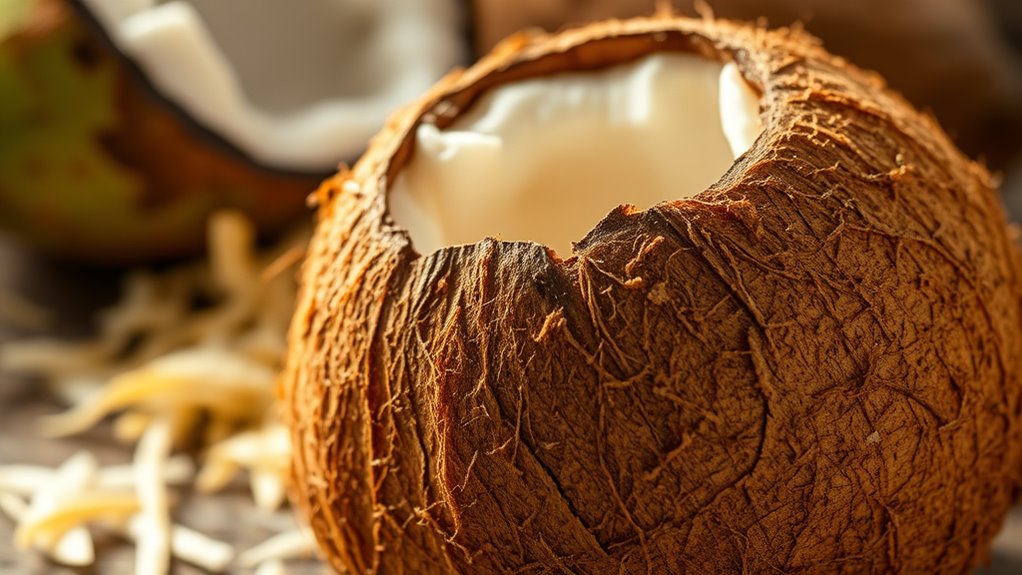
Have you ever wondered what makes dry coconut, or copra, such an essential product in the global economy? It’s more than just a dried version of fresh coconut; copra plays a vital role in various industries, from food to cosmetics. Beyond its economic importance, copra offers unique nutritional benefits and versatile culinary uses that make it stand out from fresh coconut. When you consider its nutritional profile, dried coconut provides a concentrated source of healthy fats, fiber, and essential minerals like iron, magnesium, and zinc. These nutrients support your overall health, boost your energy, and help maintain healthy skin and bones. Because copra is high in fat, it’s often used to produce coconut oil, which retains many of these nutritional benefits. Unlike fresh coconut, which has a high water content, copra’s concentrated form makes it easier to store for long periods without spoilage, ensuring its availability across different regions and climates.
In terms of culinary uses, copra lends itself to a wide range of applications that fresh coconut can’t easily match. When processed into coconut oil, it becomes a key ingredient in cooking, baking, and frying, thanks to its stable shelf life and high smoke point. You might use it to sauté vegetables, prepare curries, or bake cakes, where it adds a rich, tropical flavor. Additionally, shredded or desiccated copra is often ground into coconut flour, which serves as a gluten-free alternative in baked goods. Its intense flavor and texture also make it a popular topping for desserts and snacks. Because dried coconut is less perishable, it’s more practical for large-scale food manufacturing and export, allowing culinary traditions from different cultures to incorporate coconut flavor and nutrition into their dishes year-round.
Moreover, copra’s versatility extends beyond the kitchen. It’s used in producing cosmetics, soaps, and skincare products, capitalizing on its moisturizing properties. The process of drying and curing copra makes it a durable raw material, which is crucial for industries that rely on consistent, high-quality input. While fresh coconut is often consumed directly or used in salads and smoothies, copra’s strength lies in its ability to be processed into various forms that enhance both taste and functionality. As you can see, copra’s nutritional benefits and culinary uses make it a valuable commodity that bridges nutrition, industry, and culture—highlighting why it remains a cornerstone in the global coconut economy.
As an affiliate, we earn on qualifying purchases.
Frequently Asked Questions
How Long Does Dried Coconut Last Without Spoilage?
Dried coconut can last up to six months without spoilage if stored properly. To maximize storage duration and prevent spoilage, keep it in an airtight container in a cool, dark place. Avoid moisture and direct sunlight, which can cause mold or rancidity. Regularly check for signs of spoilage like off smell or discoloration. Proper storage guarantees you enjoy the flavor and quality of dried coconut for as long as possible.
What Are the Health Benefits of Copra Compared to Fresh Coconut?
You gain more saturated fats and calories from copra, which can boost energy, but it has fewer antioxidants compared to fresh coconut. Nutritional differences include lower vitamin content in copra because of processing. While fresh coconut offers more antioxidants and hydrating properties, copra provides a concentrated source of fats that may support skin health and energy. Be mindful of its higher fat content and processed nature when choosing between them.
Is Dried Coconut Suitable for All Dietary Restrictions?
Dry coconut is like a sturdy companion, but it might not suit everyone. You should consider your nutritional needs and allergen concerns, as copra can be high in fat and may contain traces of allergens. If you’re on a specific diet, check the label for additives or processing methods. While it fits many, those with nut allergies or specific health restrictions should consult a healthcare professional before including it.
How Is Copra Processed to Ensure Safety and Quality?
You process copra through careful methods like drying, deshelling, and sometimes bleaching to guarantee safety and quality. Your processing methods include proper drying to reduce moisture, controlling temperature, and using hygienic equipment. You also implement quality assurance checks throughout to prevent contamination and ensure the copra meets safety standards. This approach guarantees that the final product is safe for consumption and maintains high quality.
Can Dried Coconut Be Rehydrated for Culinary Uses?
Yes, you can rehydrate dried coconut for culinary uses. To do this, use rehydrating techniques like soaking the coconut in warm water for 15-30 minutes until it softens. Once rehydrated, you can incorporate it into various culinary applications such as baking, desserts, or curries. This method restores moisture, enhances flavor, and makes dried coconut more versatile in your recipes.
As an affiliate, we earn on qualifying purchases.
Conclusion
Think of dry coconut like a seasoned traveler—packed with unique flavors and qualities fresh coconuts simply can’t match. I once tried both on a tropical trip, and the copra’s rich, concentrated taste stuck with me, much like a memorable story. Just as a seasoned traveler offers new perspectives, dry coconut adds depth and versatility to your dishes, proving that sometimes, the journey—like drying—brings out the best in what you already have.
As an affiliate, we earn on qualifying purchases.
As an affiliate, we earn on qualifying purchases.
NFL season / tailgating Picks
team gear
As an affiliate, we earn on qualifying purchases.