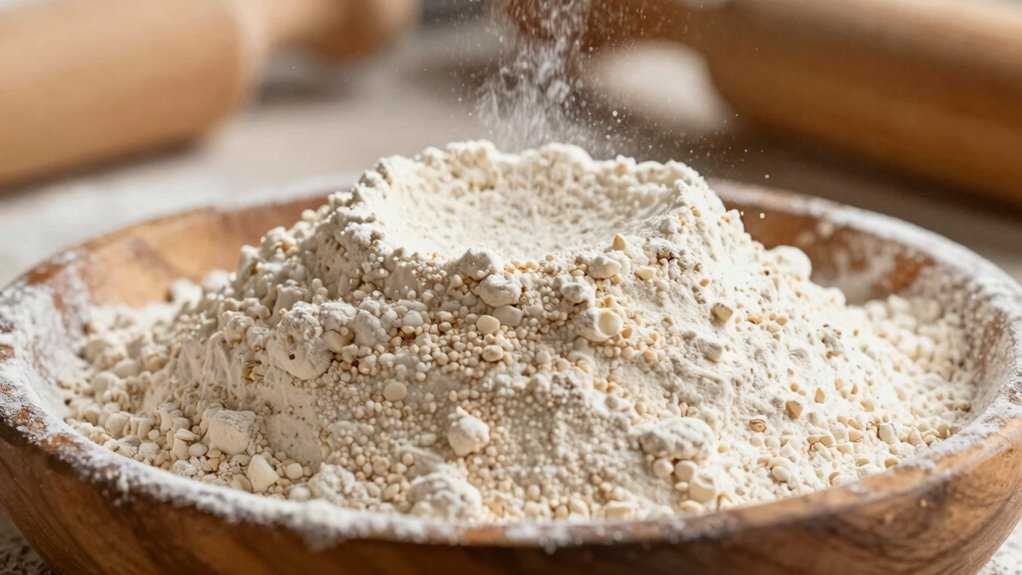

The type and quality of flour you choose greatly influence how your dough develops before baking. Higher-protein flours, like bread flour, create a stronger gluten network, making your dough more elastic and capable of rising well. Softer flours, like those for pastries, have less protein and produce tender textures. Water interacts with these proteins to form gluten, affecting dough flexibility and final structure. Want to know more about how to adjust your flour for perfect results? Keep going.

Get kitchen staples and gadgets delivered free — and shop member deals
- Fast, free delivery on millions of items
- Access to Prime Big Deal Days deals on October 6–7
- Prime Video, Amazon Music and more included
Key Takeaways
- Protein content determines gluten development capacity, affecting dough strength and elasticity.
- Higher protein flours create more resilient, chewy doughs suitable for bread.
- Lower protein flours produce tender, delicate doughs ideal for pastries and cakes.
- Water absorption varies with flour quality, influencing hydration and dough handling.
- Selecting the right flour based on protein level aligns with specific baking goals and final texture.

Have you ever wondered what sets high-quality flour apart from the rest? It all comes down to how the flour interacts with water and how it influences your dough’s structure. One key factor is gluten development, which determines how elastic and chewy your baked goods will be. When you start with a flour that has the right protein content, you’re giving yourself a better chance at achieving ideal gluten formation. Flour with higher protein levels, typically around 12-14%, is perfect for bread because it provides the necessary strength and stretch needed for a good rise. Conversely, softer flours with lower protein content are better suited for pastries and cakes, where tenderness is more important than elasticity.
Understanding protein content helps you select the right flour for your recipe, but it’s also about how that protein develops during mixing. Gluten forms when water interacts with the proteins gliadin and glutenin in the flour. As you knead or mix, these proteins bond and create a network that traps gas, giving your dough its structure. High-quality flour with a balanced protein profile encourages consistent gluten development, leading to doughs that are both resilient and extensible. If the flour has too little protein, your dough might lack the firmness needed to hold shape and rise properly. Too much protein can make the dough tough and difficult to work with, especially if it’s not handled carefully. Additionally, the protein content of flour influences how it behaves during baking, affecting final texture and rise. Recognizing the role of water in gluten formation is essential because it activates the proteins and influences the dough’s elasticity. Proper hydration of the flour is crucial for optimal gluten development and final dough quality. A thorough understanding of protein interactions can help bakers fine-tune their recipes for better results. Selecting the right flour involves understanding how protein interacts with water and how this impacts gluten formation.
The key is to choose flour that matches your baking goals. For bread, pick a flour with a higher protein content to ensure strong gluten formation. For delicate pastries, opt for softer flours with less protein, which will produce tender results. The quality of your flour impacts not only the final texture but also the ease of handling and shaping your dough. Good flour will develop gluten more predictably, allowing you to achieve consistent results with less effort. Remember, the initial quality of your flour sets the foundation for your entire baking process, so understanding the role of gluten development and protein content helps you make smarter choices right from the start. When you start with the right flour, you’re already a step closer to perfect dough and delicious baked goods.
As an affiliate, we earn on qualifying purchases.
Frequently Asked Questions
How Does Flour Freshness Affect Dough Quality?
Fresh flour greatly boosts dough quality by enhancing flavor and extending shelf life. When you use fresh flour, your dough develops a better aroma and richer taste, making your baked goods more appealing. Plus, it stays fresh longer, reducing spoilage risks. Using fresh flour guarantees consistent results, improves texture, and delivers that satisfying flavor enhancement you want in every bake. Always prioritize fresh flour for the best baking outcomes.
What Are the Best Flour Types for Different Baked Goods?
You’ll be amazed how choosing the right flour transforms your baked goods! For bread, go with high-gluten or bread flour for extra rise and chewiness; for delicate cakes, cake flour creates a melt-in-your-mouth texture. Need alternative grain or gluten-free options? Almond or rice flour work wonders, making your treats just as delicious. Each flour type opens up new possibilities, turning simple baking into an extraordinary culinary adventure!
Can Flour Storage Impact Dough Performance?
Yes, flour storage impacts dough performance. Proper storage techniques preserve flavor and prevent moisture or pests from affecting your flour. Keep flour in an airtight container in a cool, dry place away from sunlight. This maintains its freshness, guarantees consistent gluten quality, and improves dough handling. When you store flour correctly, you’ll notice better rise, texture, and overall flavor in your baked goods.
How Does Gluten Development Vary With Flour Choice?
Your choice of flour can make gluten development feel like a wild rollercoaster. Higher protein content flours build a stronger gluten network, giving your dough elasticity and structure, while lower protein flours produce a more delicate gluten. As you mix, the protein bonds form and strengthen, affecting rise and chewiness. So, selecting the right flour directly influences how well your dough develops gluten, impacting texture and overall baking success.
Are There Health Benefits to Specific Flour Blends?
Yes, certain flour blends offer health benefits. Higher gluten content provides better structure and may aid digestion for some, while blends with diverse grain origins, like whole wheat or ancient grains, boost fiber and nutrient intake. By choosing flours with specific grain origins, you can enhance antioxidants and promote gut health. Tailoring your flour blend allows you to enjoy tasty, nutritious baked goods suited to your dietary needs.
pastry flour for tender baked goods
As an affiliate, we earn on qualifying purchases.
As an affiliate, we earn on qualifying purchases.
Conclusion
Now that you understand how different flours shape your dough, you’re ready to craft your perfect bake. Picture each batch as a blank canvas, where your choice of flour paints a unique texture and flavor, transforming simple ingredients into something extraordinary. With this knowledge, you can experiment freely, watching your dough come alive under your hands like a living work of art. So, embrace the flour difference — your next delicious creation awaits.
As an affiliate, we earn on qualifying purchases.
As an affiliate, we earn on qualifying purchases.
Fall Picks
fall essentials
As an affiliate, we earn on qualifying purchases.