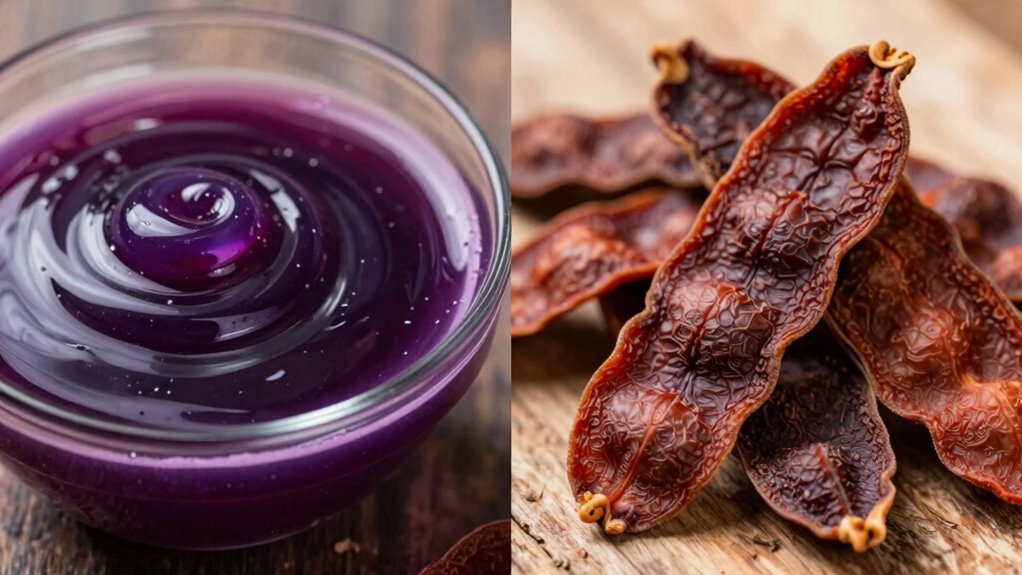

Kokum rind and kokum syrup serve different culinary purposes. The dried rind adds a tangy flavor to dishes like curries and rice, traditional in regions like Maharashtra and Goa. The syrup, on the other hand, is a sweet concentrate used in beverages, desserts, and mocktails for quick flavor enhancement. Both offer health benefits and cultural significance. To discover how each can elevate your recipes and well-being, explore further.

Get kitchen staples and gadgets delivered free — and shop member deals
- Fast, free delivery on millions of items
- Access to Prime Big Deal Days deals on October 6–7
- Prime Video, Amazon Music and more included
Key Takeaways
- Kokum rind is dried shell used in cooking, while syrup is a concentrated liquid for immediate use.
- Rind adds natural sourness to dishes; syrup enhances desserts and beverages easily.
- Rind is integral to regional traditional recipes; syrup is used during festivals and for quick flavoring.
- Rind offers medicinal benefits like digestion aid; syrup provides cooling effects in hot climates.
- Rind requires soaking or direct addition in cooking; syrup is prepared by concentrating kokum juice with sweeteners.
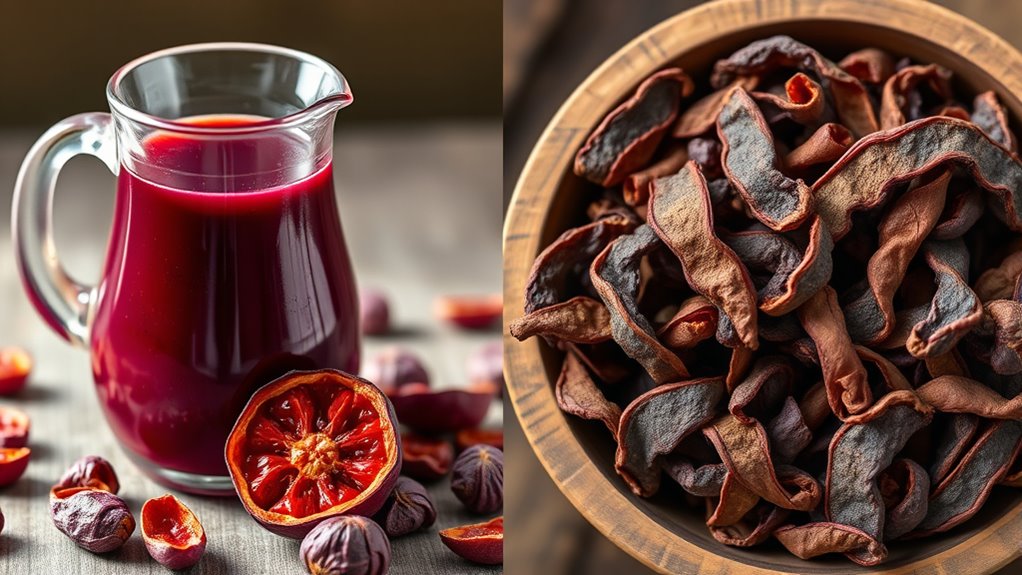
Ever wondered how kokum can be enjoyed in different forms? If you’re exploring this vibrant fruit, you’ll soon discover its remarkable culinary versatility and deep cultural significance. Kokum is more than just a tangy flavor; it’s a symbol of tradition and regional pride. Its uses span from traditional medicine to modern culinary applications, offering diverse ways to incorporate it into your diet. Two popular forms are kokum syrup and kokum rind, each serving distinct purposes and delivering unique experiences.
Kokum rind, the dried outer shell of the fruit, is highly valued for its intense flavor and health benefits. When you use kokum rind, you’re tapping into a tradition that has been part of local cultures for generations. It holds cultural significance, especially in regions like Maharashtra and Goa, where it’s a staple ingredient in many dishes. The rind’s tartness is harnessed in curries, fish preparations, and even beverages, adding a natural sourness that balances rich flavors. It’s often soaked in warm water to extract its essence, which then infuses dishes with a deep, tangy taste. The rind’s culinary versatility shines when it’s used as a marinade or added to rice and lentil dishes, giving them a distinctive regional character. Beyond flavor, kokum rind is believed to have medicinal properties, aiding digestion and providing antioxidants, making it an ingredient with both cultural and health significance.
On the other hand, kokum syrup offers a concentrated, sweet-tart liquid that’s incredibly adaptable. When you make kokum syrup, you’re creating a ready-to-use ingredient that can be drizzled over desserts, mixed into beverages, or used as a flavor enhancer in various recipes. Its smooth texture and balanced flavor profile make it ideal for creating invigorating drinks like kokum sherbet or adding a splash to cocktails and mocktails. The syrup’s culinary versatility allows you to experiment with both sweet and savory dishes, making it a favorite in modern kitchens. Culturally, kokum syrup is cherished during festivals and special occasions, symbolizing hospitality and tradition. It’s also appreciated for its cooling properties in hot climates, providing relief from the heat while nourishing the body.
As an affiliate, we earn on qualifying purchases.
Frequently Asked Questions
Can Kokum Syrup Be Used as a Natural Food Coloring?
Yes, you can use kokum syrup as a natural food coloring, especially in vibrant culinary applications. Its deep reddish-purple hue adds color and a subtle tang to dishes, desserts, and beverages. Unlike synthetic dyes, kokum syrup provides a natural, health-friendly alternative. Just a small amount can enhance visual appeal and flavor, making it perfect for those seeking colorful, natural food options without artificial ingredients.
How Long Does Kokum Syrup Stay Fresh Without Refrigeration?
You can expect kokum syrup to stay fresh for about 2 to 3 months without refrigeration if stored properly in an airtight container. To prevent spoilage, keep it in a cool, dark place away from direct sunlight. Regularly check for any signs of spoilage, like off smell or mold. Proper storage duration and spoilage prevention are key to enjoying its flavor and benefits safely over time.
Are There Any Health Risks Associated With Consuming Kokum Rind?
Did you know that consuming kokum rind in excess can lead to potential allergic reactions in about 1 in 100 people? While generally safe in small amounts, kokum rind toxicity is rare, but some may experience stomach upset or skin irritation. Always test a small quantity first and consult with a healthcare professional if you have allergies or sensitive skin. Moderation is key to avoiding health risks.
Is Kokum Syrup Suitable for People With Diabetes?
Kokum syrup can be suitable for people with diabetes if consumed in moderation, but you should watch your blood sugar levels closely. It contains natural sugars, so it’s important to take into account your dietary needs and how it fits into your overall blood sugar management plan. Always consult your healthcare provider before adding kokum syrup to your diet to ensure it aligns with your dietary considerations and health goals.
Can Leftover Kokum Rinds Be Reused for Other Recipes?
Sure, those leftover kokum rinds aren’t just good for throwing away! You can store them in your kitchen storage to reuse for flavor enhancement in soups, stews, or teas. It’s ironic how these rinds, often overlooked, can add a tangy twist again. Just dry them properly, and they’ll be ready for your next culinary adventure, giving your dishes a unique, aromatic punch without wasting a thing.
As an affiliate, we earn on qualifying purchases.
Conclusion
So, next time you’re tempted to toss that vibrant kokum rind, remember it’s not just a pretty face—it’s a flavor powerhouse. And if you’re craving the sweet nectar of tradition, kokum syrup’s your go-to. But hey, don’t get too excited—whether you choose the syrup or the rind, you’re still stuck with the same ancient secrets. Who knew that in the world of kokum, versatility can be so painfully obvious? Cheers to making your kitchen just a little more complicated!
As an affiliate, we earn on qualifying purchases.
As an affiliate, we earn on qualifying purchases.
NFL season / tailgating Picks
team gear
As an affiliate, we earn on qualifying purchases.