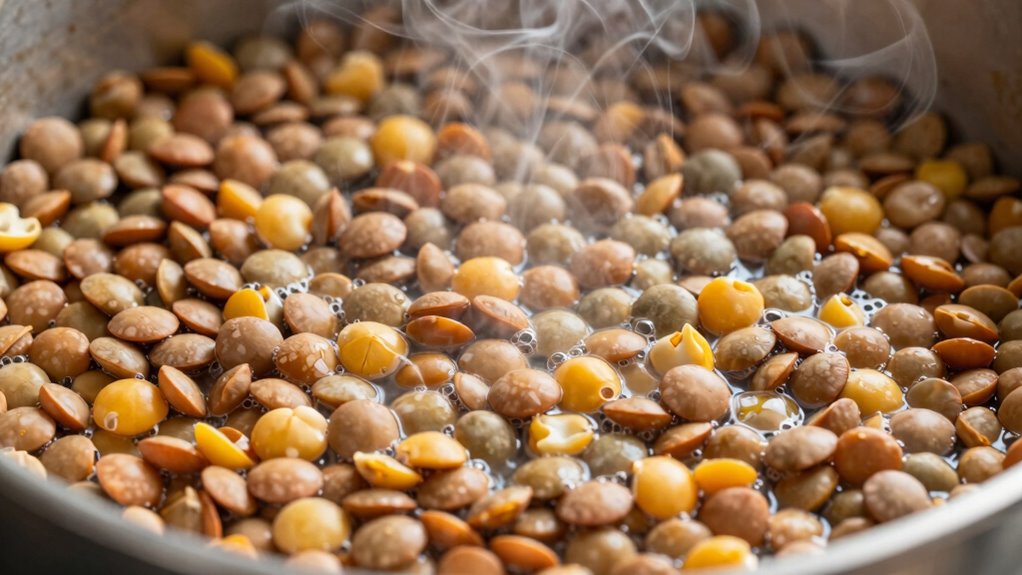

Lentils behave differently in the pot because each type has a unique structure and composition that affects how they absorb heat and soften. Red lentils break down quickly, making them ideal for purees, while green and brown lentils hold shape longer, perfect for salads and stews. Factors like soaking, cooking methods, and nutritional content also influence their response. Understanding these differences helps you cook them just right—continue exploring to reveal more helpful tips.

Get kitchen staples and gadgets delivered free — and shop member deals
- Fast, free delivery on millions of items
- Access to Prime Big Deal Days deals on October 6–7
- Prime Video, Amazon Music and more included
Key Takeaways
- Different lentil varieties have unique structures and compositions that influence their cooking behavior.
- Nutritional compounds like tannins and saponins affect flavor development and reaction to heat.
- Soaking reduces cooking time and alters how lentils absorb water and soften.
- Cooking methods (boiling, simmering, pressure) impact texture and how lentils respond to heat.
- Structural factors and anti-nutrients influence the rate of softening and nutrient availability during cooking.

Have you ever wondered why lentils have been a staple in kitchens around the world for centuries? It’s because they’re versatile, nutritious,, and easy to prepare, but they also behave differently in the pot depending on how you cook them. This variation stems from their unique structure and composition, which influences cooking times, textures,, and even flavor profiles. When exploring cooking variations, you’ll find that different types of lentils—such as green, brown, red, or black—each respond uniquely to heat and moisture. For example, red lentils tend to break down quickly, making them ideal for soups and purees, whereas green or brown lentils hold their shape longer, perfect for salads or hearty stews. These differences aren’t just about texture; they also impact how quickly they cook and how their flavors develop. Understanding these variations lets you tailor your cooking approach to achieve just the right consistency and taste, whether you’re aiming for a creamy dish or a firm bite. Additionally, nutritional differences among lentil varieties can influence how they behave during cooking, as some contain higher levels of antioxidants or other compounds that affect their reaction to heat. These nutritional nuances can influence how you prepare them because some varieties may require longer cooking to release their full nutritional potential or to soften adequately. Furthermore, compound content like tannins or saponins varies among types, affecting not only flavor but also how they interact with water and heat. As you experiment with different lentil varieties and cooking techniques, you’ll notice that soaking lentils beforehand can dramatically reduce cooking time and improve digestibility. Soaking can also activate enzymes that enhance nutrient absorption, making the nutrients more accessible to your body. Proper soaking can also help remove some of the anti-nutrients that might hinder mineral absorption. Additionally, knowing how different cooking methods—such as simmering, pressure cooking, or boiling—affect lentil texture can help you better control your dishes’ outcome. Whether you prefer them in a thick stew or a delicate salad, knowing how cooking variations and nutritional differences play into the behavior of lentils helps you achieve better results. It’s about understanding their nature, so you can manipulate their behavior in the pot to suit your dish, your taste, and your nutritional needs. With these insights, you’ll see lentils not just as a humble ingredient but as a versatile, adaptable staple that responds beautifully to your culinary touch.
As an affiliate, we earn on qualifying purchases.
Frequently Asked Questions
Do Different Lentil Varieties Require Different Cooking Times?
Yes, different lentil varieties require different cooking times. For example, red and yellow lentils cook faster, often in 15-20 minutes, while green and brown lentils take about 30-45 minutes. You should adjust your cooking times based on the variety you’re using to make sure they’re tender but not mushy. Keep an eye on them and taste-test periodically for perfect results.
How Does Altitude Affect Lentil Cooking?
At high altitudes, water boils at lower temperatures—around 90°C instead of 100°C at sea level—which greatly influences lentil cooking. The altitude influence means you need more time or higher cooking temperatures to soften lentils properly. Without adjustments, lentils may remain undercooked or take longer to reach desired tenderness. So, when cooking at higher elevations, expect longer cooking times and keep an eye on water levels to guarantee perfect results.
Can Adding Salt Before Cooking Alter Lentil Texture?
Adding salt before cooking can affect the cooking texture of lentils. Salt influences the lentils by tightening their skins, which can slow down water absorption and make them take longer to soften. If you want tender lentils, it’s better to add salt after they start to soften. This way, you avoid a tougher texture and guarantee they cook evenly, giving you perfect, fluffy lentils every time.
Do Age and Storage Conditions Impact Lentil Cooking Behavior?
You’ll notice that older lentils tend to cook unevenly because their seed coat hardens over time, affecting water absorption and cooking acidity. Studies show that aged lentils can take 20-30% longer to soften. Storage conditions like humidity and temperature further impact their behavior, making them tougher and requiring more water. To guarantee even cooking, use fresh lentils stored in cool, dry places, and adjust cooking time accordingly.
Why Do Some Lentils Stay Firm While Others Become Mushy?
Some lentils stay firm while others turn mushy because of differences in their lentil starches and cooking pH. Lentils with higher amylose content tend to hold their shape better. Additionally, a more alkaline cooking pH can cause lentils to become mushy faster by breaking down their starches. Adjusting cooking time and pH can help you achieve the desired texture, whether firm or soft.
As an affiliate, we earn on qualifying purchases.
Conclusion
Remember, patience is a virtue, especially when cooking lentils. Their behavior in the pot varies based on type, age, and cooking methods, so don’t be discouraged if they don’t turn out perfect every time. With a little practice and attention, you’ll master the art of cooking lentils just right. After all, Rome wasn’t built in a day, and neither is a perfect pot of lentils. Keep experimenting, and you’ll get there!
As an affiliate, we earn on qualifying purchases.
As an affiliate, we earn on qualifying purchases.
NFL season / tailgating Picks
team gear
As an affiliate, we earn on qualifying purchases.