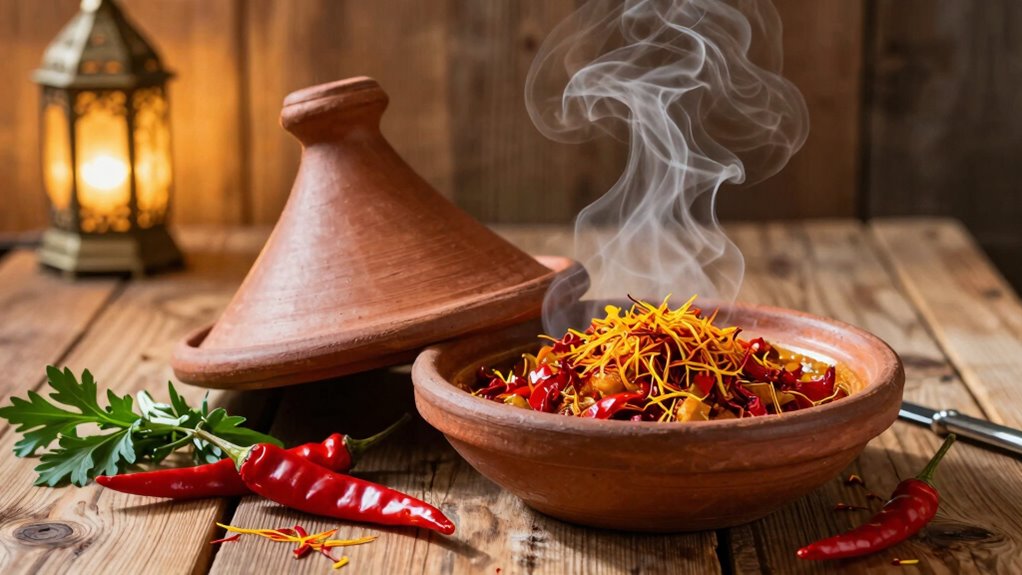

In North African cooking, spices do more than just add heat; they create layers of warmth that evoke comfort and hospitality. By blending traditional spices like cumin, turmeric, and harissa with modern ingredients like preserved lemons and fresh herbs, you can transform dishes into nurturing experiences. This cuisine balances respect for tradition with innovation, turning heat into a comforting glow that welcomes and delights. Keep exploring, and you’ll uncover how these spices turn flavor into a soulful warmth.
Key Takeaways
- North African spices are layered to create warmth and depth, transforming heat into comforting, inviting flavors.
- Traditional spice blends serve as a foundation for modern innovations that evoke a sense of hospitality and community.
- Incorporating ingredients like preserved lemons and fresh herbs enhances the warmth and complexity of dishes.
- Balancing traditional techniques with contemporary flavors elevates spice use from mere heat to a comforting experience.
- Spices in North African cuisine symbolize more than heat—they foster a sense of home, warmth, and culinary richness.
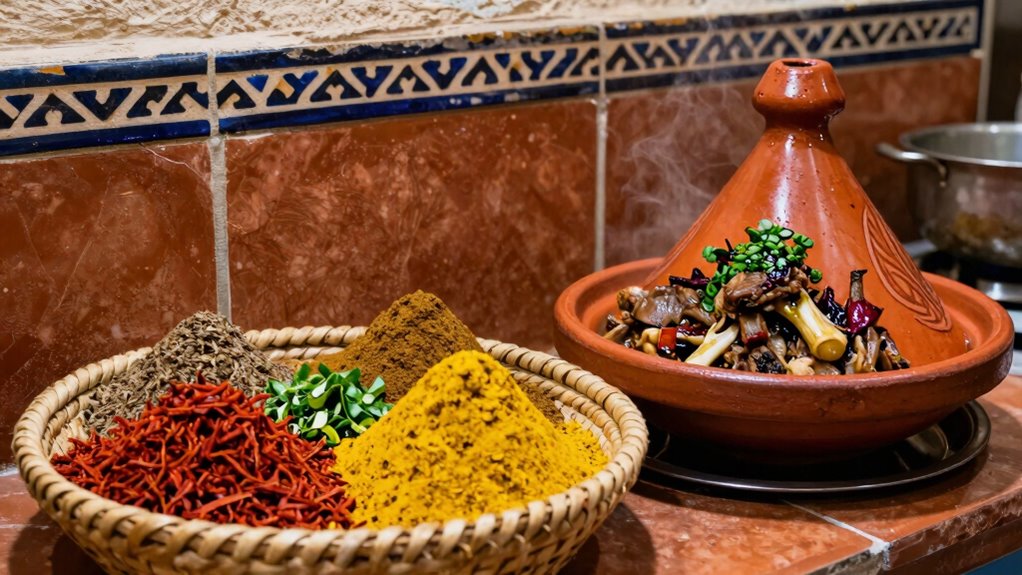
You might find yourself experimenting with these spices, exploring new combinations that bring fresh life to classic recipes. For example, a tagine might traditionally rely on a standard set of spices, but a modern twist could incorporate a dash of turmeric or harissa to add a subtle, contemporary flair. The goal isn’t just to add heat but to develop a layered warmth that fills your palate with comfort and complexity. It’s about transforming dishes into experiences—where each bite resonates with tradition but also surprises you with creative adaptations.
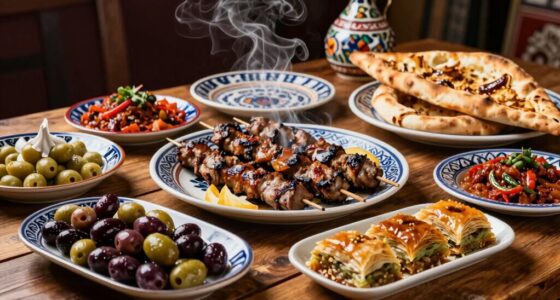
As you prepare North African dishes, you’ll realize that these traditional spices serve a purpose beyond flavor—they evoke feelings of hospitality and community. The aroma of spiced stews bubbling on the stove or fragrant grilled kebabs is enough to make anyone feel at home. Using these spices thoughtfully, you create warmth that’s inviting rather than overwhelming. Modern twists might involve infusing dishes with unexpected ingredients like preserved lemons or fresh herbs, turning a classic into something uniquely yours while still paying homage to the rich culinary history. Incorporating culinary innovation can also inspire new ways of combining ingredients and techniques.
What makes North African cooking so compelling is this balance between tradition and innovation. You don’t have to choose between respecting the old ways or experimenting with new flavors. Instead, you blend them, using traditional spices as your foundation and layering on modern twists to develop dishes that are both familiar and exciting. It’s a way of turning spice into warmth—not just heat—creating a culinary experience that’s as rich in history as it is in flavor. Embracing biodiversity in ingredients can also inspire new combinations and support sustainable practices. When you embrace this approach, you’ll see how North African cuisine invites you to explore, adapt, and celebrate the timeless magic of spices.
As an affiliate, we earn on qualifying purchases.
Frequently Asked Questions
What Are the Most Common Spices Used in North African Cuisine?
You’ll find cumin, coriander, paprika, and cinnamon among the most common spices in North African cuisine. These spices carry a rich spice trade history and are often showcased during culinary festival traditions. They add warmth and depth to dishes, transforming heat into comforting flavors. By using these spices, you connect with centuries of culinary heritage that celebrate bold, aromatic flavors central to North African cooking.
How Do North African Spices Vary Between Countries?
You’ll notice regional spice influences shape North African cuisines distinctly—Moroccan dishes often feature cinnamon and saffron, while Tunisian recipes emphasize chili and coriander. Cultural spice preservation keeps these traditions alive, with each country maintaining its unique blends passed down through generations. This variation reflects historical trade routes and local ingredients, enriching the culinary diversity across North Africa. So, your spice choices can tell a story of regional identity and cultural heritage.
Are There Health Benefits Associated With North African Spices?
You’ll find that North African spices offer more than flavor—they’ve got health benefits rooted in herbal medicine and culinary traditions. Imagine turmeric’s golden glow reducing inflammation, or cumin aiding digestion like an ancient remedy. These spices contain antioxidants and anti-inflammatory compounds, supporting your immune system and overall wellness. By embracing these traditions, you not only enjoy rich flavors but also tap into natural ways to boost your health every day.
How Is Spice Blending Traditionally Taught in North African Cultures?
In North African cultures, you learn spice blending through traditional mortar techniques and family recipe secrets. You’re often taught by elders, who demonstrate how to grind and combine spices with a mortar and pestle, emphasizing balance and intuition. This hands-on approach helps preserve authentic flavors and techniques passed down through generations, making each blend uniquely personal and deeply rooted in cultural tradition.
What Are Some Lesser-Known North African Spice Combinations?
You might stumble upon lesser-known North African spice combinations, like a regional spice fusion of cinnamon, cumin, and rose petals, or a blend inspired by ancient spice rituals including sumac, cardamom, and saffron. These unique mixes, often passed down through generations, create surprising depth and warmth in dishes. Exploring them reveals how history and tradition infuse every sprinkle, transforming simple ingredients into culinary treasures.
As an affiliate, we earn on qualifying purchases.
Conclusion
So, next time you savor a North African dish, remember it’s more than just fiery peppers; it’s about turning spice into warmth that wraps around your soul, much like a cozy hearth in an ancient castle. You might even feel like a modern-day explorer, discovering flavors that have traveled through time. Embrace the tradition, and let those spices remind you that sometimes, heat is just the beginning of a rich, heartfelt story—far beyond the medieval age.
As an affiliate, we earn on qualifying purchases.
As an affiliate, we earn on qualifying purchases.