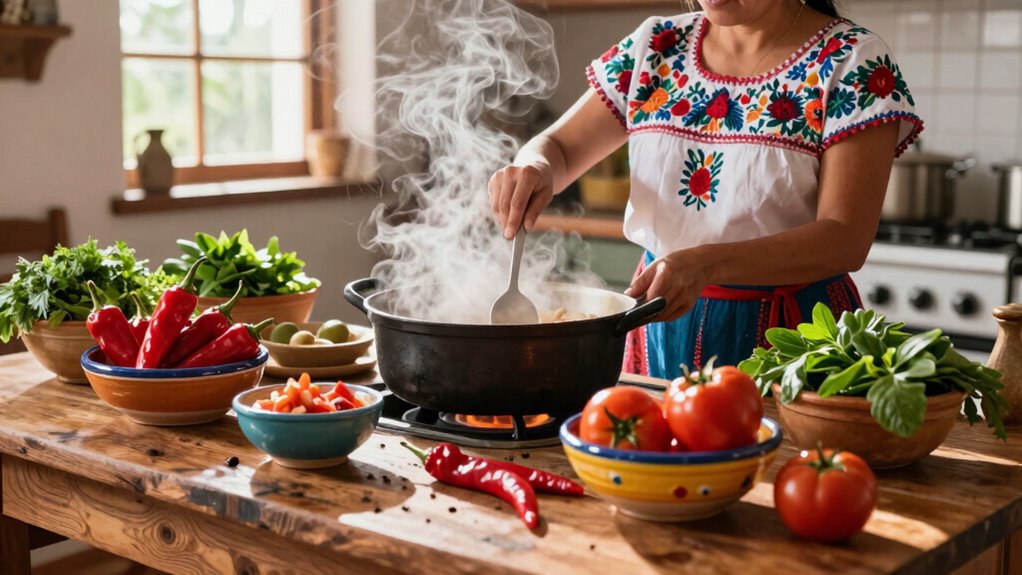

Mexican cooking is about much more than just heat; it’s built on authentic ingredients and traditional techniques that highlight natural flavors. You’ll find staples like corn, chilies, tomatoes, garlic, and herbs, prepared with methods like nixtamalization, slow roasting, and smoking to develop depth and complexity. Every dish reflects centuries of cultural history and craftsmanship. If you keep exploring, you’ll discover how these elements combine to create the rich, vibrant flavors that define Mexican cuisine.

Get kitchen staples and gadgets delivered free with Prime
- Fast, free delivery on millions of items
- Prime Video, Amazon Music and more included
- Member-only deals all year
Key Takeaways
- Authentic Mexican cuisine emphasizes fresh ingredients like corn, chilies, tomatoes, and herbs that enhance flavor beyond spiciness.
- Traditional techniques such as nixtamalization, slow roasting, and smoking develop depth and complexity in dishes.
- Flavor balance through toasting, grinding, and layering spices is central, not just heat.
- High-quality, authentic ingredients preserve cultural integrity and highlight natural flavors.
- Mexican cooking reflects centuries of tradition, artistry, and cultural history beyond just adding spice or heat.
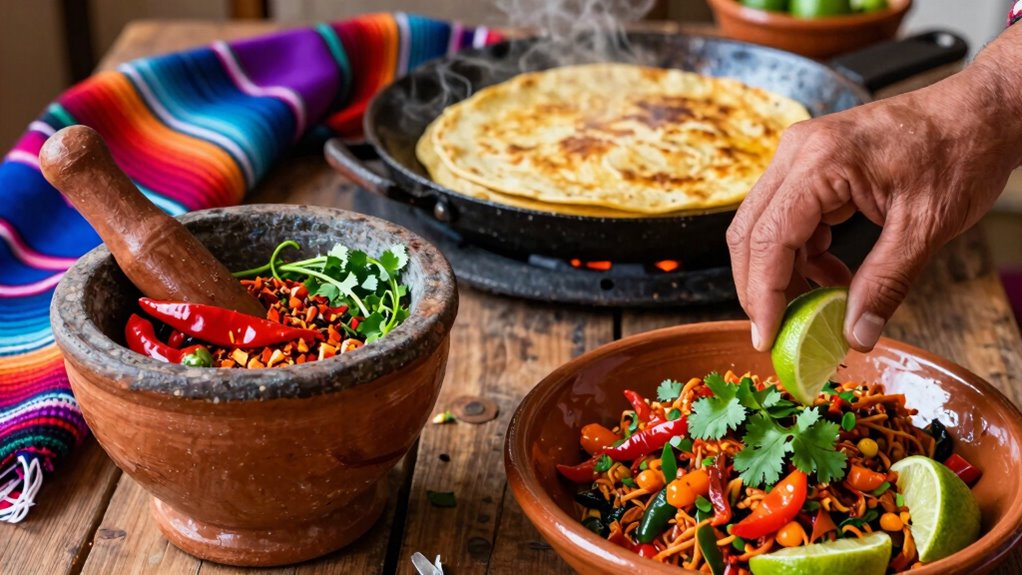
Mexican cooking is a vibrant and flavorful culinary tradition that combines bold spices, fresh ingredients, and time-honored techniques. When you immerse yourself in this cuisine, you’ll discover that its richness goes far beyond just heat. It’s rooted in a deep appreciation for traditional ingredients and a mastery of cooking techniques passed down through generations. These elements come together to create dishes that are as complex in flavor as they are comforting.
You’ll find that traditional ingredients form the backbone of Mexican cuisine. Corn, for example, isn’t just a side dish—it’s a fundamental staple used to make tortillas, tamales, and pozole. Fresh chilies, whether jalapeños or chipotles, add depth and flavor, not just spiciness. Tomatoes, garlic, onions, and herbs like cilantro and epazote bring freshness and brightness to every dish. These ingredients are often combined in simple yet extraordinary ways, highlighting their natural flavors without overwhelming them with heat.
Cooking techniques are equally essential. You might be surprised to learn that many classic dishes involve slow roasting or smoke curing, which deepen flavors and add complexity. For instance, the process of making adobo includes marinating meat in a blend of dried chilies, vinegar, and spices, then slow-cooking it to tender perfection. Sautéing or frying ingredients in hot oil often forms the base of salsas and sauces, allowing flavors to develop and meld. Grilling is another common technique, imparting smoky undertones to meats and vegetables alike.
Mexican cuisine also employs techniques like nixtamalization, where corn is soaked and cooked in lime water to make masa, the dough used for tortillas and tamales. This process not only enhances flavor but also improves nutritional value. Additionally, understanding the culinary techniques used in Mexican cooking helps appreciate the skill involved in creating complex flavors. For example, the layering of flavors in mole sauces involves toasting, grinding, and simmering a variety of ingredients—nuts, seeds, dried fruits, spices—using careful technique to balance sweetness, spice, and earthiness. Learning about the traditional methods can deepen your appreciation for the artistry behind each dish. Recognizing the importance of authentic ingredients highlights how crucial quality and tradition are in achieving true Mexican flavors. Moreover, exploring the cultural history behind these techniques reveals how Mexican cuisine has preserved its unique identity over centuries.
What makes Mexican cooking truly remarkable isn’t just its spices or heat, but its dedication to preserving authentic methods and ingredients. When you prepare Mexican dishes, you’re engaging with centuries of culinary tradition that emphasize harmony between ingredients and techniques. It’s this balance—more than just heat—that elevates Mexican food into a celebration of culture, history, and flavor.
Products Worth Considering

Breville Barista Pro Espresso Machine with Grinder, Brushed Stainless Steel

Le Creuset Signature Enameled Cast Iron Round Dutch Oven, 5.5 qt, Deep Teal

KitchenAid Artisan 5-Quart Tilt-Head Stand Mixer, Almond Cream
As an affiliate, we earn on qualifying purchases.
Frequently Asked Questions
What Are the Regional Differences in Mexican Cuisine?
You’ll notice regional differences in Mexican cuisine through chili varieties and corn preparations. In the Yucatán, you might find habanero peppers and dishes with maize-based tamales. In Oaxaca, mole sauces feature diverse chili varieties, and corn is often used for tlayudas. Each area combines local ingredients uniquely, showcasing distinct flavors and techniques that highlight their cultural heritage and climate, making Mexican cuisine wonderfully diverse beyond just heat.
How Do Traditional Mexican Ingredients Vary by Region?
You’ll notice that traditional Mexican ingredients vary greatly by region. For example, in the Yucatán, you’ll find regional fruit varieties like mamey and papaya, while Oaxaca is famous for its unique Mexican spice blends, such as mole. In the coastal areas, seafood dominates, whereas inland regions use more maize and beans. This regional diversity influences the flavors and ingredients used, making Mexican cuisine rich and varied across its different areas.
What Is the History Behind Key Mexican Dishes?
You discover that Mexican dishes develop through diverse histories and deep-rooted traditions. The story behind classics like mole, tacos, and tamales highlights centuries of culinary techniques and traditional cooking methods, blending indigenous ingredients with Spanish influences. These recipes evolved over generations, embodying cultural customs, community connections, and conservation of flavors. Understanding this history helps you appreciate how Mexican cuisine celebrates its rich, resilient, and revolutionary culinary heritage.
How Has Mexican Cuisine Influenced Global Food Culture?
Mexican cuisine has profoundly influenced global food culture through fusion cuisine and innovative techniques like molecular gastronomy. You can see its impact in dishes that blend traditional flavors with modern methods, creating exciting new experiences. Chefs worldwide incorporate Mexican ingredients and spices, elevating dishes and inspiring culinary creativity. This fusion approach celebrates Mexico’s rich culinary heritage while pushing boundaries, making Mexican food a dynamic force shaping international tastes and gastronomic trends.
What Are Common Misconceptions About Mexican Cooking?
You might think Mexican cooking is just fiery heat and spicy peppers, but that’s an exaggeration. The truth is, it’s a rich tapestry of authentic flavor and culinary diversity, with complex sauces, fresh ingredients, and regional specialties. Many believe it’s all about hot peppers, but Mexican cuisine’s depth includes subtle herbs, slow-cooked stews, and vibrant textures, proving it’s far more than just heat—it’s a celebration of culture and tradition.
Conclusion
So, next time you savor Mexican dishes, remember it’s about more than just heat—it’s about tradition, ingredients, and stories passed down through generations. You might wonder, can you truly appreciate the richness of Mexican cuisine without embracing its history and culture? Dive deeper, explore beyond the spice, and discover a world where flavor and heritage intertwine, creating a culinary experience that’s as meaningful as it is delicious.