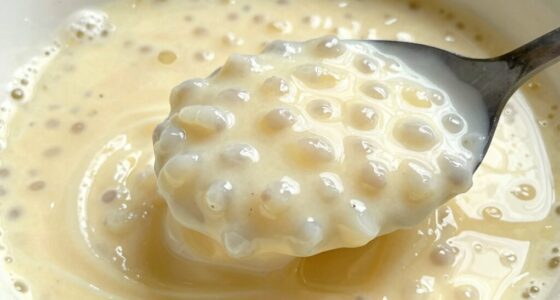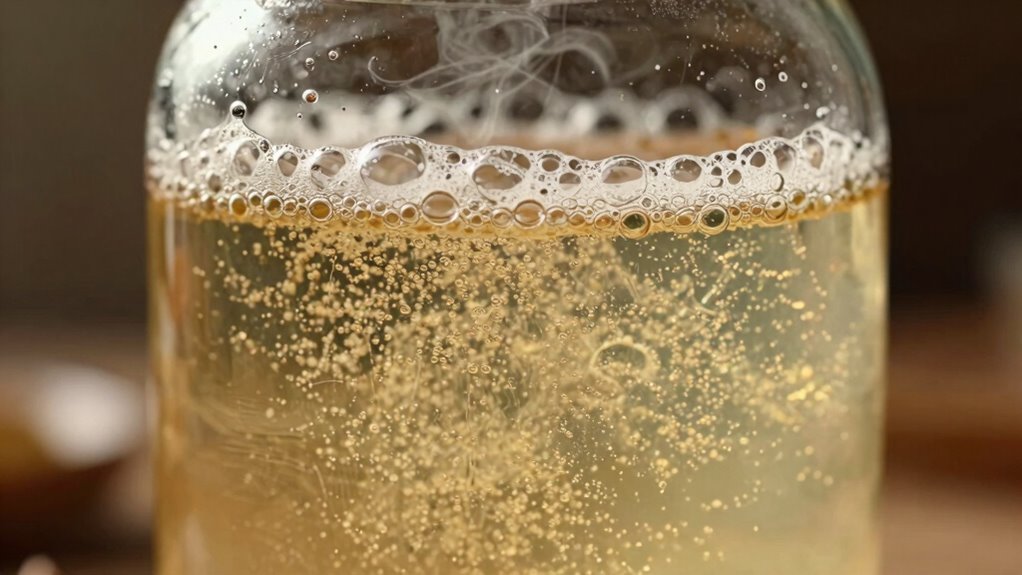

When you see bubbles in dough or fermenting drinks, you’re witnessing yeast activity, where it produces carbon dioxide (CO₂) as it eats sugars. These tiny gas bubbles get trapped, causing your baked goods to rise and become light, while in beverages, they create fizz. Temperature, ingredients, and gluten all affect how well these bubbles form and stay. Want to discover how to control and optimize this process? Keep going to find out more.

Get kitchen staples and gadgets delivered free with Prime
- Fast, free delivery on millions of items
- Prime Video, Amazon Music and more included
- Member-only deals all year
Key Takeaways
- Bubbles indicate active yeast fermentation, releasing CO₂ gas that causes dough and beverages to expand.
- Gas production and retention depend on gluten structure, temperature, pH, and ingredient interactions.
- Monitoring bubble size and distribution reveals fermentation progress and yeast activity.
- Proper bubble formation contributes to the lightness, texture, and carbonation of baked goods and drinks.
- Adjusting environmental factors enhances gas retention, improving fermentation efficiency and final product quality.
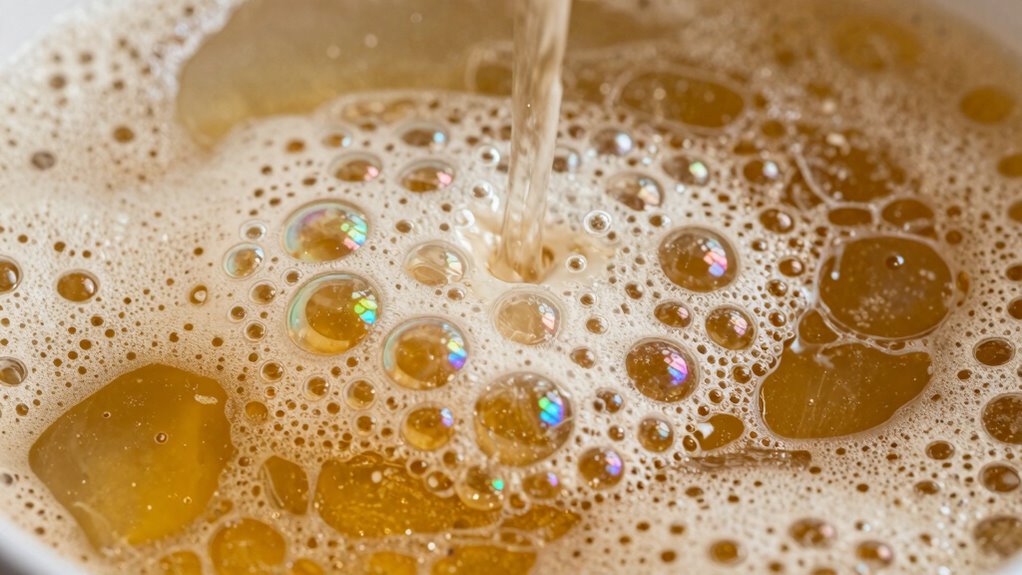
Bubbles formed during fermentation and leavening are vital indicators of the biological processes that create rise and texture in baked goods and fermented beverages. These bubbles are the visible signs of yeast activity at work, releasing gases as they consume sugars. When yeast ferments, it produces carbon dioxide, which gets trapped within the dough or liquid matrix, causing it to expand and develop a light, airy structure. Your ability to observe these bubbles can tell you a lot about how well your fermentation or leavening process is progressing. If you see a steady stream of tiny bubbles, it means yeast is actively converting sugars into gas, and your dough or mixture is on the right track. If bubbles are absent or slow to form, it might indicate that the yeast is inactive or the environment isn’t essential for activity, such as incorrect temperature or insufficient nutrients.
Bubbles indicate yeast activity; steady tiny bubbles mean good fermentation, while absence signals issues.
Gas retention is vital because it determines the final texture of your baked goods or fermented beverage. When gas is retained effectively within the dough or liquid, it results in a tender, fluffy crumb in bread or a bubbly, lively beverage. Factors like gluten development in bread help trap gas, creating those desirable bubbles that give your baked goods their structure. In fermenting beverages like beer or kombucha, the ability of the liquid to hold onto the CO2 influences carbonation levels. If your mixture fails to retain gas, you might end up with flat bread or a dull, less effervescent drink. Understanding how yeast activity impacts gas retention helps you control the entire process, from initial fermentation to final proofing or aging.
Monitoring the size and number of bubbles offers insight into the fermentation timeline. Smaller, evenly distributed bubbles typically signal a healthy, steady fermentation, while larger, irregular bubbles could suggest overactive yeast or uneven fermentation. Managing temperature, pH, and ingredients ensures consistent yeast activity and gas retention. For instance, maintaining the right temperature encourages yeast to produce a steady stream of CO2, leading to consistent bubble formation. Conversely, too high or too low temperatures can slow down or kill yeast, reducing gas production and affecting the rise and texture. Additionally, understanding the biological processes behind bubble formation can help troubleshoot common issues. Recognizing the gas retention capabilities of your dough or beverage enables you to make adjustments that optimize the final product. Properly controlling these factors not only improves your results but also deepens your understanding of the microbial activity involved in fermentation. Moreover, developing a keen sense of visual cues can help you anticipate and fine-tune your fermentation process more effectively.
In essence, bubbles are more than just visual cues—they’re a window into the microscopic activity that shapes your baked goods and drinks. Recognizing how yeast activity and gas retention work together helps you troubleshoot issues, refine your technique, and achieve better results. Whether you’re baking bread or brewing a beverage, keeping an eye on those bubbles will guide you toward a perfectly risen, flavorful end product. Additionally, understanding these processes can help you develop fermentation skills and better appreciate the science behind your culinary creations.
Products Worth Considering

Ninja Mega Kitchen System Blender and Food Processor, 1500W, 72-oz Pitcher, 8-Cup Bowl, Black (BL770)

Philips Café Aromis Automatic Espresso Machine with LatteGo Pro Milk System

Le Creuset Signature Deep Round Enameled Cast Iron Dutch Oven, 6.5 qt, Sea Salt
As an affiliate, we earn on qualifying purchases.
Frequently Asked Questions
How Do Bubbles Affect the Flavor of Fermented Foods?
Bubbles play a key role in flavor enhancement by releasing gases that influence fermentation, creating complex flavors. They also affect bubble stability, which determines how evenly flavors develop and how the texture feels in your mouth. When bubbles are stable, fermentation proceeds smoothly, resulting in balanced, richer flavors. Conversely, unstable bubbles can cause off-flavors or inconsistent textures, so controlling bubble stability is essential for achieving delicious, well-rounded fermented foods.
Can Bubble Size Indicate Fermentation Progress?
Think of bubbles as tiny messengers signaling your fermentation’s progress. Larger bubbles often indicate active fermentation, serving as reliable fermentation indicators, while smaller, steady bubbles suggest a slowing process. By measuring bubble size, you get a visual cue of fermentation stages. Regular bubble measurement helps you gauge when your ferment is ready, ensuring ideal flavor and texture. So, yes, bubble size can indeed reveal how far along your fermentation journey has come.
What Causes Uneven Bubble Distribution in Baked Goods?
Uneven bubble distribution in baked goods happens when gas entrapment isn’t uniform, often due to inconsistent dough mixing or uneven fermentation. Poor bubble stability can cause some bubbles to collapse or grow unevenly, leading to irregular textures. Additionally, temperature variations or improper kneading can create areas where bubbles are either too large or too small, resulting in an uneven crumb structure. Ensuring consistent mixing and proper fermentation promotes even bubble distribution.
Are There Health Risks Associated With Excessive Fermentation Bubbles?
Excessive fermentation bubbles generally don’t pose health risks if proper fermentation safety measures are followed. However, over-fermentation can lead to bubble contamination with harmful bacteria or mold, which could cause foodborne illnesses. To stay safe, make certain your fermentation process uses clean utensils, correct temperatures, and proper ingredients. Monitoring bubbles and smell helps prevent issues, so you can enjoy your fermented foods without health concerns.
How Do Temperature Changes Influence Bubble Formation During Fermentation?
Temperature changes can considerably influence bubble formation during fermentation. When it’s warm, yeast activity speeds up, rapidly breaking down sugar and producing more bubbles, creating a lively, frothy scene. Conversely, cooler temperatures slow down yeast activity, leading to fewer bubbles and a calmer fermentation process. You notice this contrast as the environment shifts—warmth sparks vigorous bubbles, while cold quiets the activity, shaping the fermentation’s energy and appearance.
Conclusion
So, next time you enjoy that perfectly risen bread or fizzy soda, remember the tiny bubbles working behind the scenes. It’s ironic how these microscopic bubbles, born from simple fermentation, craft delightful textures and flavors we crave. Without them, your baked goods and beverages would be flat and dull. It’s a bubble story, after all—tiny, overlooked, but essential. Sometimes, the smallest things truly make the biggest difference, don’t they?