Food can stick to your pan even with oil because proper heating and surface preparation are key. If your pan isn’t hot enough before adding food, proteins and sugars bond more easily, causing sticking. Damage or rust from poor cleaning also roughens the surface, making sticking worse. Regular seasoning and preheating create a natural non-stick layer. If you want to discover how to fix this problem and cook smoothly, keep exploring these tips and techniques.

Get kitchen staples and gadgets delivered free — and shop member deals
- Fast, free delivery on millions of items
- Access to Prime Big Deal Days deals on October 6–7
- Prime Video, Amazon Music and more included
Key Takeaways
- The pan may not be properly preheated, causing food to bond and stick during cooking.
- Insufficient or uneven oil coating prevents forming a smooth, non-stick surface.
- The pan’s surface might be damaged or rusted, reducing its non-stick effectiveness.
- Food sticking can occur if the pan isn’t heated enough before adding ingredients.
- Inadequate or improper cleaning and seasoning degrade the pan’s natural non-stick properties over time.
As an affiliate, we earn on qualifying purchases.
Why Does Food Stick to My Pan? The Science Explained

Have you ever wondered why food often sticks to your pan even when you’re careful? It all comes down to the science behind how pans heat and interact with food. When you season cast iron, you create a natural non-stick surface by polymerizing oil onto the metal, which helps prevent sticking. Stainless steel tips reveal that food sticks when the pan isn’t hot enough, causing proteins and sugars to bond to the surface. Proper heating promotes a process called “Maillard reaction,” which releases food from the pan. Food sticks because the surface isn’t properly prepared or heated, making it more likely to adhere. Understanding these principles helps you choose the right tools and techniques to minimize sticking and improve your cooking results. Additionally, pan materials play a crucial role in how well food releases during cooking. Using the appropriate cooking surface can greatly enhance non-stick performance and reduce frustration.
As an affiliate, we earn on qualifying purchases.
How to Prevent Food From Sticking: Easy Tips for Better Results

To prevent food from sticking, you need to focus on proper pan preparation and cooking techniques. Start with a well-seasoned pan to create a natural non-stick surface. Ensure the oil is evenly distributed across the entire cooking surface to prevent hotspots. Use enough oil to coat the bottom, but not so much that it pools. Preheat the pan before adding food; this helps seal the surface and reduces sticking. Maintain steady heat during cooking to avoid sudden temperature drops. Here’s a quick guide:
| Tip | Why it helps |
|---|---|
| Seasoned pans | Develop a natural non-stick layer |
| Proper oil distribution | Prevents uneven sticking and burning |
| Preheating the pan | Seals surface and improves release |
| Controlled heat | Keeps food from sticking or burning |
Additionally, using the right type of cookware, such as non-stick pans, can further minimize sticking issues and make cooking easier. Proper pan maintenance also plays a key role in keeping food from sticking over time. Regular cleaning and avoiding metal utensils help preserve the seasoning and non-stick qualities of your cookware.
stainless steel pan preheating thermometer
As an affiliate, we earn on qualifying purchases.
As an affiliate, we earn on qualifying purchases.
How Pan Material Affects Food Release and Non-Stick Cooking

The type of pan you choose plays an essential role in how easily food releases during cooking. Different pan materials, like stainless steel, cast iron, or non-stick aluminum, influence food’s ability to slide off. For example, non-stick surface coatings, such as Teflon, create a smooth barrier that prevents food from sticking, making cleanup easier. Cast iron pans develop a natural non-stick patina if properly seasoned, offering reliable release over time. Stainless steel pans, however, rely on proper heating and oil application, since they lack a surface coating designed for non-stick performance. Your choice of pan material impacts heat distribution and the effectiveness of non-stick surfaces, ultimately affecting how well your food releases during cooking. Proper pan maintenance can also improve non-stick performance and extend the lifespan of your cookware. Additionally, understanding nanotechnology advancements has led to the development of innovative cookware surfaces that enhance non-stick properties and durability. Innovative coating technologies are now being integrated into cookware to further improve food release and longevity. Furthermore, the development of advanced materials allows for even better non-stick performance along with increased resistance to wear and tear. Some of these new materials incorporate superhydrophobic surfaces, which repel water and reduce food sticking even further.
As an affiliate, we earn on qualifying purchases.
The Importance of Preheating and Using the Right Oil
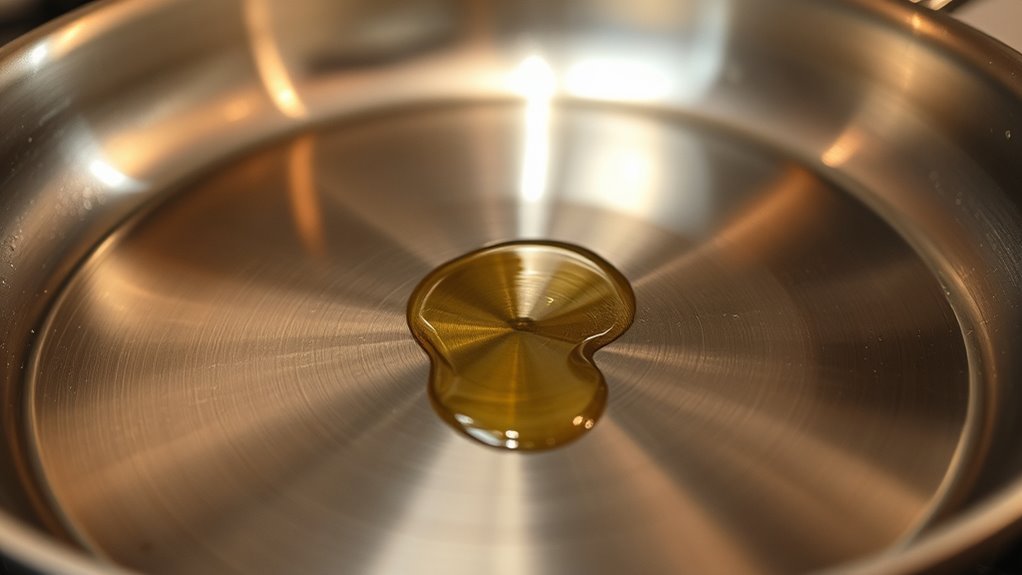
Preheating your pan guarantees a proper non-stick surface and even cooking. Choosing an oil with the right smoke point helps prevent sticking and smoke. Keeping the heat steady allows your food to release easily without burning or sticking. Additionally, understanding heat distribution in your cookware can make a significant difference in how food behaves during cooking, especially with modern smart cookware] that enhances temperature control.
Properly Preheat Pan
Ever wonder why your food sticks even when you’re sure you’ve oiled the pan? Properly preheating the pan is key. When you preheat correctly, the surface becomes hot enough to create a natural non-stick effect, making it easier to season pans over time. This step also helps you choose the right oil—one with a suitable smoke point—to prevent burning and sticking. Avoid rushing this process; add oil only after the pan is evenly heated. Once the oil shimmers, it’s ready for your ingredients. Proper preheating ensures the oil bonds well with the pan’s surface, enhancing its non-stick qualities. Being aware of Free Floating principles in cookware can also influence how your pan performs over time. Taking this step seriously reduces sticking and improves your overall cooking results. Additionally, understanding the industrial manufacturing process can help you select higher-quality pans that maintain their non-stick properties longer.
Choose Smoke-Point Oil
Choosing the right oil with a suitable smoke point is essential for preventing food from sticking and ensuring your pan heats evenly. When selecting an oil, consider its smoke point—the temperature at which it starts to smoke and break down. Using oil with a low smoke point can cause burning and sticking, even if you preheat properly. Understanding smoke point helps you select oils that withstand higher temperatures without degrading. Higher smoke point oils are especially important for high-heat cooking, which can help prevent sticking and burning. Proper pan preheating and selecting the correct cooking temperature also play crucial roles in creating a non-stick surface and ensuring even cooking. Using the appropriate oil type based on its smoke point can further enhance your results by reducing the chances of food sticking to the pan.
Maintain Consistent Heat
Maintaining a consistent heat during cooking is essential for preventing food from sticking to your pan. When the heat fluctuates, the oil may not distribute evenly, leading to uneven cooking and sticking. Preheating your pan properly helps achieve better heat consistency, ensuring the surface is hot enough before adding oil. Using the right amount of oil and spreading it evenly across the pan’s surface promotes uniform oil distribution. This creates a barrier that helps food release easily and reduces sticking. Avoid turning the heat too high or too low, as drastic temperature changes can cause the oil to smoke or form a barrier that traps food. Consistent heat and proper oil distribution are key to perfectly cooked, stick-free meals. Additionally, understanding the science of heat transfer can help you better control your cooking process. Heat conduction, for example, explains how heat moves through your cookware and impacts cooking results, emphasizing the importance of maintaining stable temperatures.
Common Mistakes That Make Food Stick, Even With Oil
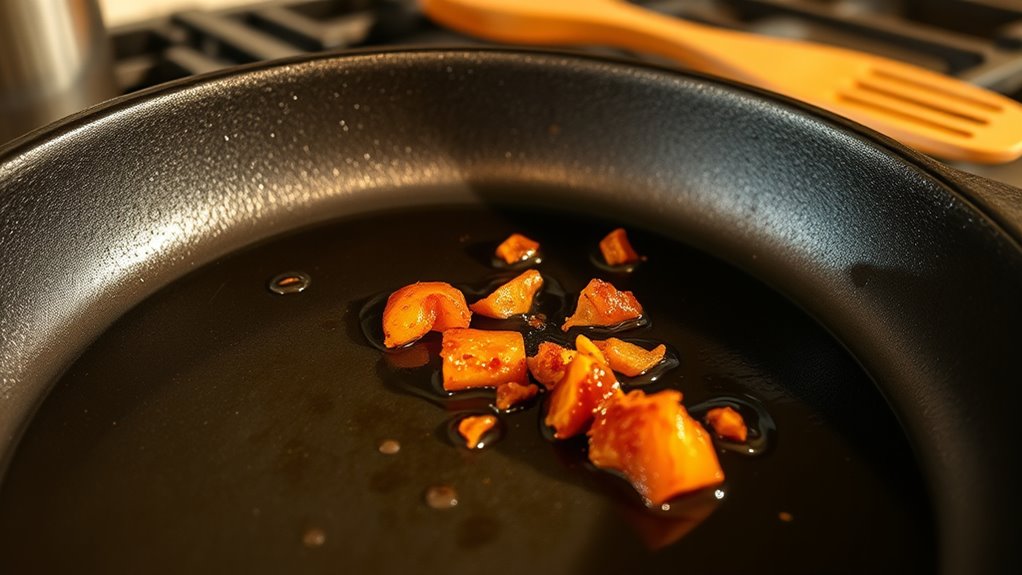
Even when you use oil, certain mistakes can cause food to stick to the pan. One common error is neglecting proper seasoning techniques; a well-seasoned pan creates a natural non-stick surface, reducing sticking. Using cold oil and adding food too soon can also lead to sticking, even with oil present. Additionally, poor cleaning habits can leave residue or rust, which makes sticking more likely. If you don’t thoroughly clean and re-season your pan regularly, it loses its non-stick properties. Also, applying too little oil or not heating the pan enough before adding food increases sticking risk. Proper pan seasoning is essential for maintaining a stick-resistant surface and preventing food from sticking. Regularly maintaining cookware by proper cleaning and seasoning helps preserve its non-stick qualities. Ensure you preheat the pan properly before adding ingredients, as this step is crucial for creating a stick-resistant cooking surface, which is essential for successful baking and frying.
Tips for Cooking Different Foods Without Sticking

To prevent food from sticking, start with a properly prepared pan by heating it thoroughly before adding oil. Use correct cooking techniques, like avoiding overcrowding and adjusting heat levels, to keep food from sticking. Paying attention to pan prep and your methods makes all the difference in achieving a smooth, non-stick cooking experience.
Proper Pan Preparation
Proper pan preparation is essential to prevent food from sticking and guarantee even cooking. Start with seasoning techniques by lightly coating your pans with oil and heating them before adding ingredients. This creates a natural non-stick surface, especially with cast iron or carbon steel pans. Additionally, proper pan storage is key—avoid stacking pans directly on each other, which can damage their coating or surface. Instead, store them with separators or hanging racks to keep their surfaces smooth and ready for use. Always verify your pan is clean and dry before cooking to prevent sticking caused by residual moisture or food particles. These simple steps make a significant difference, helping you cook different foods without them sticking, and prolonging your cookware’s lifespan.
Correct Cooking Techniques
When cooking different foods, applying the right techniques can make a big difference in preventing sticking. Always verify your pan’s surface is properly seasoned or use high-quality non-stick coatings. Preheat the pan before adding oil or food, as this helps create a barrier that minimizes sticking. Avoid overcrowding the pan, which can lower the temperature and cause food to stick. Use enough oil or fat to coat the surface evenly; this creates a smooth, non-stick environment. When cooking delicate items like fish or eggs, cook at medium or lower heat to prevent sticking and preserve the non-stick surface. With seasoned surfaces or non-stick coatings, gentle flipping and patience prevent tearing or sticking, giving you clean releases and better results every time.
Choosing the Best Pan for Non-Stick Cooking

Are you choosing the right pan to prevent food from sticking? The best options often feature quality non-stick coatings that reduce the need for excess oil. Cast iron pans can be versatile but require proper seasoning to achieve non-stick performance. When selecting a pan, consider its material and coating.
| Pan Type | Best Use |
|---|---|
| Non-stick coated | Ideal for delicate foods like eggs and pancakes |
| Cast iron | Great for searing and browning, needs seasoning |
| Stainless steel | Suitable for high-heat cooking, less non-stick |
Choosing the right pan depends on your cooking style and maintenance preferences. A good non-stick coating or well-seasoned cast iron can make sticking issues a thing of the past.
Troubleshooting Sticking Problems and Fixing Your Pans

Even with the best pan choices, food can still stick if the surface isn’t maintained properly or if cooking techniques aren’t followed. To troubleshoot sticking problems, start by reviewing your seasoning techniques; reseason your pan if the surface looks dull or rough. Proper cleaning methods are vital—avoid harsh abrasives that damage the surface. Instead, use gentle scrubbing with warm water and a soft sponge, then dry thoroughly to prevent rust. If sticking persists, consider reapplying a thin layer of oil and heating the pan to restore its non-stick properties. Regular maintenance ensures the surface remains smooth and effective, making your cooking experience easier and more enjoyable. Fixing your pans with proper seasoning and cleaning guarantees better results every time.
Frequently Asked Questions
Can Dishwasher Cleaning Damage Non-Stick Coatings?
Dishwasher exposure can damage non-stick coatings over time, leading to coating erosion. The high heat and harsh detergents in dishwashers may weaken the coating, causing it to peel or deteriorate. To protect your non-stick pans, avoid putting them in the dishwasher unless the manufacturer explicitly states they’re dishwasher safe. Hand washing with gentle sponges helps prolong the life of your non-stick coatings and keeps them performing well.
Does Cooking at High Heat Ruin Non-Stick Surfaces?
Cooking at high heat can ruin non-stick surfaces because it accelerates pan scratches and coating degradation. When you crank up the heat, the coating’s bond weakens, causing it to peel or flake off. Over time, this damage reduces non-stick effectiveness, making food stick even more. To preserve your pan, avoid high temperatures and use gentle heat, protecting the coating from unnecessary wear and tear.
Are Ceramic Pans Truly Non-Stick or Just Marketing?
You might think ceramic pans are miracle non-stick tools, but the truth is, ceramic durability varies and they often fall prey to non-stick myths. While they do offer decent non-stick performance initially, over time, their surfaces can wear down, causing food to stick. So, ceramic pans aren’t entirely non-stick—just marketing hype. Proper care and understanding their limits help you get the most out of these pans without false expectations.
How Often Should I Replace My Non-Stick Pan?
You should replace your non-stick pan every 3 to 5 years, depending on pan deterioration and coating longevity. Keep an eye out for scratched or peeling coating, which signals it’s time for a new one. Regular use and cleaning can impact how long the coating lasts, so avoid metal utensils and abrasive cleaners. When the non-stick surface no longer performs well or shows damage, it’s best to upgrade for safety and ideal cooking results.
Can Seasoning or Oil Treatments Improve Non-Stick Performance?
Seasoning techniques and proper oil application can definitely improve your non-stick pan’s performance. Regularly applying a thin layer of oil and heating it helps build a natural non-stick surface over time. Make sure to season your pan after cleaning, using the right oils like flaxseed or vegetable oil, and heat it until it smokes slightly. This process creates a durable, non-stick coating that minimizes food sticking and prolongs your pan’s lifespan.
Conclusion
Mastering your pan’s potential prevents persistent sticking and promotes perfect plates. By paying attention to preheating, choosing the right oil, and practicing proper pan care, you’ll prevent problems and promote pristine results. Remember, patience and preparation pave the path to flawless food. With consistent care, your cooking can become a simple, satisfying skill. Stay attentive, tweak techniques, and trust your tools—your culinary journey will be smooth, successful, and satisfying every single time.
Halloween Picks
halloween
As an affiliate, we earn on qualifying purchases.