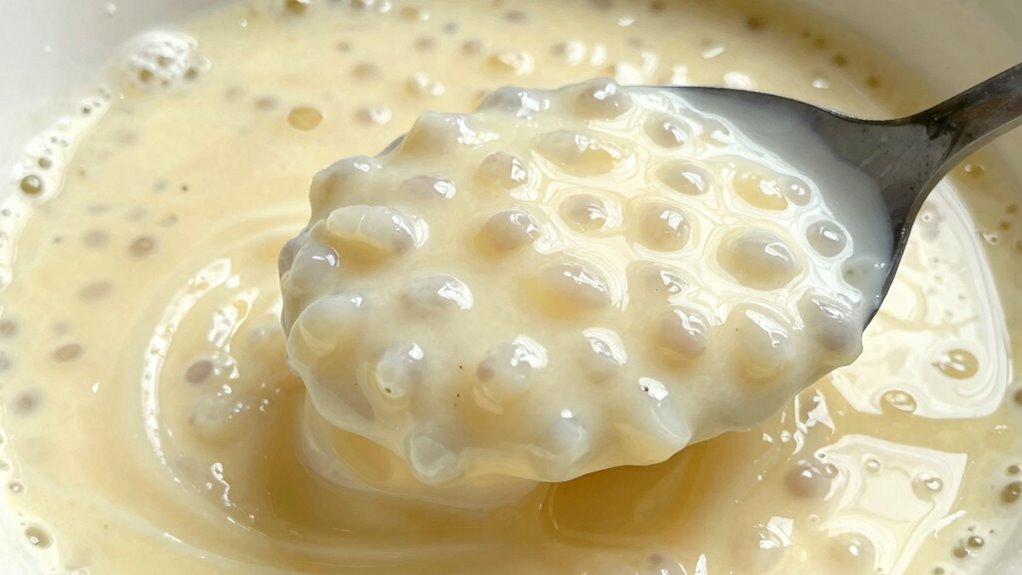

Starch gelatinization happens when you heat starch granules, causing them to absorb water and swell. As temperature rises, the hydrogen bonds within the granules break, leading to rupture and release of amylose, which thickens your mixture. This process creates a smooth, creamy texture essential for sauces and desserts. Controlling heat and time helps you achieve the perfect consistency. Keep exploring to discover how understanding this science can elevate your cooking results.

Get kitchen staples and gadgets delivered free — and shop member deals
- Fast, free delivery on millions of items
- Access to Prime Big Deal Days deals on October 6–7
- Prime Video, Amazon Music and more included
Key Takeaways
- Gelatinization involves water absorption and swelling of starch granules, leading to thickening and creaminess.
- Heating disrupts hydrogen bonds in starch, causing granules to rupture and release amylose into the surrounding liquid.
- The molecular changes during gelatinization increase viscosity, creating a tender and cohesive texture.
- The type of starch, temperature, and cooking time influence the extent of gelatinization and final dish consistency.
- Proper control of heat prevents over- or under-gelatinization, ensuring a smooth, velvety, and tender result.
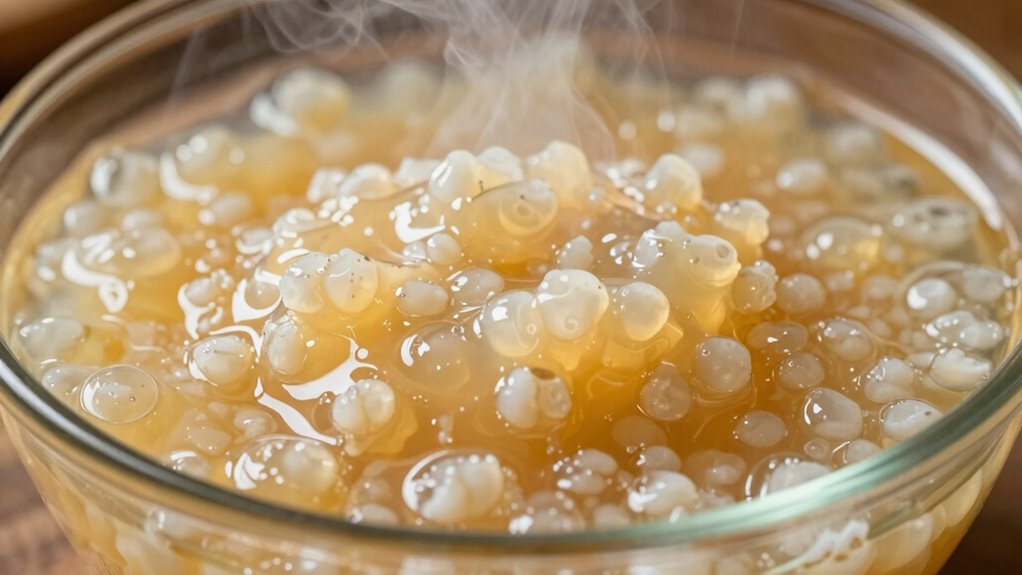
Have you ever wondered what happens to starch when it’s heated in cooking? When you add starch-rich ingredients like flour, cornstarch, or potatoes to a hot liquid, a fascinating transformation begins. This process, known as starch gelatinization, is essential to creating the creamy, thick, and tender textures you love in sauces, puddings, and cooked grains. At its core, gelatinization involves molecular changes within the starch granules that dramatically alter their structure and, consequently, how they influence food texture.
Initially, starch exists as tiny granules, each composed of tightly packed molecules of amylose and amylopectin. When heated in liquid, these granules start to absorb water, swelling as they do. This swelling results from the water molecules penetrating the granule’s structure, disrupting the hydrogen bonds that hold the starch molecules in place. As the temperature rises, these molecular changes become more pronounced. The granules continue to swell until they reach a point where they can no longer hold their structure, leading to the rupture of their outer shell.
This rupture marks the pivotal moment of gelatinization. The broken granules release their internal molecules—mainly amylose—into the surrounding liquid, thickening the mixture. As the starch molecules disperse, they form a network that traps water, giving the dish its characteristic viscosity. This network is responsible for the smooth, creamy food texture that makes sauces and custards so appealing. Additionally, the starch composition can significantly affect how quickly and thoroughly the gelatinization occurs, which is crucial for achieving the desired consistency. The extent of thickening depends on the type of starch, the temperature, and the duration of heating, which all influence the degree of molecular changes and water absorption. Properly controlling these factors can also prevent undesirable clumping or lump formation, ensuring a smooth final product.
Understanding these molecular changes is vital if you want to control the final consistency of your dish. Too little heat, and the starch won’t fully gelatinize, resulting in a thin, runny sauce. Too much heat or overcooking can cause the starch molecules to break down further, leading to thinning or even a gluey texture. Controlling the gelatinization process allows for more precise culinary results, especially when working with different types of starches or aiming for specific textures. Additionally, being aware of the gelatinization temperature helps in timing the cooking process effectively to achieve optimal results. By carefully managing the temperature and cooking time, you guarantee that the starch reaches its ideal gel point, producing a tender, cohesive texture without losing its structure.
In essence, starch gelatinization is a delicate dance of molecular changes that transform simple ingredients into rich, velvety textures. It’s this science that allows you to craft dishes with the perfect thickness and mouthfeel. When you understand how heat affects starch at the molecular level, you gain greater control over your cooking, turning basic ingredients into culinary masterpieces with inviting, creamy consistency.
cornstarch for thickening sauces
As an affiliate, we earn on qualifying purchases.
As an affiliate, we earn on qualifying purchases.
Frequently Asked Questions
How Does Starch Type Affect Gelatinization Temperature?
Different starch varieties influence gelatinization temperature because each has unique gelatinization properties. For example, cornstarch gelatinizes at a lower temperature than potato starch, which requires higher heat. When you choose a starch type, you’re selecting for specific gelatinization temperatures that affect your dish’s texture and consistency. Understanding these variations helps you control cooking times and achieve the desired creaminess or thickness precisely.
Can Gelatinization Occur at Room Temperature?
Gelatinization can occur at room temperature, but it’s much slower than when heated. The gelatinization process involves starch granules absorbing water and swelling, which speeds up with heat. At room temperature, this process still happens gradually, especially over extended periods. So, if you leave a starch-based mixture out, it might thicken slightly as gelatinization takes place, but for quicker results, applying heat is usually necessary.
How Do Additives Influence the Gelatinization Process?
Additives are like secret agents, subtly influencing the gelatinization process. They can speed it up or slow it down, impacting flavor enhancement and texture modification. For example, acids may delay gelatinization, while salts can strengthen the starch network. This means you can tailor dishes to be creamier or firmer by carefully choosing additives, giving you more control over the final texture and flavor.
What Is the Role of pH in Starch Gelatinization?
You should know that pH effects considerably influence starch gelatinization, especially in acidic environments. When the pH drops and becomes more acidic, it can delay or weaken gelatinization, leading to less thick and creamy textures. Acidic conditions break down starch molecules differently, so controlling pH helps achieve the desired consistency. To maintain ideal gelatinization, you need to monitor and adjust the pH levels carefully during cooking or processing.
How Does Gelatinization Impact Nutritional Content?
Gelatinization can slightly impact nutrient retention, as heat and moisture may cause some loss of sensitive vitamins, but most nutrients remain intact. As you cook starchy foods, you enhance their digestibility, offering digestive benefits by breaking down complex carbs. This process makes nutrients more accessible, improving absorption. So, while some nutrients might diminish slightly, gelatinization generally supports better digestion and nutrient availability in your meals.
starch gelatinization thermometer
As an affiliate, we earn on qualifying purchases.
As an affiliate, we earn on qualifying purchases.
Conclusion
Now that you understand starch gelatinization, you see how it transforms simple ingredients into creamy, thick textures. It’s the science behind comforting soups and tender baked goods, turning raw starch into a culinary masterpiece. Without this process, dishes would lack that luscious, cohesive quality you crave. So next time you enjoy a velvety sauce or tender pudding, remember—it’s the magic of starch gelatinization working behind the scenes, blending science and flavor in perfect harmony.
As an affiliate, we earn on qualifying purchases.
As an affiliate, we earn on qualifying purchases.
Fall Picks
fall essentials
As an affiliate, we earn on qualifying purchases.