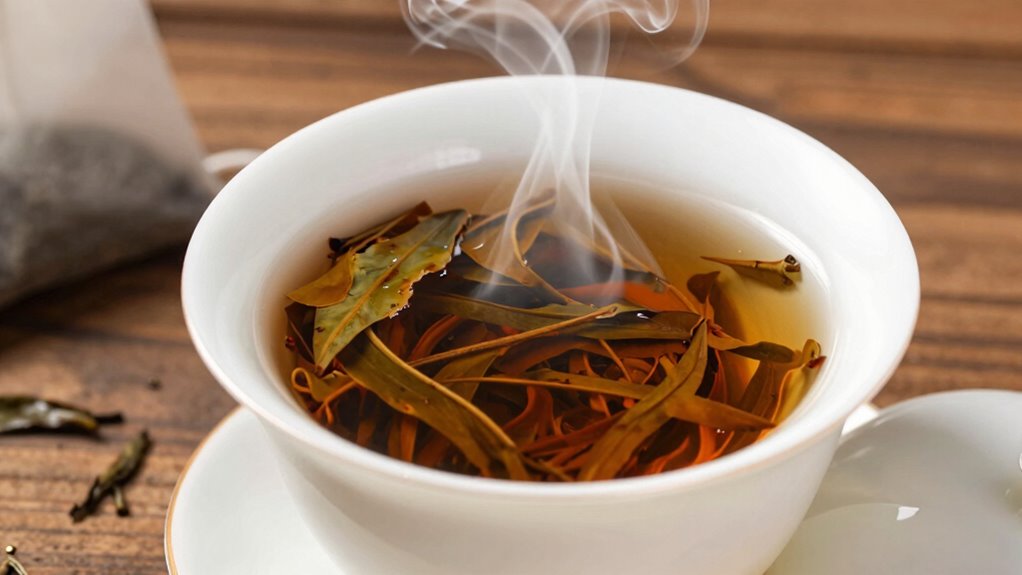

Over-steeping your tea is a common mistake that makes your cup harsh and bitter. When you leave the tea in the water too long, it extracts excessive tannins and polyphenols, resulting in astringency and an unbalanced flavor. Don’t rush or extend the steeping time beyond what’s recommended for your tea type. Paying attention to the right duration helps you enjoy a smooth, flavorful cup. Keep exploring to discover how precise timing can elevate your tea experience.
Key Takeaways
- Over-steeping releases excessive tannins, causing bitterness and a harsh taste.
- Ignoring recommended steep times leads to unbalanced, puckering cups.
- Using too long a steep time for green or white teas results in harshness.
- Extending steeping beyond optimal duration increases polyphenol extraction, making the tea bitter.
- Not using a timer to monitor steeping duration often causes over-steeping and harsh flavors.
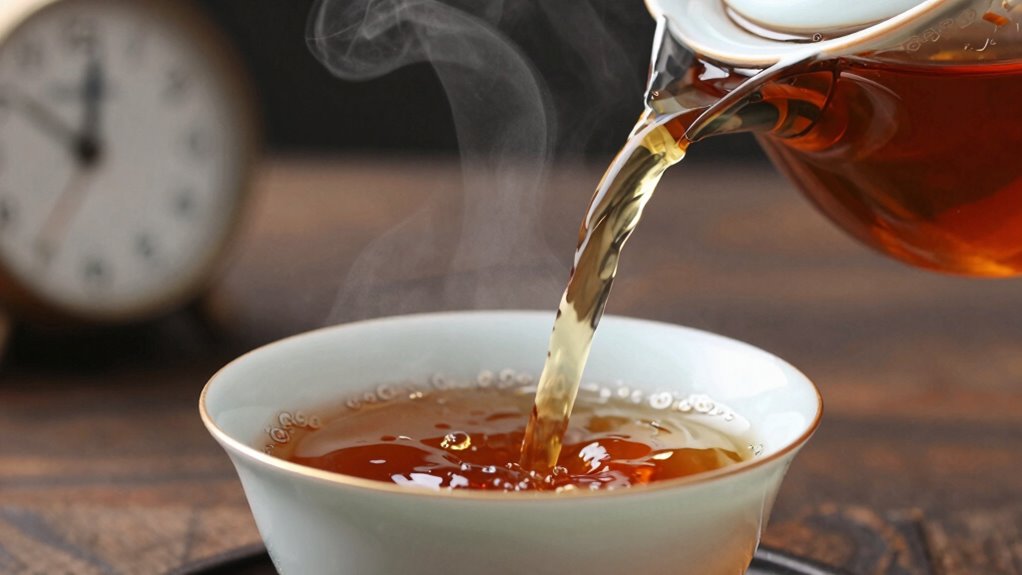
Many tea enthusiasts overlook the importance of steep time, but getting it right can considerably enhance your brew’s flavor. When you rush or extend the steeping process, it can make your tea taste harsh or overly bitter, which is often a result of imprecise timing. One common mistake is assuming that longer steeping always equals a stronger flavor. In reality, over-steeping extracts excessive tannins and polyphenols, which give tea that sharp, astringent edge. To avoid this, you need to pay close attention to the ideal steep time for your specific tea type. Whether you’re brewing black, green, or herbal tea, each has a recommended steeping duration that balances flavor and smoothness.
Proper steeping time enhances flavor; over-steeping causes bitterness by extracting excess tannins and polyphenols.
Another essential aspect that influences your tea’s flavor profile is steeping temperature. Many people overlook how markedly temperature impacts the extraction process. Using too high a temperature for green or white teas can quickly lead to bitterness, while too low a temperature for black or herbal teas may result in weak, underdeveloped flavors. The key is to match the steeping temperature with the tea variety, but also to be mindful of the steep time. For example, green tea usually requires a lower temperature—around 160–180°F—and a shorter steep time, typically 2–3 minutes. Conversely, black tea benefits from higher temperatures—around 200°F—and steeps for 3–5 minutes. When you combine the correct steeping temperature with an appropriate steep time, you extract the tea’s flavor more effectively without overdoing it.
Many people make the mistake of steeping their tea at the wrong temperature or for too long, which leads to a harsh, unbalanced cup. If you leave your tea steeping beyond the recommended time, you risk pulling out too many tannins, resulting in that unpleasant, puckering sensation. Proper steeping technique involves paying attention to both time and temperature to optimize flavor extraction. On the other hand, steeping for too little time, or at a too-low temperature, leaves the tea weak and insipid. The proper steeping conditions are crucial for achieving a balanced flavor profile. Understanding the impact of steeping time and temperature can help you refine your brewing process and avoid common pitfalls. The correct approach involves adjusting your steeping parameters based on the type of tea and personal taste preferences. Using a timer can help you stay disciplined, ensuring you don’t accidentally turn a delicate green or white tea into a bitter mess. Recognizing the ideal steeping conditions can make all the difference in brewing a perfect cup.
In the end, understanding and controlling steep time and temperature are the easiest ways to avoid harshness and reveal the true, nuanced flavor of your tea. It’s about precision and patience—two qualities that transform a good cup into a truly exceptional one.

Teabloom Tea Timer – 2 Minutes for Light-Strength White/Green Teas, 3 Minutes for Medium-Strength Black/Oolong Teas, and 5 Minutes for Full-Strength Black/Oolong/Herbal Teas
- Includes three hourglasses: Timing for different tea strengths
- Compact size: 3.5 x 1.2 x 3.5 inches
- Trusted brand: Used by five-star hotels worldwide
As an affiliate, we earn on qualifying purchases.
As an affiliate, we earn on qualifying purchases.
Frequently Asked Questions
How Can I Tell if My Tea Is Over-Steeped?
You can tell your tea is over-steeped if it tastes bitter, harsh, or astringent. To prevent this, store your tea properly in airtight containers away from light and moisture. Use the right steeping vessels, like a teapot with a strainer, and follow recommended steep times. If your tea becomes too strong or develops an unpleasant flavor, it’s a sign you’ve steeped it too long.
Does Water Temperature Affect Steep Time?
Think of water temperature as the conductor of your tea symphony—if it’s off, the whole performance suffers. Yes, water temperature affects steep time, especially with delicate or robust teas. For perfect flavor, store your tea properly and adjust steeping methods accordingly. Hotter water demands shorter steeping, while cooler water needs more time. Mastering this balance guarantees your tea stays smooth and delightful, not harsh or bitter.
Can Steeping Time Vary Between Tea Types?
Yes, steeping time varies between tea types because each has unique flavor profiles and leaf structures. For delicate green teas, shorter steeping times preserve their fresh, grassy flavor, while robust black teas benefit from longer steeping to fully develop their rich taste. Your steeping techniques, like adjusting time and temperature, directly influence tea flavor. Experimenting with these variations helps you find the perfect balance and avoid harsh or weak cups.
What Signs Indicate a Bitter or Harsh Cup?
You’ll notice a bitter or harsh cup when the flavor profiles become overly astringent, often with astringent or puckering sensations on your palate. This usually happens if you oversteep or use incorrect brewing techniques. To prevent this, pay attention to your tea’s recommended steeping time and temperature, which helps preserve the delicate flavors and prevents bitterness. Adjusting brewing techniques ensures a smooth, balanced cup every time.
Are There Quick Tips to Avoid Over-Steeping?
To avoid over-steeping and keep your tea flavorful, set a timer for the recommended steeping duration based on the type of tea. Keep an eye on the clock, and remove the tea leaves promptly once the time is up. Using a timer or alarm helps prevent over-steeping, which can make your tea taste harsh or bitter. Adjust steeping times slightly for personal preference without exceeding the ideal duration.
As an affiliate, we earn on qualifying purchases.
Conclusion
Remember, the perfect cup of tea is like a delicate dance—you’re guiding the flavors, not rushing the rhythm. Steep it too long, and the bitterness lurks like a shadow; too short, and the brightness slips away like dawn’s first light. Find that sweet harmony, and your tea becomes a mirror of patience and care. In each sip, you’re not just tasting leaves—you’re savoring the art of timing, the true symbol of mastery.
tea infuser with temperature control
As an affiliate, we earn on qualifying purchases.
As an affiliate, we earn on qualifying purchases.
As an affiliate, we earn on qualifying purchases.