
Storing knives improperly is a quick way to dull their blades. Avoid tossing them loose in drawers or using unsuitable sheaths, which can trap moisture and cause rust. Don’t store knives with other metal utensils or in cluttered spaces, as this leads to nicks and scratches. Using the right storage method, like magnetic strips or dedicated blocks, keeps blades sharp and safe. Keep these mistakes in mind to preserve your knives’ edge and lifespan. Learn more to protect your blades effectively.

Get kitchen staples and gadgets delivered free — and shop member deals
- Fast, free delivery on millions of items
- Access to Prime Big Deal Days deals on October 6–7
- Prime Video, Amazon Music and more included
Key Takeaways
- Storing knives loosely in cluttered drawers causes blades to rub against other utensils, leading to dulling and nicks.
- Using damaged or improper sheaths exposes blades to impacts and moisture, accelerating dullness and corrosion.
- Cutting on hard surfaces like glass or stone causes micro-chips and dulls blades faster.
- Washing knives in dishwashers subjects blades to high pressure, heat, and moisture, resulting in corrosion and micro-damage.
- Storing knives without protective covers or in overcrowded magnetic strips increases contact and wear, dulling blades quickly.
As an affiliate, we earn on qualifying purchases.
The Importance of Proper Knife Storage for Sharpness
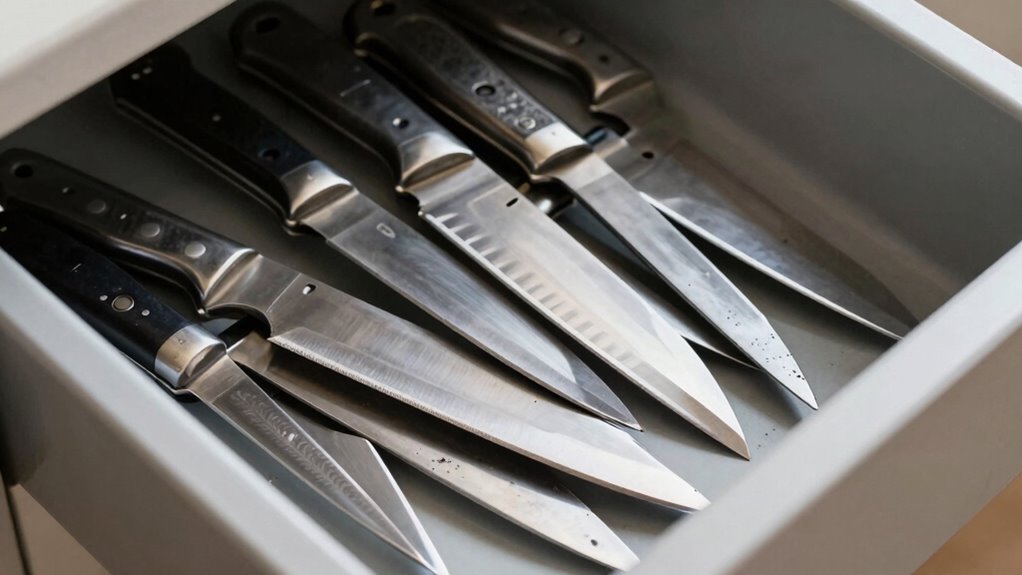
Proper knife storage is essential to keep your blades sharp and your kitchen safe. When you store knives correctly, you support good knife maintenance, preventing unnecessary dulling or damage. Using a knife block, magnetic strip, or protective sheath keeps blades separated, reducing the risk of accidental cuts and protecting the edges from nicks. Proper storage also helps prevent corrosion and rust by keeping blades dry and protected from moisture. Storage safety also minimizes accidents, ensuring everyone in your kitchen stays safe. Consistent maintenance of storage habits not only prolongs the sharpness of your knives but also keeps your workspace organized and efficient. Blade preservation is significantly enhanced by correct storage methods, ensuring your knives remain effective for years to come. Additionally, understanding the materials and design of your knife storage options can further improve blade longevity. Selecting storage solutions that are compatible with your knife’s construction materials can prevent unnecessary wear. Prioritize safe, correct storage methods to preserve your knives’ quality over time.
As an affiliate, we earn on qualifying purchases.
Common Mistakes That Dull Your Knives Quickly
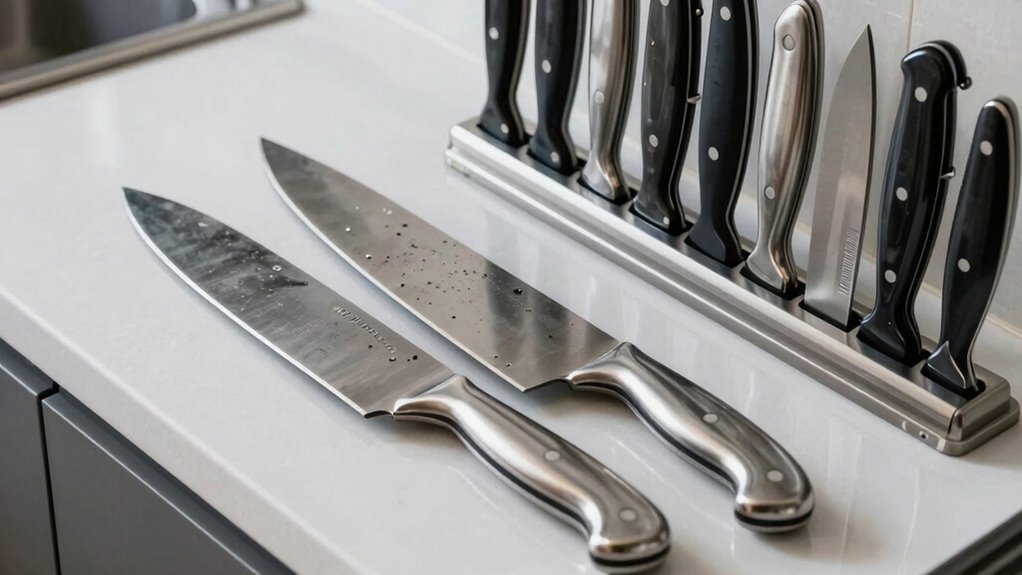
Many common habits can dull your knives fast without you realizing it. Using dishwashers for storage exposes blades to harsh detergents and heat, while tossing loose knives in drawers causes unnecessary nicks. Cutting on hard surfaces like glass or stone quickly damages the edge, reducing sharpness and effectiveness. To prevent premature dulling, it’s important to properly store your knives in a safe and protective manner. Additionally, choosing the right knife storage solutions can significantly extend the life of your blades and maintain their sharpness over time. Proper blade care practices, such as cleaning and honing regularly, also helps preserve their optimal performance. Implementing storage best practices can further reduce the risk of accidental damage and preserve blade integrity. Proper knive maintenance routines are essential for ensuring longevity and sharpness.
Using Dishwashers for Storage
Storing knives in the dishwasher might seem convenient, but it’s one of the quickest ways to dull your blades. Dishwasher damage occurs from the high-pressure water jets and harsh detergents that can chip or bend your knife edges. Additionally, improper drying inside the dishwasher leaves moisture on blades, leading to rust and corrosion over time. When knives are stored in the dishwasher, they often come into contact with other utensils, increasing the risk of nicks and dulling. The heat and moisture cycle also weaken the handle and blade connection, reducing durability. Moreover, exposing knives to dishwasher conditions can compromise blade integrity and reduce their sharpness faster. Instead of using the dishwasher as storage, hand wash your knives immediately after use, dry them thoroughly, and store them safely in a knife block or on a magnetic strip to preserve their sharpness and longevity.
Storing Loose in Drawers
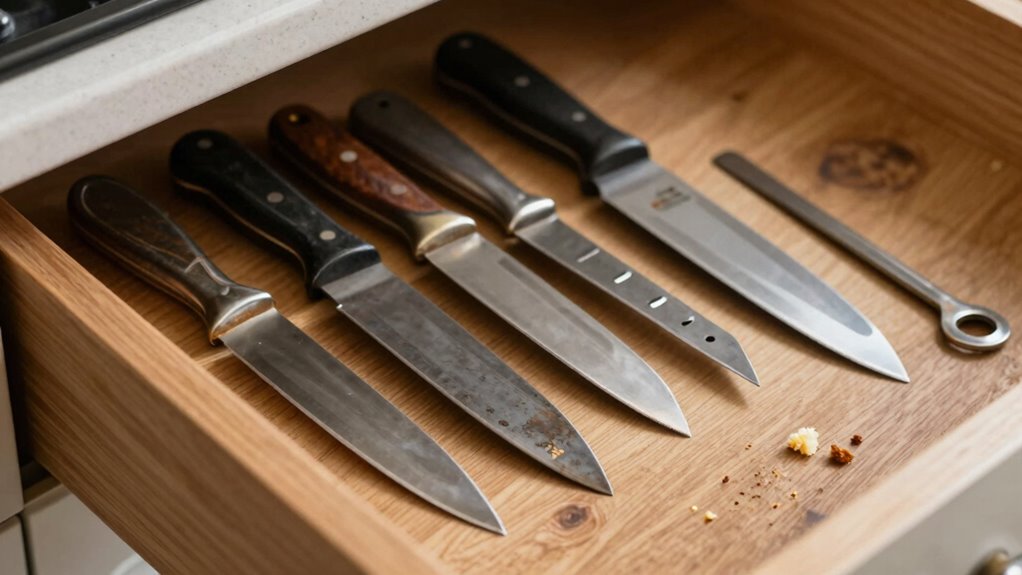
Keeping knives loose in your drawer might seem convenient, but it’s one of the fastest ways to dull their edges. Without proper knife drawer organization, blades rub against other utensils, causing unnecessary nicks and dulling. Tossing knives in a cluttered drawer also increases the risk of accidents, jeopardizing utensil storage safety. Instead, invest in a knife block, magnetic strip, or drawer inserts designed for cutlery. These solutions keep blades protected, separated, and easily accessible. Proper storage prevents blades from scraping against hard surfaces or other utensils, maintaining sharpness longer. Remember, a well-organized knife storage setup not only preserves your knives’ edge but also makes your kitchen safer and more efficient. Don’t compromise knife quality—organize your drawer and prioritize safety.
Cutting on Hard Surfaces
Using the wrong surface to cut can quickly dull your knives and make food prep more frustrating. Cutting on ceramic cutting boards or hard plastic surfaces causes unnecessary wear on your blades. These materials are too tough, leading to micro-chips and dull edges over time. Avoid using ceramic cutting surfaces for daily chopping, as they’re too abrasive. Similarly, plastic surfaces can seem gentle but may still dull your knives if they’re too hard or scratched. Instead, opt for softer, knife-friendly cutting boards like wood or rubber, which absorb impact and protect your blades. Being mindful of the surfaces you cut on preserves your knives’ sharpness and extends their lifespan. Remember, choosing the right cutting surface is key to maintaining a razor-sharp edge.
As an affiliate, we earn on qualifying purchases.
Why Tossing Knives Into Drawers Without a Cover Is a Bad Idea
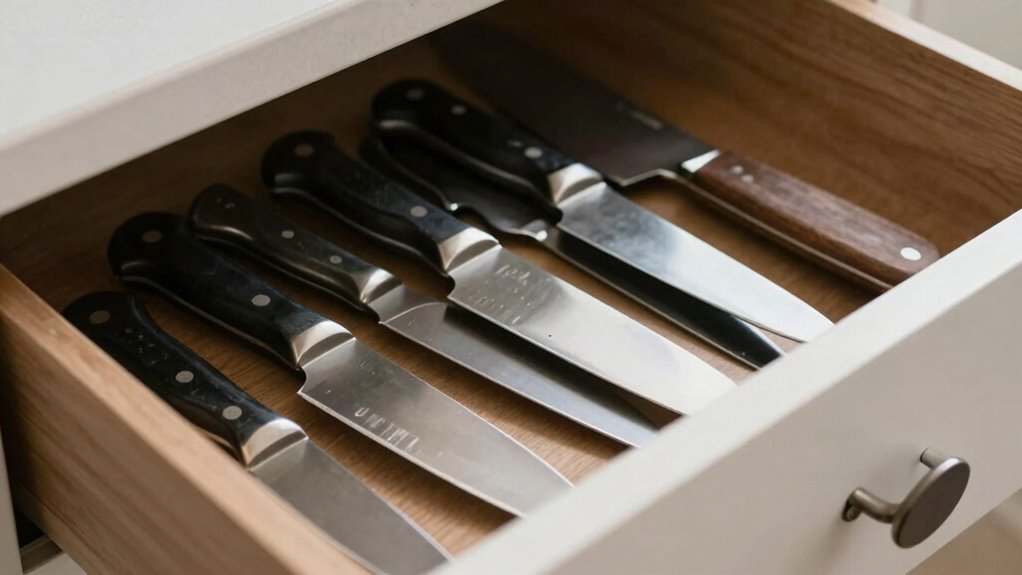
Putting knives in drawers without covers can damage their blades and make them dull faster. You also risk cutting yourself if you reach in without warning. Using covers helps protect both your knives and your fingers. Proper knife storage is essential for maintaining sharpness and safety. Additionally, proper organization can prevent accidental cuts and prolong the life of your knives. Investing in quality knife covers ensures your blades stay sharp and your hands safe during storage. Remember, correct storage techniques are key to preserving your knives’ performance over time. Proper blade protection techniques can further prevent unnecessary dulling and damage.
Increased Blade Damage
Without a cover, knives are vulnerable to unnecessary damage every time you toss them into a drawer. This careless habit leads to increased blade damage, including nicks and dulling. The constant jostling against other utensils accelerates blade corrosion, especially if moisture gets trapped. Improper sharpening can worsen the problem, creating uneven edges that chip easily. To understand how damage occurs:
| Impact Type | Effect | Prevention |
|---|---|---|
| Knocking against objects | Dulling or chipping blades | Use knife covers or sheaths |
| Moisture exposure | Blade corrosion | Keep knives dry |
| Improper sharpening | Uneven edges | Sharpen correctly |
| Abrasive contact | Blade degradation | Store separately |
Proper storage minimizes these risks, preserving your knife’s sharpness and longevity. Using appropriate storage solutions helps prevent these common mistakes and extends the life of your blades. Additionally, choosing proper blade maintenance techniques can further reduce damage and keep your knives performing at their best.
Risk of Accidental Cuts
Tossing knives into a drawer without a cover considerably increases the risk of accidental cuts. When you reach in blindly, you might cut yourself on a sharp blade or slip while trying to grab a knife. Without proper safety gear, like cut-resistant gloves, you’re exposing yourself to unnecessary danger. Visualize rummaging through a cluttered drawer:
- A jagged edge catching your hand unexpectedly
- A hidden knife’s tip piercing your finger
- Slipping and the blade slicing your palm
- Struggling to retrieve a knife without cutting yourself
Poor storage disrupts your knife safety and your cutting technique, making safety almost impossible. Always keep knives covered or in a designated block. Doing so minimizes risks, helps maintain control, and keeps your fingers safe from avoidable injuries. Proper storage is essential for safe kitchen work and overall kitchen safety. Additionally, neglecting proper storage can lead to blade dulling over time, as blades are more prone to damage when improperly stored. Using the right storage method also preserves blade sharpness, extending the life of your knives and ensuring they perform effectively when needed. Moreover, storing knives properly helps prevent corrosion, which can degrade blade quality and reduce their effectiveness.
Dull Blade Edges
When knives are stored carelessly in a drawer, their blades often become dull over time. Without proper knife maintenance, blades repeatedly scrape against other utensils or hard surfaces, gradually dulling the edge. Tossing knives into a drawer without a cover exposes the blade to unnecessary friction and impacts, speeding up the dulling process. Regular blade sharpening helps restore the edge, but neglecting proper storage makes this necessary more often. Sharp blades are safer and more effective, so keeping knives sheathed or stored in a dedicated knife block is essential. Proper storage minimizes contact with other utensils and reduces wear, helping maintain a sharp edge longer. Additionally, correct storage practices can prevent accidental damage and improve overall safety in the kitchen. In the long run, investing in good storage solutions supports your knife’s performance and extends its lifespan.
As an affiliate, we earn on qualifying purchases.
How Inadequate Sheaths Can Damage Your Blades
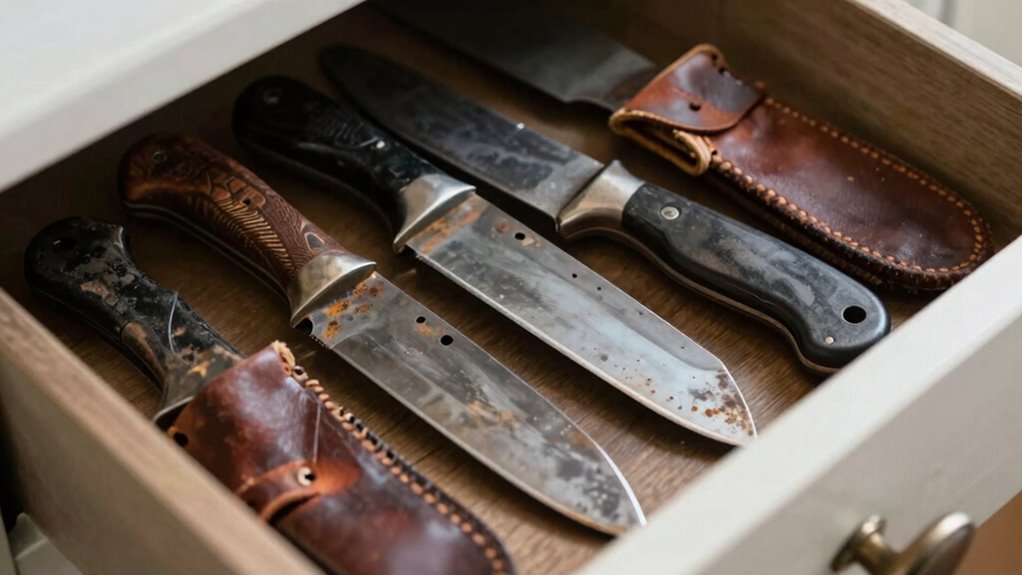
Inadequate sheaths can considerably harm your blades over time, even if you’re careful during storage. Poor-quality sheaths often lack sufficient sheath durability, leading to wear and tear that exposes your blade to damage. When sheaths don’t fit properly, the blade can slide, causing nicks or dulling the edge. Reusing old or damaged sheaths can trap moisture, promoting rust and corrosion. Additionally, rough or abrasive materials inside the sheath can scratch or dull your blade with every insertion and removal. To guarantee proper blade protection, choose sheaths that fit well, are made from durable materials, and keep your blades safe from unnecessary impacts and moisture. Proper sheath selection preserves your blades’ sharpness and longevity.
Risks of Storing Knives Loose in Utensil Holders
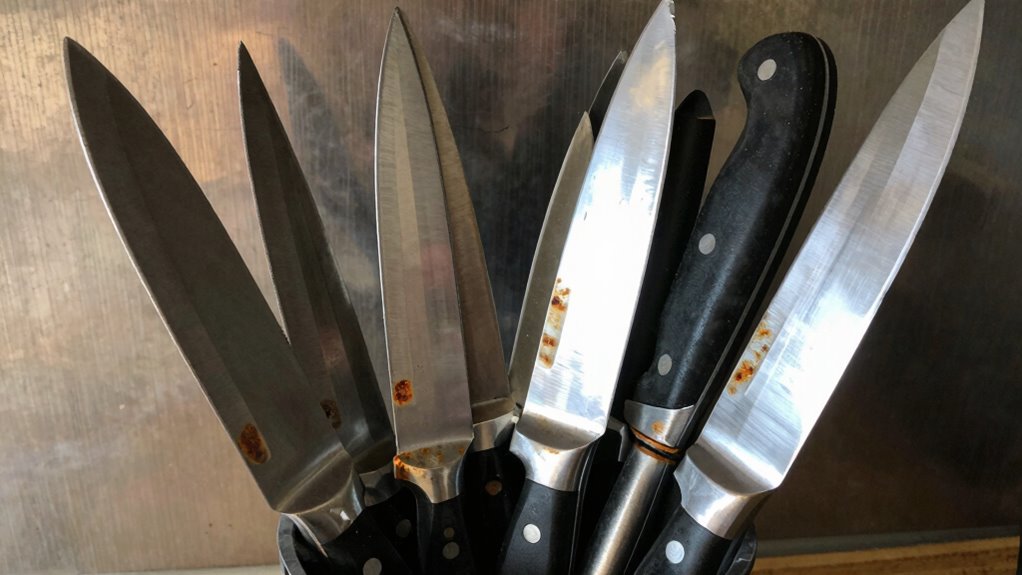
Storing knives loose in utensil holders can cause your blades to dull faster because they rub against other utensils. It also increases safety risks, making it easier to accidentally cut yourself when reaching in. Proper storage helps protect both your knives and your fingers.
Blades Dull Faster
Loose knives in utensil holders tend to dull much faster than properly stored blades. When blades jostle against other utensils, the edges sustain microscopic nicks and chips, making regular knife sharpening necessary. This constant friction erodes the sharpness quickly, increasing the effort needed for each cut. Poor storage also hampers proper blade maintenance, leading to uneven wear and faster dulling. Visualize a cluttered holder with blades rubbing against metal utensils, causing damage.
- Knives scraping against rough edges
- Blades knocking against metal handles
- Friction from loose movement
- Tiny chips forming along the edge
To keep your blades sharp longer, focus on proper storage and regular sharpening. This prevents unnecessary dulling and ensures your knives perform efficiently over time.
Increased Safety Risks
When knives aren’t stored securely, they pose significant safety hazards in the kitchen. Loose knives in utensil holders can easily fall or be grabbed unexpectedly, increasing the risk of cuts and kitchen accidents. Children are especially vulnerable if they can access a messy utensil holder, risking serious injuries. Storing knives properly reduces these dangers, keeping sharp blades out of reach and preventing accidental cuts. An unorganized holder makes it harder to retrieve knives safely and increases the chance of snagging or stabbing yourself when reaching for a utensil. Prioritizing safe storage helps protect everyone in your home, especially curious kids. Remember, a secure knife storage system minimizes risks and creates a safer cooking environment for all.
Storing Knives With Other Metal Utensils: What You Need to Know
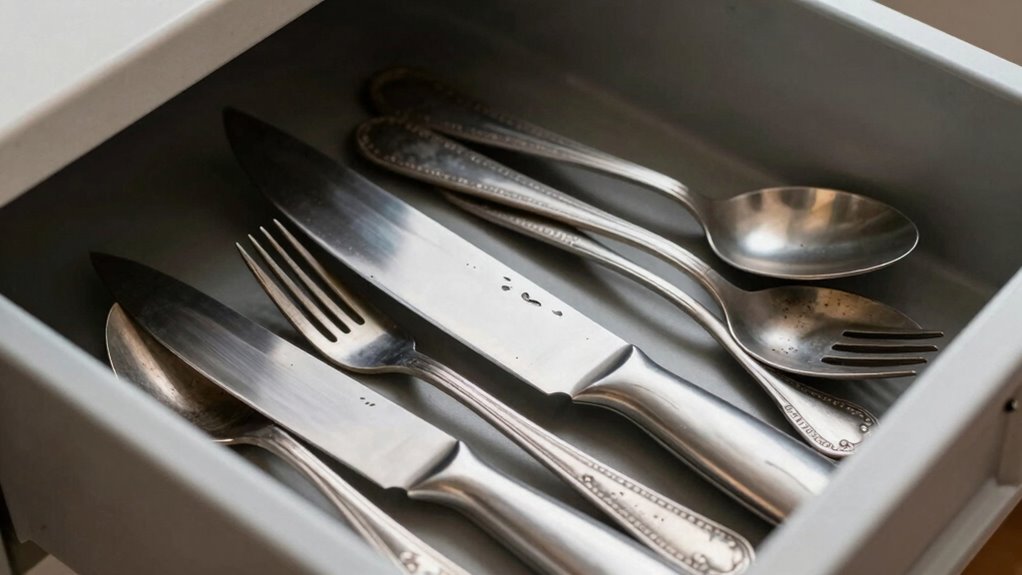
Putting knives together with other metal utensils might seem convenient, but it can actually cause damage to your blades. When metal contact occurs, blades can get scratched or dulled from constant rubbing against forks, spoons, or pots. This friction accelerates blade dulling and increases the risk of rust formation, especially in humid environments. To visualize the damage, consider:
Storing knives with metal utensils can cause scratches, dull blades, and rust over time.
- Scratches along the blade’s edge and surface
- Tiny nicks from contact with harder utensils
- Rust spots developing in hidden crevices
- Dulling of the sharp edge over time
These issues happen because metal contact weakens the blade’s integrity. Keeping knives separate from other metal utensils helps preserve their sharpness and prevents rust, ensuring your blades stay in top condition longer.
Choosing the Best Knife Storage Options to Protect Your Blades
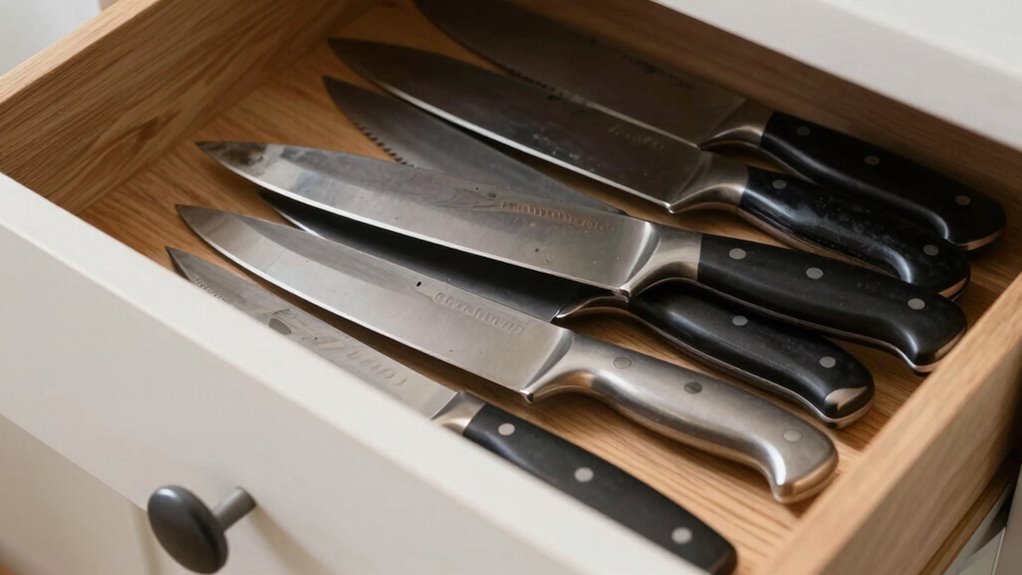
Choosing the right knife storage options is essential for maintaining the sharpness and longevity of your blades. Knife sheathes offer a safe way to protect your blades from damage and prevent accidental cuts, especially during transport or storage. They keep the edge protected and reduce exposure to moisture and air, which can cause dulling. Magnetic strips are another popular choice, allowing you to keep knives easily accessible while preventing clutter and unnecessary handling. When mounted properly, magnetic strips hold blades securely without risking scratches or dulling that can occur with drawer storage. Both options help preserve your knives’ sharpness, but you should select based on your space and usage habits. Proper storage ensures your knives stay sharp longer and perform better in the kitchen.
How Cluttered Drawers Contribute to Blade Dulling
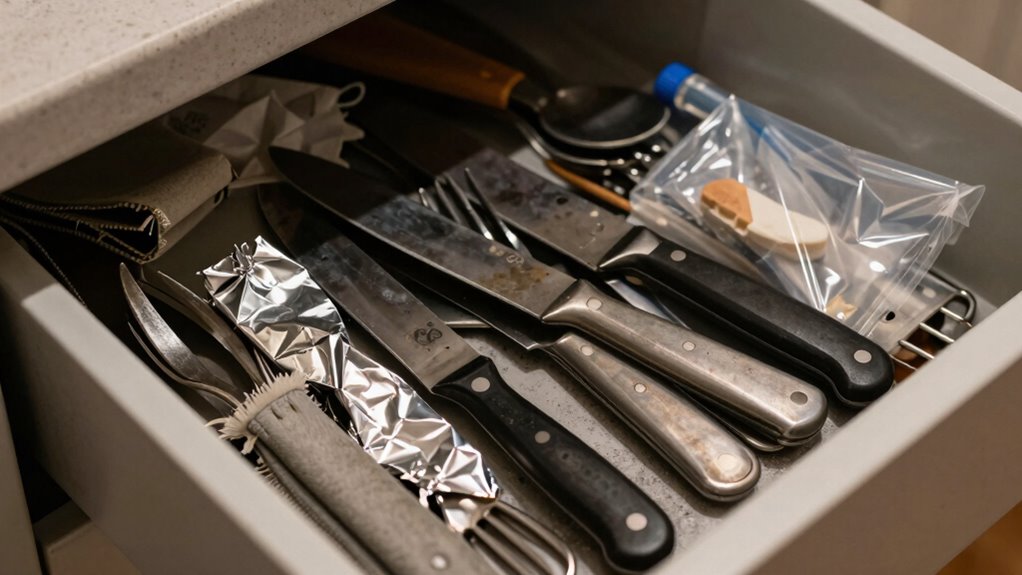
Cluttered drawers can considerably accelerate blade dulling by creating an environment where knives constantly rub against other utensils and hard surfaces. When drawer organization and clutter management are neglected, blades experience unnecessary friction, leading to faster dulling. Imagine pulling out a knife only to scrape it against metal spoons, forks, or other sharp tools. This repeated contact damages the fine edge, reducing its sharpness over time. Visualize a chaotic drawer filled with jumbled utensils, each bump and scrape wearing down the blade. Keep your knives separate from other utensils, and avoid overstuffing drawers. Proper drawer organization minimizes contact with hard objects, preserving blade sharpness longer and ensuring your knives stay effective and safe to use.
Tips for Organizing Your Knife Storage for Sharp, Safe Knives
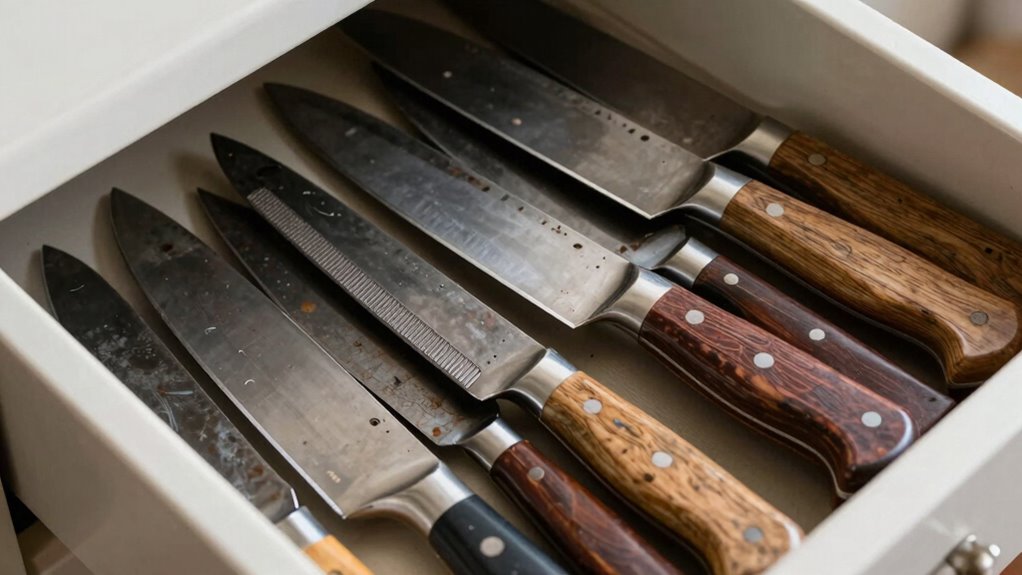
To keep your knives sharp and safe, organizing your storage space is essential. Proper storage prevents unnecessary knife contact, reducing dulling and enhancing knife maintenance. It also promotes kitchen safety by minimizing accidental cuts. Use a dedicated knife block, magnetic strip, or individual slots to keep blades separated. Avoid drawers with cluttered utensils that can cause blades to dull or chip. Consider the following tips for *ideal* organization:
| Storage Method | Pros | Best For |
|---|---|---|
| Knife Block | Protects blades, easy access | Everyday use |
| Magnetic Strip | Saves space, quick grab | Modern kitchens |
| Drawer Inserts | Keeps knives separated | Custom organization |
| Wall Mounts | Frees counter space | Small kitchens |
Avoid These Mistakes for Long-Term Knife Sharpness

Even if you have a great knife storage system, neglecting proper handling and maintenance can still dull your blades over time. Avoid common mistakes that harm your knives’ sharpness. For example, storing a knife in a dirty knife sheath can cause scratches and dulling. Placing knives haphazardly on a countertop risks unnecessary contact and damage. Using a magnetic strip improperly—like overloading or forcing blades—can bend or dull edges. Additionally, ignoring regular honing or sharpening accelerates dullness. To preserve your knife’s edge, guarantee blades are stored in a clean, dry knife sheath or securely on a well-organized magnetic strip. Proper handling and storage habits considerably extend the sharpness and lifespan of your knives, saving you time and effort in the long run.
Frequently Asked Questions
How Often Should I Sharpen My Knives for Optimal Performance?
You should sharpen your knives every 1-2 months, depending on how often you use them. Maintaining a consistent sharpening frequency as part of your maintenance schedule keeps blades sharp and prevents damage. If you notice your knives aren’t cutting as smoothly, it’s time for a quick sharpen. Regular honing between sharpenings also helps maintain edge longevity. Adjust the frequency based on your cutting tasks and knife usage to guarantee peak performance.
Can Dishwasher Cleaning Damage My Knife Blades?
Think of your knife blades as delicate brushstrokes on a masterpiece. Dishwasher damage can be like relentless rain eroding your artwork; the high heat and harsh detergents cause blade corrosion and dullness. Repeated dishwasher cleaning accelerates this process, risking rust and weakened steel. To preserve their sharpness, hand wash and dry your knives carefully, avoiding dishwasher damage that compromises their edge and longevity.
What Materials Are Best for Knife Storage Sheaths?
The best storage options for your knives include sheaths made from materials like wood, leather, or high-quality plastic. These knife sheath materials protect blades from scratches and dulling. When choosing knife sheath materials, guarantee they’re durable and soft enough to prevent blade damage. Proper knife storage not only keeps your blades sharp longer but also enhances safety. Always opt for high-grade, well-crafted sheaths that suit your needs for ideal performance and longevity.
Are Magnetic Strips Safe for All Types of Knives?
Magnetic strips are generally safe for most knives, but you should consider metal versus wooden options and magnetic strip safety. Metal strips can sometimes scratch or damage delicate blades if not used carefully. Wooden strips are gentler and reduce the risk of blade damage. Always make sure your knives are securely held and avoid storing very lightweight or fragile blades on magnetic strips to prevent accidents or blade damage.
How Does Humidity Affect Knife Blade Longevity?
Humidity harms your knives by encouraging corrosion and moisture damage, which can profoundly shorten their lifespan. When you store knives in humid environments, moisture seeps into the blades, leading to rust and dullness. To keep your blades sharp and sturdy, avoid humid areas like damp basements or near sinks. Instead, store your knives in dry, well-ventilated spaces, and consider using moisture-absorbing materials to protect your precious blades from humidity’s harmful effects.
Conclusion
Think of your knives like delicate dancers—they need the right stage to stay sharp. When you toss them into cluttered drawers or skip proper covers, you’re dulling their performance faster. I once watched a chef struggle with a dull blade, like trying to trim tough meat with a butter knife. Keep them protected and organized, and your knives will glide through ingredients like a ballet, staying sharp and ready for every cut.
Fall Picks
fall essentials
As an affiliate, we earn on qualifying purchases.