Spice pastes kept in the fridge typically last about 1-2 weeks if homemade, and up to 3 months with preservatives. They spoil when their color dulls, mold appears, or they develop sour smells and slimy textures. Proper storage—tight lids, small portions, and using clean utensils—helps extend their freshness. If you notice any signs of spoilage, it’s safest to discard. Stay tuned to learn how to maximize their shelf life and avoid health risks.

Get kitchen staples and gadgets delivered free — and shop member deals
- Fast, free delivery on millions of items
- Access to Prime Big Deal Days deals on October 6–7
- Prime Video, Amazon Music and more included
Key Takeaways
- Spice pastes typically spoil within 1–2 weeks if homemade, or up to 3 months with preservatives, depending on ingredients.
- Spoilage signs include mold, discoloration, off-odor, sliminess, or texture changes.
- Proper storage in the coldest fridge section and airtight containers can extend shelf life.
- Contamination from dirty utensils or exposure to air accelerates spoilage.
- Consuming spoiled pastes risks foodborne illness; discard if any spoilage signs are present.
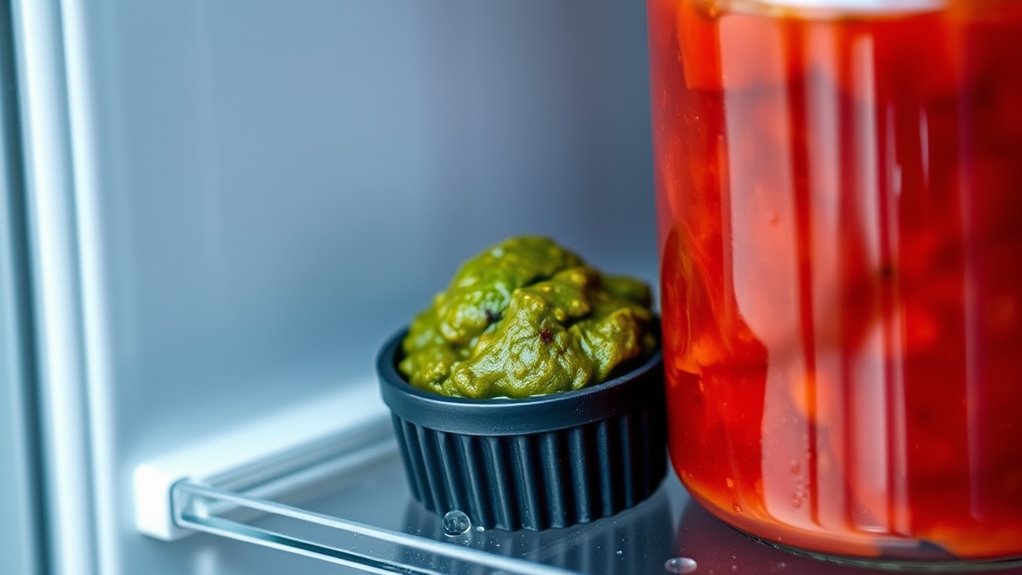
Keeping spice pastes in the fridge is a smart way to extend their freshness and flavor. Proper storage helps maintain their vibrant taste, but it’s also important to know how long they stay good and what signs indicate spoilage. Typically, spice pastes can last anywhere from a few weeks up to a couple of months when stored properly, but this depends on ingredients, preservatives, and storage conditions. Most homemade or fresh pastes tend to have a shorter shelf life, usually around 1 to 2 weeks, while commercially prepared ones with preservatives can last longer—sometimes up to 3 months. To maximize their shelf life, always keep the lid tightly sealed and store them in the coldest part of your fridge, away from the door, where temperature fluctuations are less frequent. Ensuring proper storage conditions can significantly impact their longevity and safety.
Monitoring spoilage indicators is *vital* to avoid consuming unsafe or degraded pastes. Look for changes in color—if the paste turns dull or develops dark spots, it’s a warning sign. The appearance of mold, which can be fuzzy or have a different hue, signals that the paste has gone bad and should be discarded immediately. Also, pay attention to any off-putting odors; fresh spice pastes generally have a fragrant, aromatic smell. If you notice a sour, rancid, or otherwise unpleasant aroma, it’s best not to take the risk. Texture is another clue—if the paste becomes slimy, excessively dry, or develops an unusual film, these are signs of spoilage. Proper hygienic handling is also crucial to prevent contamination and extend shelf life.
Beyond visual and sensory cues, consider the storage duration. Even if a paste looks and smells fine, eating it beyond its recommended storage time increases the risk of foodborne illness. Proper labeling helps keep track of when you made or opened the paste, so you know when to toss it. Some people also choose to portion out spice pastes into smaller containers before refrigerating, which helps reduce exposure to air and minimizes spoilage risk. Remember, always use clean utensils to scoop out what you need—introducing bacteria or contaminants can shorten their lifespan and lead to spoilage faster.
airtight spice paste storage containers
As an affiliate, we earn on qualifying purchases.
As an affiliate, we earn on qualifying purchases.
Frequently Asked Questions
How Long Do Homemade Spice Pastes Typically Last in the Fridge?
You can usually store homemade spice pastes in airtight storage containers for about 1 to 2 weeks in the fridge. To maintain ingredient freshness, use clean utensils every time you scoop out the paste, and keep the container sealed tightly. Proper storage helps prevent spoilage and preserves flavor. If you notice any mold, sour smell, or change in color, it’s best to discard the paste to stay safe.
Can Moldy Spice Pastes Still Be Safe if Only a Small Area Is Affected?
If you notice mold on your spice paste, it’s best to discard it, even if only a small area is affected. In a hypothetical case, someone tried mold removal, but bacteria may have penetrated deeper, risking paste contamination. Mold can produce toxins, so even a tiny spot isn’t safe. Always prioritize safety; when in doubt, throw it out to prevent health issues.
What Are the Best Signs That Spice Pastes Have Gone Bad?
You’ll notice signs of spoilage like an off smell, mold growth, or a change in color and texture. If the spice paste becomes slimy or develops an unusual taste, it’s time to discard it. For longer freshness, store your spice pastes in an airtight container in the fridge and always use clean utensils. Regularly check for these signs of spoilage to ensure your spices stay safe and flavorful.
Does Freezing Extend the Shelf Life of Spice Pastes?
Think of freezing spice pastes like putting a time capsule in the freezer—you’re pausing spoilage. Freezing preservation definitely extends shelf life, keeping pastes fresh for months. Just like a snow globe preserves a scene, freezing slows down microbial growth and oxidation. To maximize shelf life extension, store your spice pastes in airtight containers before freezing. When you’re ready to use them, thaw thoroughly for *best* flavor.
Are There Preservatives That Can Help Keep Spice Pastes Fresh Longer?
Yes, some preservative options can help maintain your spice pastes fresh longer. Natural preservatives like vinegar, lemon juice, or salt work well and are healthier choices. You can also look for commercial spice pastes with added preservatives, but always check the labels. Using natural preservatives not only extends shelf life but also maintains flavor integrity. Just ensure you add them in appropriate amounts to avoid altering the taste.
refrigerator spice paste organizer
As an affiliate, we earn on qualifying purchases.
As an affiliate, we earn on qualifying purchases.
Conclusion
Remember, your spice pastes are like tiny treasures in your fridge—delicate yet powerful. When they spoil, it’s like losing a secret weapon in your kitchen arsenal. Keep an eye on color, smell, and texture, and you’ll avoid the culinary villains of mold and rancidity. Treat them with care, and they’ll reward you with bold flavors and memorable meals. After all, isn’t a well-preserved spice paste the key to turning ordinary into extraordinary?
food-safe silicone spice paste scoops
As an affiliate, we earn on qualifying purchases.
As an affiliate, we earn on qualifying purchases.
As an affiliate, we earn on qualifying purchases.
NFL season / tailgating Picks
team gear
As an affiliate, we earn on qualifying purchases.