To prevent food processor leaks, regularly inspect and clean your seals and bowl, ensuring they sit snugly and without damage. Check for cracks, tears, or warping and replace worn seals promptly. Properly align and firmly assemble the bowl and lid, paying attention to grooves and tabs. Avoid overloading and keep the seals and bowl edges free of debris for a tight fit. If leaks persist, tips and solutions for maintenance are just a step away.

Get kitchen staples and gadgets delivered free — and shop member deals
- Fast, free delivery on millions of items
- Access to Prime Big Deal Days deals on October 6–7
- Prime Video, Amazon Music and more included
Key Takeaways
- Regularly inspect and clean seals to prevent cracks, debris buildup, and ensure a snug, even fit.
- Properly align and securely lock the bowl, lid, and seals during assembly to prevent leaks.
- Dry all components thoroughly after cleaning to prevent mold and bacterial growth.
- Avoid overloading the processor; add ingredients gradually and use pulse functions for tough ingredients.
- Replace damaged seals and worn components promptly, and consider using food-grade silicone sealant if leaks persist.
As an affiliate, we earn on qualifying purchases.
How to Spot Worn or Damaged Food Processor Seals
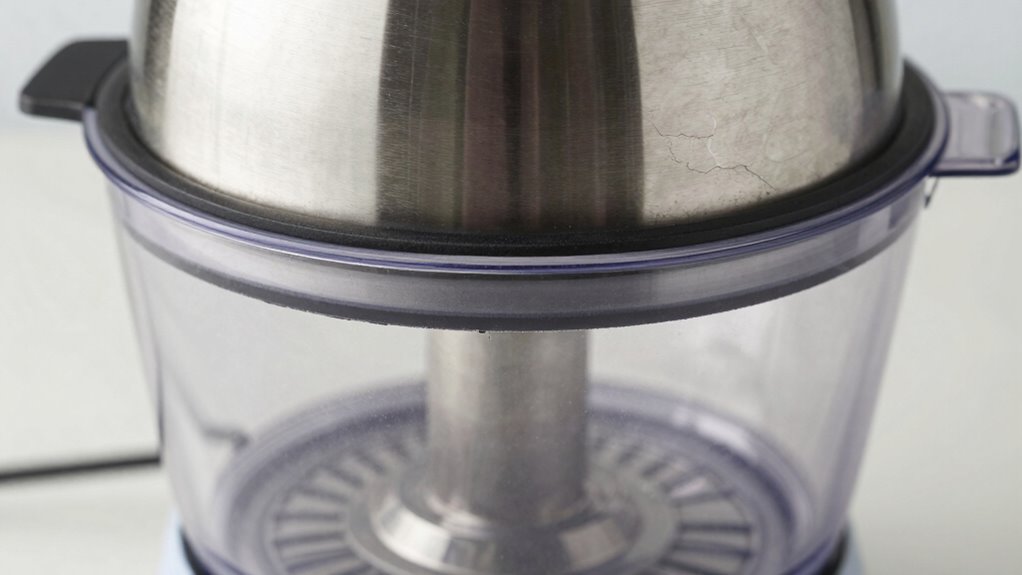
To effectively prevent food processor leaks, you need to know how to identify worn or damaged seals. Start by inspecting the seals regularly for signs of seal damage, such as cracks, tears, or warping. During wear inspection, look closely at the rubber or silicone parts around the blade and lid area—these are most vulnerable to deterioration. Damaged seals may appear brittle or have gaps that prevent a tight fit, which can lead to leaks. Pay attention to any residue or debris stuck in the seal area, and check for any looseness or deformation. Catching seal damage early helps you address issues before leaks happen, ensuring your food processor operates smoothly and stays mess-free.
As an affiliate, we earn on qualifying purchases.
How to Inspect and Clean Your Food Processor Bowl and Seals
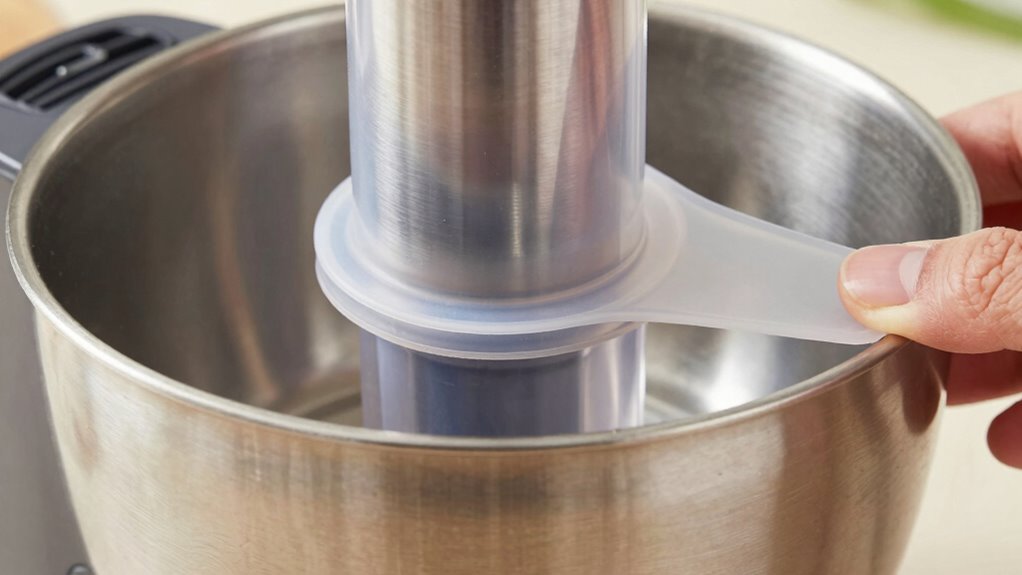
Start by inspecting your seal for any signs of wear or damage to guarantee it’s a tight fit. Next, remove the bowl and thoroughly clean all surfaces, paying special attention to the seal area. Keeping your bowl and seals clean helps maintain proper function and prevents leaks. Additionally, regularly checking for seal integrity and replacing worn seals can further prevent leaks during operation. Proper calibration of the seals ensures they fit snugly and function effectively, reducing the risk of leaks. Being aware of body jewelry measurements and materials can help you choose the correct replacement seals if needed. For optimal performance, understanding thermal behavior can help prevent issues caused by temperature fluctuations that may affect seal flexibility and fit. Regular maintenance and inspection are key to preventing issues caused by material wear and ensuring long-lasting performance.
Checking Seal Integrity
Regularly inspecting the seals and bowl of your food processor is essential to prevent leaks. Check for signs of seal wear, such as cracks, tears, or brittleness, which can compromise the seal’s effectiveness. Seal deformation, like warping or misshaping, also reduces sealing performance. Remove the bowl and carefully examine the rubber or silicone gasket, ensuring it sits flat and undamaged. If you notice any cracks, tears, or deformation, replace the seal immediately. Clean the seal thoroughly to remove food residue that could cause deterioration. Using a visual inspection approach can help you identify issues early before they worsen. A well-maintained, intact seal guarantees a tight fit, preventing leaks during operation. Regular checks help catch issues early, saving you from messy cleanups and potential damage to your appliance. Consistently practicing creative storytelling in your maintenance routine can help you better understand and anticipate issues before they occur.
Proper Bowl Cleaning
Cleaning your food processor bowl and seals thoroughly is essential for maintaining peak performance and preventing leaks. Start by inspecting the bowl design for any cracks or damage, which can compromise its integrity. Remove the bowl and carefully clean all surfaces with warm, soapy water, paying special attention to corners and crevices where food residue can hide. When cleaning seals, examine the seal materials for signs of wear or deterioration. Use a soft brush or cloth to gently scrub around the seal area, ensuring no debris is trapped. Rinse everything thoroughly and dry completely before reassembling. Proper cleaning removes residues that could cause leaks and prolongs the life of your food processor’s components, keeping it functioning smoothly and safely. Regular maintenance also helps to protect your investment, and incorporating regular auditory processing evaluations can help identify underlying issues that might affect maintenance routines. Additionally, using appropriate cleaning tools can enhance the thoroughness of your cleaning process. Incorporating proper drying techniques ensures no moisture remains that could foster mold or bacteria growth, further safeguarding your appliance’s longevity.
silicone sealant for food processor
As an affiliate, we earn on qualifying purchases.
As an affiliate, we earn on qualifying purchases.
How to Assemble Your Food Processor Bowl Correctly to Avoid Leaks
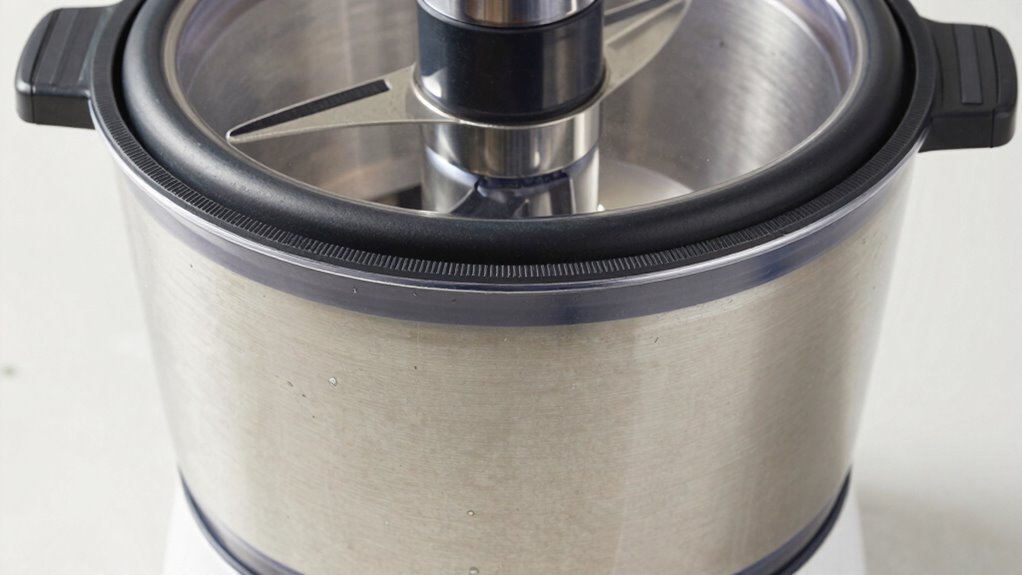
To prevent leaks, it’s essential to assemble your food processor bowl correctly from the start. Start with a thorough seal inspection to ensure the gasket is clean, intact, and properly seated. Follow this assembly guidance: align the bowl securely onto the motor base, then lock the lid firmly until it clicks. Proper placement prevents gaps that cause leaks. Visualize the process with this image:
| Step | Action | Description |
|---|---|---|
| 1 | Check the seal | Ensure it’s clean and undamaged |
| 2 | Align the bowl | Match tabs with base |
| 3 | Secure the bowl | Turn clockwise until tight |
| 4 | Fit the lid | Line up the lid’s notches |
| 5 | Lock the lid | Confirm it clicks into place |
Following these steps guarantees a leak-proof assembly every time. Additionally, regularly inspecting the sealing components can help maintain optimal performance and prevent future leaks, especially since wear and tear can compromise the gasket over time. Regular cleaning and proper maintenance are key to extending the lifespan of your seal and ensuring the food processor operates smoothly. Moreover, incorporating smart maintenance reminders can help you stay on top of routine inspections and replacements to avoid unexpected leaks.
As an affiliate, we earn on qualifying purchases.
How to Replace Food Processor Seals for a Secure Fit

To replace your food processor seal, start by carefully removing the old seal without damaging the groove. Next, clean both the seal and groove thoroughly to guarantee a proper fit. Proper maintenance of your seal and bowl ensures longevity and optimal performance. Additionally, inspecting the seals regularly can help prevent leaks before they start. Keeping the water-tight seal in good condition is essential for safe and efficient operation. Regularly checking the seal integrity can help identify potential issues early and avoid costly repairs. To further ensure a secure fit, consider understanding the design of sealing mechanisms, which can improve the longevity and reliability of your seals. Finally, install the new seal correctly, making sure it sits securely for a leak-proof operation.
Remove Old Seal Carefully
Removing the old seal carefully is crucial to guarantee a proper fit for the new one. During seal removal, handle the old seal with gentle care to prevent damage to the surrounding areas. Use a plastic pry tool or your fingers to gently lift and loosen the seal, avoiding sharp tools that could scratch or distort the groove. Proper old seal care involves removing it completely without tearing or stretching it out of shape, which could compromise the seal’s effectiveness. Take your time to work around the entire edge, ensuring all remnants are cleared. This careful approach ensures the new seal will seat properly and create a tight, leak-proof fit, preventing future leaks and maintaining your food processor’s ideal performance.
Clean Seal and Groove
Before installing the new seal, it’s essential to thoroughly clean both the seal and the groove. Start with a careful seal inspection to guarantee no debris, residue, or damage is present. Use a soft cloth or brush to remove any food particles or buildup from the seal. Next, focus on groove cleaning—remove any dirt or old lubricant that could interfere with a secure fit. Make sure the groove is completely dry before proceeding. Proper cleaning ensures the seal sits snugly and functions effectively, preventing leaks. Skipping this step can cause gaps or improper sealing, leading to leaks down the line. Taking the time to inspect and clean thoroughly will help you achieve a tight, leak-proof fit with your new seal.
Install New Seal Properly
With the seal and groove thoroughly cleaned and dried, you’re ready to install the new seal. During seal installation, ensure the seal fits snugly into the groove without twisting or pinching. Proper sealing depends on positioning the seal evenly around the rim, so it creates a complete, airtight barrier. Gently press the seal into place, making sure it seats fully in the groove. Check that there are no gaps or overlaps, as these can cause leaks. Confirm the seal is aligned correctly before reassembling the food processor. Proper sealing is crucial to prevent leaks and maintain ideal performance. Take your time during installation to guarantee a secure, leak-proof fit that will keep your food processor running smoothly. Additionally, inspecting the power tool safety features and maintaining the seal regularly can extend its lifespan and ensure consistent performance. Regular seal inspection helps identify wear early and prevents potential leaks before they happen, especially since wave and wind conditions can impact outdoor equipment.
Tips to Prevent Overloading and Protect Your Seals
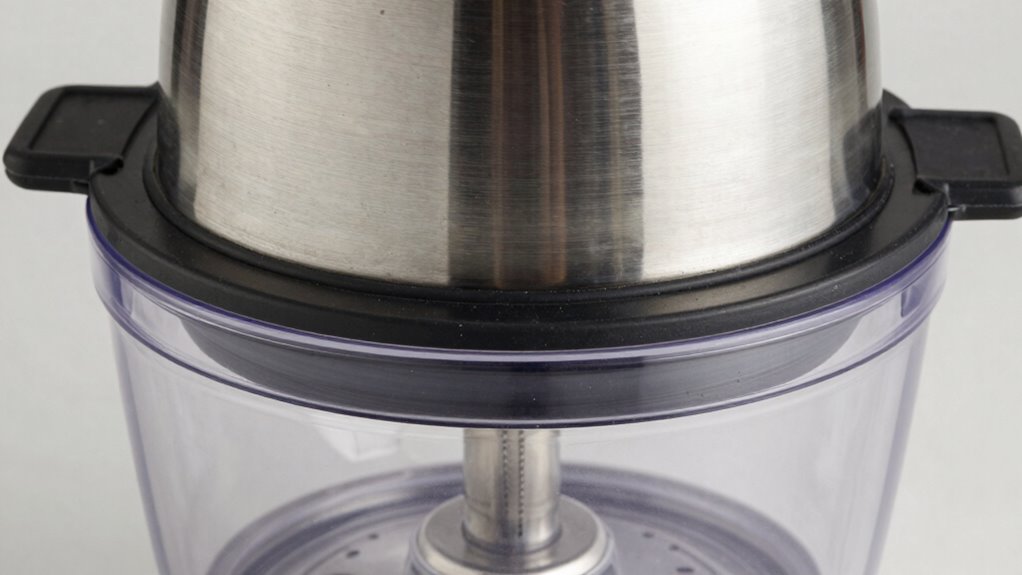
Overloading your food processor can put unnecessary strain on the seals, increasing the risk of leaks. To avoid overloading dangers, always follow the manufacturer’s recommended capacity. Overfilling can cause ingredients to press against the seals, weakening them over time. To protect your seal protection, add ingredients gradually and in small batches if needed. Use pulse functions for tougher ingredients instead of continuous processing. Be mindful of the motor’s response; if it struggles or stalls, reduce the load immediately. Properly balanced loads prevent uneven pressure on the seals, extending their lifespan. Regularly inspect your seals for signs of wear or damage, replacing them promptly. These tips help ensure your seals remain secure, keeping your food processor leak-free and functioning efficiently.
Common Causes of Leaks and How to Troubleshoot Them

Leaks in your food processor often stem from specific issues that compromise the seals or housing. To troubleshoot, start with a thorough seal inspection—look for cracks, tears, or debris that prevent a tight fit. Next, check the bowl for proper alignment; misaligned or damaged bowls can cause leaks. Consider bowl maintenance, ensuring it’s clean and free from food buildup that can interfere with sealing surfaces. Also, examine the gasket or sealing ring for wear or damage, replacing it if necessary. Finally, verify that the lid and blade assembly are securely in place; loose components can lead to leaks during operation. Addressing these common causes promptly helps keep your food processor working efficiently and leak-free.
Best Practices for Regular Maintenance to Keep Your Food Processor Leak-Free
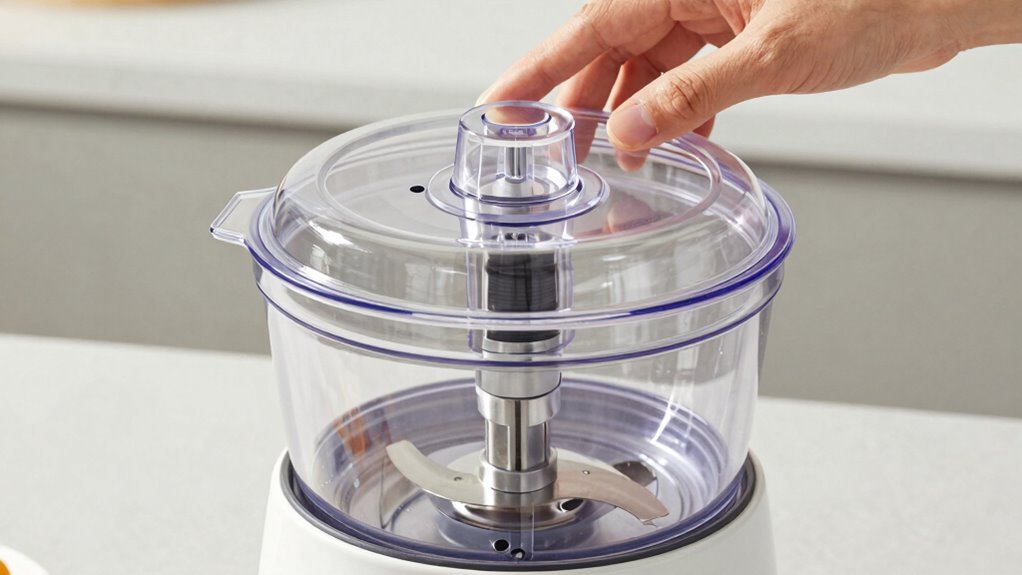
Regular maintenance is essential to prevent leaks and keep your food processor running smoothly. Start by regularly inspecting your food processor accessories, including the bowl, lid, and blades, for cracks or damage. Clean these parts thoroughly after each use, paying close attention to sealing surfaces. If you notice persistent leaks, consider alternative sealing methods, such as applying a food-grade silicone sealant around the gasket or replacing worn seals altogether. Keep the gasket and bowl edges free of debris and buildup, ensuring a tight fit. Regularly tightening screws and checking for wear helps maintain a secure seal. By staying vigilant and performing routine checks, you can prevent leaks before they start, extending your food processor’s lifespan and ensuring safe, efficient operation.
Frequently Asked Questions
Can Using Incompatible Attachments Cause Food Processor Leaks?
Using incompatible attachments can definitely cause food processor leaks. When the attachment compatibility isn’t right, the seal material may not fit properly, leading to gaps where liquids can escape. Always check the manufacturer’s instructions for compatible attachments to guarantee a proper fit. Properly matching the attachment with the seal material helps maintain a secure seal, preventing leaks and ensuring your food processor works efficiently.
What Are the Signs of a Leaking Food Processor During Operation?
A leaking food processor whispers trouble through leaking sounds and food residue buildup around the base. You’ll notice a puddle forming beneath it or see ingredients sneaking out during operation. The noise might sound different, like a faint hiss or drip. These signs mean you should pause and check seals, bowls, and attachments. Acting quickly prevents messes from spreading and keeps your processor running smoothly.
How Long Do Food Processor Seals Typically Last Before Needing Replacement?
Your food processor’s seals typically last around 1 to 3 years, depending on usage and care. Seal durability varies, so keep an eye out for signs like leaks or difficulty securing the bowl. If you notice these issues, it’s time for a replacement. Regularly inspecting and maintaining the seals can extend their lifespan, but don’t wait too long—replacing them promptly guarantees your processor stays leak-free and functions smoothly.
Are There Specific Cleaning Products That Can Damage Food Processor Seals?
You should avoid using harsh cleaning agents like bleach or abrasive scrubbers on your food processor seals, as they can damage the rubber and compromise seal maintenance. Instead, opt for mild dish soap and warm water to clean the seals gently. Regularly inspecting and cleaning your seals helps prevent leaks, ensuring your food processor stays in top shape. Always follow the manufacturer’s cleaning instructions for best results.
How Does Ambient Temperature Affect the Integrity of Seals and Bowls?
Think of your food processor as a delicate dance partner—temperature fluctuations can throw it off balance. When ambient temperatures swing wildly, the seal material durability can weaken, leading to leaks. High heat can cause seals to warp or crack, while cold can make them brittle. Keep your processor in a stable environment to protect the integrity of seals and bowls, ensuring smooth operation and preventing leaks.
Conclusion
By keeping an eye on your seals and maintaining your food processor regularly, you can prevent leaks before they start. Always assemble it correctly and avoid overloading to protect your investment. Remember, a stitch in time saves nine—address issues early, and your food processor will serve you well for years. With proper care, you’ll keep leaks at bay and enjoy smooth, hassle-free meal prep every time.
Fall Picks
fall essentials
As an affiliate, we earn on qualifying purchases.