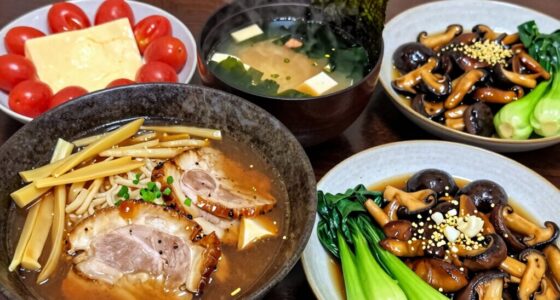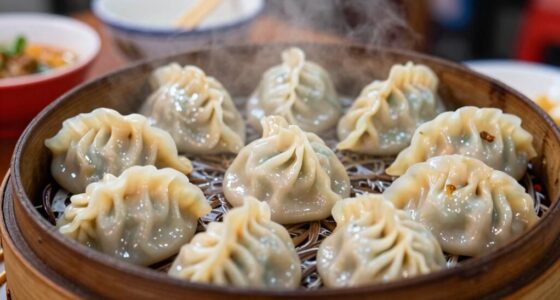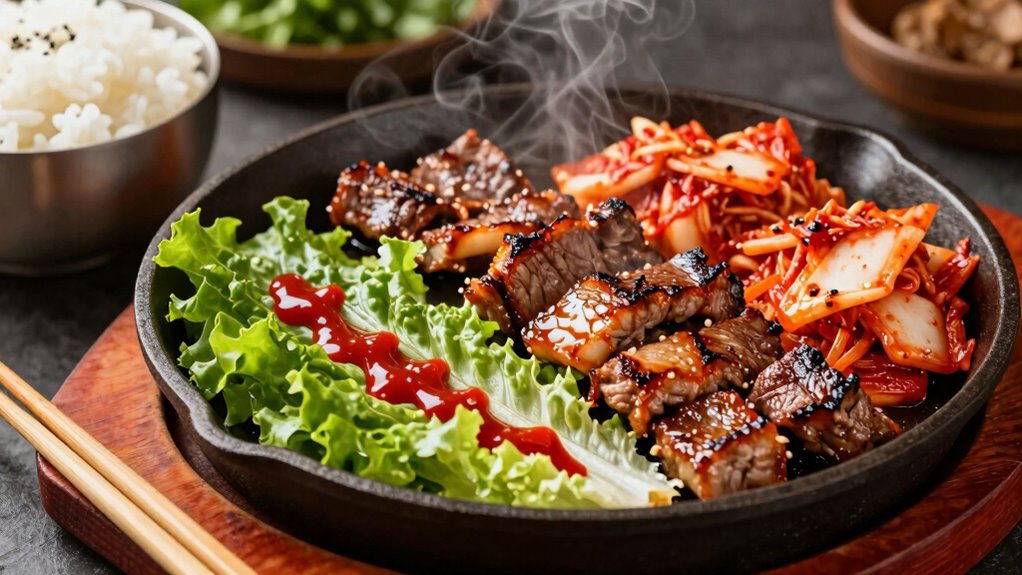

Korean cuisine gets its big flavors from skillfully balancing contrasting tastes and textures. You’ll find spicy, sweet, sour, and savory elements that excite your palate with each bite. Think crunchy pickled vegetables paired with tender meats or silky tofu contrasted with crispy coatings. These intentional contrasts deepen flavor and keep your mouth engaged. If you want to explore more about these dynamic flavor combinations and how to use them in your own cooking, keep going.
Listen free for 30 days with Audible
Thousands of audiobooks and originals — cancel anytime.
As an affiliate, we earn on qualifying purchases.
Key Takeaways
- Korean cuisine balances spicy, sweet, sour, and savory flavors through thoughtful ingredient pairings and contrast techniques.
- Texture contrasts, like crispy vegetables with tender meats, enhance dish complexity and mouthfeel.
- Fusion incorporates international ingredients while respecting traditional flavors, creating bold, innovative dishes.
- Flavor pairings, such as gochujang with fruits or kimchi with rich meats, deepen taste layers.
- Mastering flavor and texture contrasts makes Korean dishes both memorable and exciting.
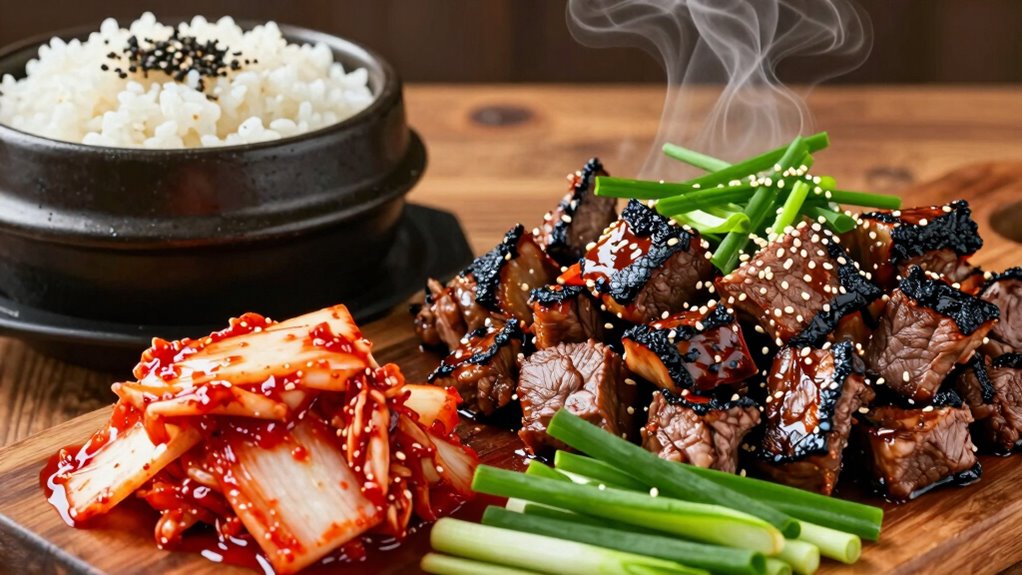
Korean cooking stands out for its bold flavors, which come from a masterful use of contrast. This culinary approach balances spicy, sweet, sour, and savory elements in a way that excites your palate with every bite. The secret lies in the clever application of fusion techniques and ingredient pairing that create a symphony of taste sensations. You’ll notice how traditional ingredients are combined with modern techniques to craft dishes that are both familiar and innovative, making Korean cuisine uniquely dynamic.
Korean cuisine masterfully balances bold flavors through innovative fusion and ingredient pairing, creating a dynamic taste experience.
When exploring Korean dishes, you’ll see how fusion techniques play an essential role in shaping the flavor profile. Chefs blend ingredients and cooking styles from other cultures while maintaining core Korean elements. For example, you might find kimchi tacos or bibimbap bowls topped with international ingredients, like avocado or cheese. These fusion techniques don’t dilute the essence but enhance it, creating new layers of flavor that surprise your senses. It’s about respecting tradition while embracing innovation, allowing you to enjoy familiar tastes with a contemporary twist.
Ingredient pairing is central to the boldness of Korean dishes. You’ll notice how spicy gochujang (red chili paste) pairs perfectly with sweet honey or ripe fruits, balancing heat with a touch of sweetness. Similarly, the tangy flavor of fermented kimchi contrasts with rich, fatty meats like pork belly, cutting through the richness and providing an invigorating bite. The harmony comes from understanding how contrasting flavors and textures complement each other. As you taste these combinations, you’ll discover how each ingredient’s role enhances the overall dish, making every bite more complex and satisfying. This mastery of flavor balance is what elevates Korean cuisine to a level of culinary artistry.
Korean cuisine’s mastery of contrast also extends to its textures. Crunchy pickled vegetables balance soft, tender meats, while silky tofu contrasts with crispy fried elements. This careful ingredient pairing keeps your mouth engaged and prevents any one flavor or texture from overpowering the others. It’s a deliberate balance that makes each dish memorable. Whether you’re eating a spicy stew, a savory pancake, or a simple side dish, you’ll see how the thoughtful combination of ingredients accentuates each component’s strengths. Additionally, understanding these flavor contrasts can inspire you to experiment with your own cooking at home. Recognizing how culinary contrast enhances dishes can help you develop your palate and create more exciting meals.
As an affiliate, we earn on qualifying purchases.
Frequently Asked Questions
What Are the Most Common Ingredients Used in Korean Cuisine?
You’ll find that common ingredients in Korean cuisine include fermented pastes like gochujang and doenjang, which add rich, savory flavors. Rice is a staple for many dishes, forming the base for items like bibimbap and various side dishes. Vegetables like napa cabbage, garlic, ginger, and green onions are essential, giving dishes their vibrant taste. These ingredients create the bold contrasts that make Korean food so flavorful.
How Does Korean Cooking Incorporate Regional Flavors?
You’ll find Korean cooking beautifully balances regional flavors through traditional fermentation and regional spice blends. Each area emphasizes its unique ingredients, like Jeju’s fresh seafood or Jeolla’s hearty vegetables, creating distinct dishes. These local flavors influence everything from kimchi to stews, making every bite a voyage. By blending traditional techniques with regional ingredients, Korean cuisine cultivates a rich, diverse tapestry of tastes that reflect the country’s cultural and geographical variety.
What Cooking Techniques Are Unique to Korean Dishes?
You’ll notice Korean dishes use unique techniques like fermentation and grilling. Fermentation techniques are essential for making staples like kimchi and doenjang, which develop complex flavors over time. Grilling methods, such as charcoal or gas grilling, are common for dishes like bulgogi and galbi, giving the meat a smoky, caramelized taste. These techniques combine to create bold, layered flavors that define Korean cuisine and make it stand out.
How Has Korean Cuisine Influenced Global Food Trends?
You’ve seen Korean cuisine influence global food trends through fusion innovations and modern interpretations. Chefs blend traditional flavors like gochujang and kimchi with ingredients from various cuisines, creating exciting dishes that appeal worldwide. This approach sparks culinary creativity, inspiring restaurants to experiment with Korean spices and techniques. As a result, Korean food’s bold, contrasting flavors now shape contemporary menus, making it a celebrated influence in the global culinary scene.
Are There Traditional Korean Spices Essential for Authentic Flavor?
Yes, traditional Korean spices are essential for authentic flavor. You’ll want to include fermented pastes like gochujang and doenjang, which add depth and umami. Chili powders, especially gochugaru, give dishes their signature heat and vibrant color. These ingredients create the bold, contrasting flavors that define Korean cuisine. Using them properly helps you achieve the genuine taste and complexity that make Korean dishes so distinctive and delicious.
As an affiliate, we earn on qualifying purchases.
Conclusion
Just like a master painter uses bold strokes and subtle shades to create depth, Korean cooking blends contrasting flavors—spicy and sweet, sour and savory—to craft dishes full of complexity. Embrace these contrasts as your culinary palette, turning each meal into a vibrant masterpiece. When you understand and play with these flavors, you’re not just cooking—you’re telling a story with every bite, inviting everyone to experience the rich tapestry of Korean cuisine.
As an affiliate, we earn on qualifying purchases.
As an affiliate, we earn on qualifying purchases.
Fall Picks
fall essentials
As an affiliate, we earn on qualifying purchases.