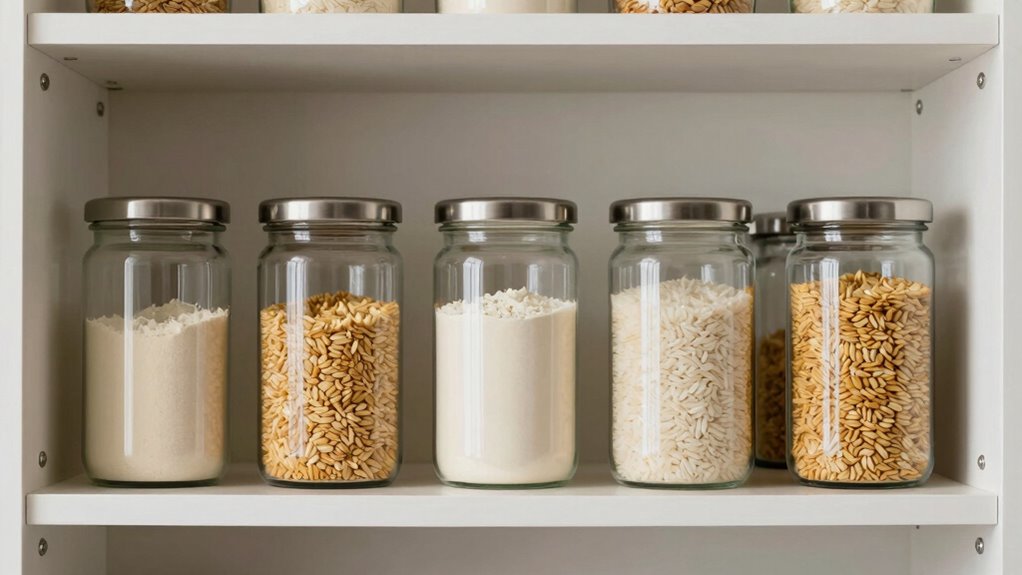

To make managing flour and rice easier, invest in airtight, clear, and stackable containers to keep your staples fresh and visible. Label everything with transfer dates and contents, and place everyday items within easy reach. Regularly check for expiration and rotate stock to prevent waste. Develop a routine to organize baking supplies and grains, and stick to it. Keep your pantry tidy, efficient, and well-maintained — discover more tips to optimize your system.
Open a free Amazon Business account
Business pricing, bulk buying and tax-exempt orders.
As an affiliate, we earn on qualifying purchases.
Key Takeaways
- Use airtight, clear, and stackable containers to keep flour and rice fresh and visible.
- Label containers with contents and transfer dates for easy tracking and rotation.
- Store frequently used items at eye level for quick access; less-used items go higher or lower.
- Regularly check and rotate stock to prevent spoilage and maintain ingredient quality.
- Develop a routine to organize baking staples and grains, simplifying long-term pantry management.

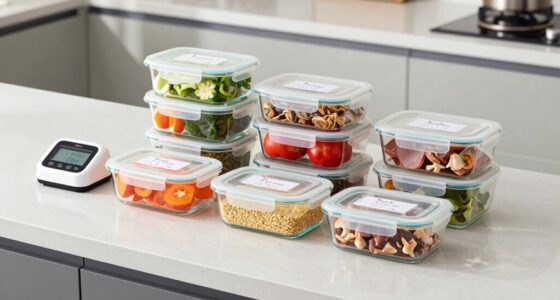
Keeping your flour and rice organized is vital for maintaining an efficient pantry and preventing waste. When you have a clear system in place, cooking becomes smoother, and you waste less of these staple ingredients. The key is implementing practical storage solutions that make it easy to access what you need and keep everything fresh. Start by choosing containers that are airtight and made from materials like glass or BPA-free plastic. These help preserve the quality of your flour and rice while preventing pantry pests and moisture from compromising the contents. Clear containers are a smart choice because you can easily see how much you have left without opening each one, saving you time and effort during meal prep.
Organize flour and rice with airtight, clear containers to keep ingredients fresh and accessible.
In terms of storage solutions, consider labeling each container with its contents and the date you transferred the flour or rice into the container. This simple step guarantees you always know what’s inside and helps you keep track of freshness, reducing the risk of using expired ingredients. When organizing your pantry, place your most frequently used items at eye level for quick access. Less frequently used items can go on higher or lower shelves, which keeps your space tidy and efficient. If you have limited space, stackable containers work well because they maximize vertical storage without taking up extra room. Additionally, understanding the importance of proper storage safety helps ensure your ingredients stay fresh longer and remain safe to use. Proper storage conditions can significantly extend the shelf life of your staples, saving you money and reducing waste. Incorporating storage best practices into your routine can also help prevent contamination and spoilage.
Cooking tips also come into play when managing these ingredients. Always scoop flour and rice with dry, clean utensils to avoid contamination and moisture buildup. Avoid using your hands directly, as oils or moisture from your skin can spoil the ingredients faster. When measuring, use dry measuring cups and level off accurately for consistent results. Proper storage and handling are vital in maintaining the quality of flour and rice, ensuring your dishes turn out as intended. Incorporating routine checks into your pantry management can help you identify and use older ingredients before they spoil, keeping your supplies fresh and minimizing waste.
To keep your pantry organized long-term, develop a routine of checking your supplies every few months. This allows you to rotate older stock to the front, so nothing gets forgotten or wasted. Consider creating a dedicated section for baking ingredients and staples like rice, so you know exactly where everything is when you’re planning meals. Incorporating these storage solutions and cooking tips into your routine will make managing flour and rice less of a chore and more of an efficient process. With a little effort upfront, you’ll enjoy a tidy, well-stocked pantry that makes cooking easier, more enjoyable, and less wasteful.
airtight clear storage containers for flour and rice
As an affiliate, we earn on qualifying purchases.
As an affiliate, we earn on qualifying purchases.
Frequently Asked Questions
How Often Should I Rotate My Stored Flour and Rice?
You should rotate your stored flour and rice every 3 to 6 months to guarantee freshness and safety. Check their shelf life regularly, especially if stored in warm or humid conditions. Use airtight containers for better storage, and keep an eye out for signs of spoilage like mold or off odors. Proper rotation prevents waste and keeps your pantry stocked with high-quality ingredients.
What Are the Best Containers for Long-Term Storage?
Did you know that properly stored grains can last up to 25 years? For long-term storage, you want airtight containers that keep moisture and pests out. Glass, BPA-free plastic, or metal bins are excellent options, especially if they have airtight seals. Consider eco-friendly options like reusable glass jars or biodegradable containers to minimize environmental impact while keeping your flour and rice fresh for years.
How Do I Prevent Pests in My Pantry?
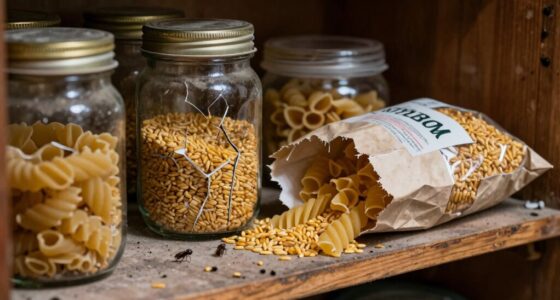
To prevent pests in your pantry, start with pest-proof packaging to keep bugs out of your flour and rice. Store your grains in airtight containers and regularly inspect for signs of pests. You can also use natural repellents like bay leaves or cedar chips in your pantry to deter insects. Keep the area clean, dry, and well-ventilated, and rotate your stock to prevent infestations from developing over time.
Can I Store Different Types of Flour Together?
Yes, you can store different types of flour together, but keep gluten content in mind. High-gluten flours like bread flour should be separated from gluten-free or organic varieties to prevent cross-contamination. Use airtight containers to keep pests out and maintain freshness. Label each container clearly, and store in a cool, dry place. This way, you’ll keep your flour varieties organized and ready for baking without compromising their unique qualities.
What’s the Ideal Humidity Level for Storing Rice?
Think of your rice as a delicate pearl, needing just the right environment to shine. Keep humidity control between 13-15% for ideal storage. Too high, and mold might creep in like shadows; too low, and it becomes brittle. Use proper storage techniques—airtight containers and cool, dark spots—to keep your rice fresh and prevent spoilage. Maintaining this balance ensures your pantry remains a treasure chest of quality grains.
stackable BPA-free plastic pantry containers
As an affiliate, we earn on qualifying purchases.
As an affiliate, we earn on qualifying purchases.
Conclusion
With this pantry system, managing your flour and rice becomes effortless, transforming chaos into order. Imagine the simplicity of quick access amidst clutter, like finding clarity in a storm. Just as a lighthouse guides ships safely home, this system guides you through your kitchen routine. Say goodbye to spills and forgotten bags, and hello to a streamlined space. Because in the end, a well-organized pantry isn’t just about storage — it’s about reclaiming your time and peace of mind.
labeling kit for pantry containers
As an affiliate, we earn on qualifying purchases.
As an affiliate, we earn on qualifying purchases.
As an affiliate, we earn on qualifying purchases.
Flea & tick season Picks
flea and tick prevention
As an affiliate, we earn on qualifying purchases.