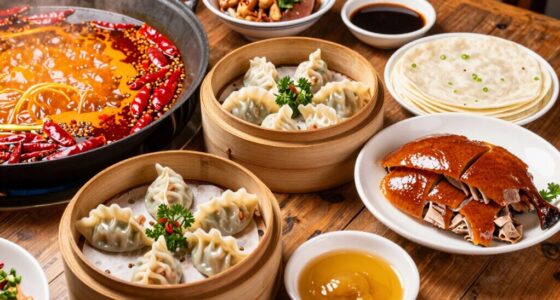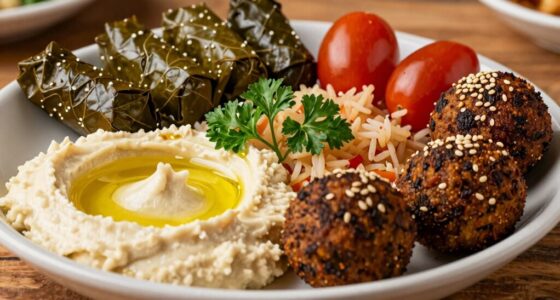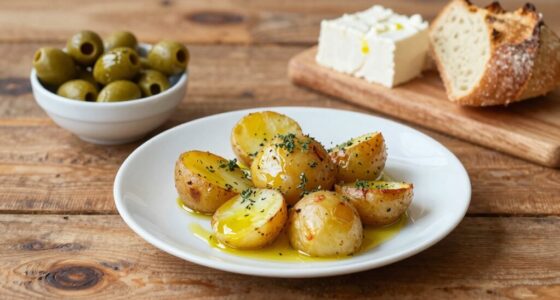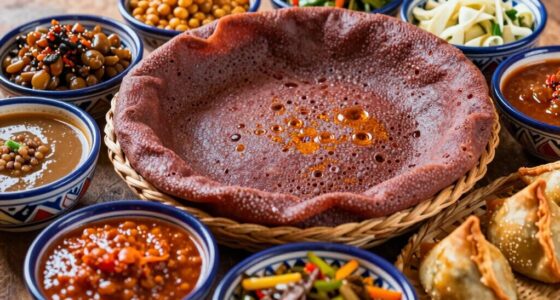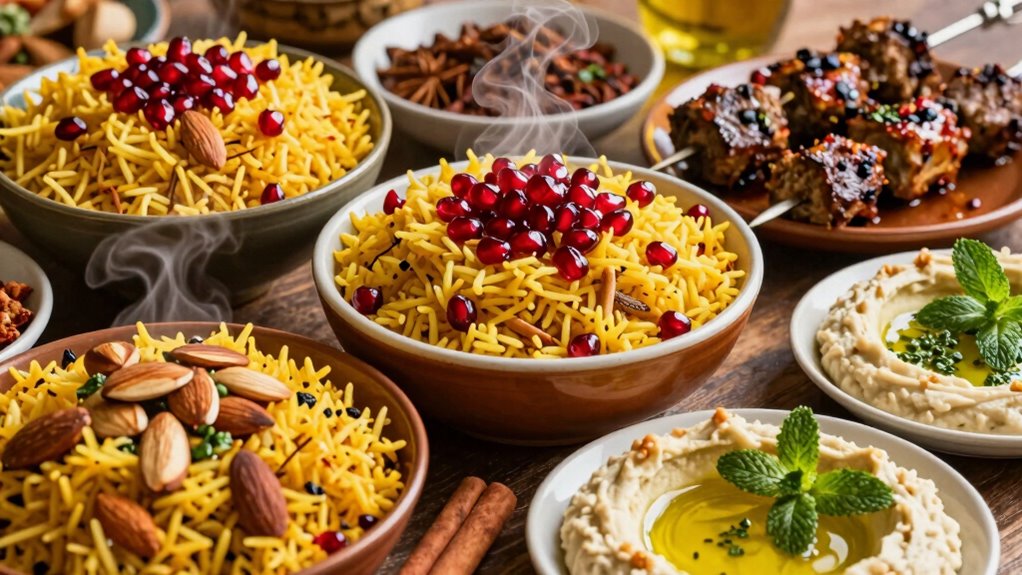
You’ll notice Middle Eastern dishes feel so layered and fragrant because they use fresh herbs like parsley, mint, and cilantro generously, which add bright, grassy notes that balance rich ingredients. Spices are thoughtfully blended, releasing aromatic oils and building deep, complex flavors. Techniques like layering herbs and spices during cooking create a vibrant aroma and multisensory experience. If you keep exploring, you’ll discover how these elements come together to make this cuisine truly unforgettable.
Open a free Amazon Business account
Business pricing, bulk buying and tax-exempt orders.
As an affiliate, we earn on qualifying purchases.
Key Takeaways
- The generous use of fresh herbs like parsley, mint, cilantro, and dill adds bright, fragrant layers to dishes.
- Thoughtful layering of spices and herbs during cooking enhances aroma and complexity.
- Incorporating herbs at different stages releases essential oils, creating a multisensory fragrance.
- The combination of warm spices and fresh herbs produces a vibrant, multi-dimensional aroma.
- The deliberate blending of ingredients ensures a cohesive, fragrant, and richly layered flavor profile.
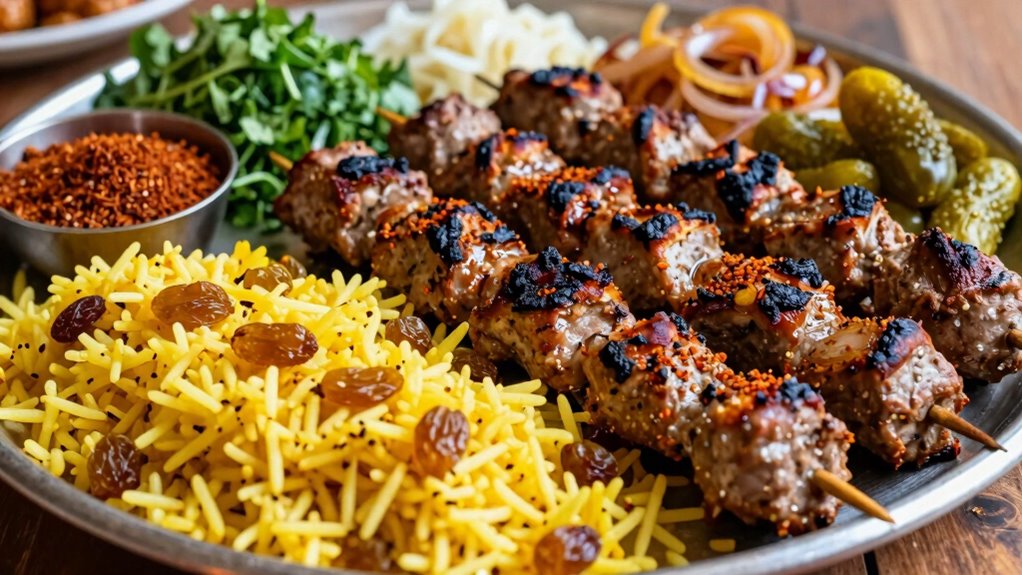
Aromatic herbs play a vital role in elevating these dishes, too. Fresh herbs like parsley, mint, cilantro, and dill are used generously and thoughtfully. Their bright, grassy notes contrast beautifully with the warm spices, providing freshness that balances richer elements like lamb or chickpeas. When you cook with these herbs, they release their essential oils, filling the kitchen with fragrant, inviting scents. The way they’re incorporated—either chopped fresh at the end or simmered into stews—affects the final aroma, making each bite a multisensory experience.
The layering of flavors isn’t accidental; it’s a deliberate process. You might start with a base of sautéed onions and garlic, which add earthiness, then add your spice blend, letting the oils release their fragrant aromas. As you continue cooking, aromatic herbs are introduced to add brightness and complexity. The result is a dish that evolves with each bite—initially spicy, then herbaceous, then deeply savory. This careful layering guarantees each element complements the others rather than overpowering them.
What makes Middle Eastern cuisine particularly astonishing is how these elements come together seamlessly. The spices and herbs are not used randomly; they’re thoughtfully combined to create a layered aroma that’s both warm and vibrant. Understanding the art of spice blending allows cooks to craft dishes with a rich, multi-dimensional flavor profile. When you understand the art of spice blending and the significance of aromatic herbs, you can appreciate why these flavors feel so rich, inviting, and multi-dimensional. It’s this mastery that transforms simple ingredients into dishes that are both fragrant and unforgettable.
As an affiliate, we earn on qualifying purchases.
Frequently Asked Questions
How Do Middle Eastern Spices Vary Across Different Countries?
You’ll notice that Middle Eastern spices vary across countries through regional spice blends like Za’atar in Lebanon, Ras el Hanout in Morocco, and Baharat in Turkey. Each region incorporates unique herbs, seeds, and spices, reflecting local tastes and ingredients. Culinary fermentation also influences flavor profiles, adding depth and complexity. These regional differences create layered, fragrant dishes that showcase the diverse spice traditions across the Middle East.
What Are the Most Common Aromatic Herbs Used in Middle Eastern Cuisine?
Imagine a vibrant garden bursting with colors—that’s what you’ll find with Middle Eastern herbs. You’ll often encounter aromatic herbs like parsley, mint, cilantro, and dill, creating herb blending that layers flavors beautifully. These herbs are used in aromatic infusions that add freshness and depth to dishes. Their bright, fragrant notes elevate everything from salads to stews, making each bite a lively, aromatic experience.
How Does the Climate Influence Flavor Profiles in Middle Eastern Food?
The climate impact in the Middle East profoundly influences flavor development, making dishes more vibrant and layered. Hot, dry conditions intensify the use of herbs and spices, which retain their aroma and potency. You’ll notice that the climate allows ingredients like sumac, za’atar, and citrus to develop richer flavors over time. This natural environment helps create the distinctive, fragrant profiles that define Middle Eastern cuisine.
Are There Specific Cooking Techniques That Enhance Fragrance?
Imagine you’re in a bustling market, like a scene straight out of a timeless story. To enhance fragrance, you should use herb infusion and spice roasting techniques. Herb infusion releases delicate aromas, while spice roasting brings out deeper, richer flavors. These methods awaken the senses, layering scents and tastes that make Middle Eastern dishes so vibrant. Your careful attention to these techniques transforms simple ingredients into a fragrant, unforgettable culinary experience.
How Do Traditional Middle Eastern Dishes Develop Their Layered Flavors?
You develop layered flavors in traditional Middle Eastern dishes through a mix of historical influences and culinary techniques. You use slow simmering to meld spices and ingredients, creating depth. Toasting spices enhances their aroma, while layering ingredients during cooking builds complexity. These methods, combined with centuries of cultural exchange, give dishes their rich, fragrant profile, making each bite a blend of history and careful craftsmanship.
As an affiliate, we earn on qualifying purchases.
Conclusion
Imagine hosting a dinner where every bite surprises you with a new layer of flavor—like a traditional kebab infused with smoky spices and topped with bright, tangy sumac. That’s the magic of Middle Eastern cuisine: its depth and fragrance come from carefully balanced herbs, spices, and ingredients. When you embrace these complex flavors, you’re not just eating—you’re experiencing centuries of culinary artistry that invite you to savor every moment.
As an affiliate, we earn on qualifying purchases.
Middle Eastern herb and spice jars
As an affiliate, we earn on qualifying purchases.
As an affiliate, we earn on qualifying purchases.
NFL season / tailgating Picks
team gear
As an affiliate, we earn on qualifying purchases.