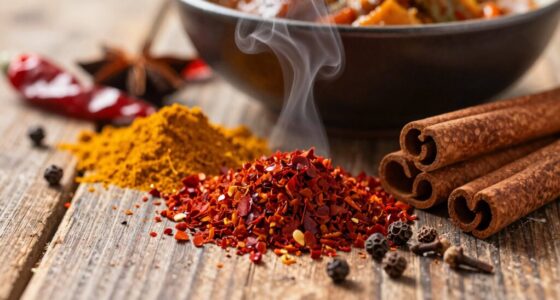
You might think that the hotter the chili, the better it tastes, but that’s a common myth. Increasing heat doesn’t always improve flavor or enjoyment—in fact, overly spicy peppers can mask subtle taste notes and overwhelm other flavors. Many factors influence a chili’s appeal, like balance and complexity, not just heat level. Your personal tolerance varies, so the spiciness that excites one person might be just right or too strong for another. Curious to discover how to find that perfect balance?
Key Takeaways
- Higher heat levels do not necessarily enhance flavor and can mask subtle chili complexities.
- Flavor balance and variety are more important than simply increasing spiciness.
- Personal tolerance and perception vary, making hotter peppers not universally better.
- Excessive heat can overpower other flavor notes, reducing overall chili enjoyment.
- Scientific evidence shows spicy foods, including chili peppers, are not directly linked to stomach ulcers.
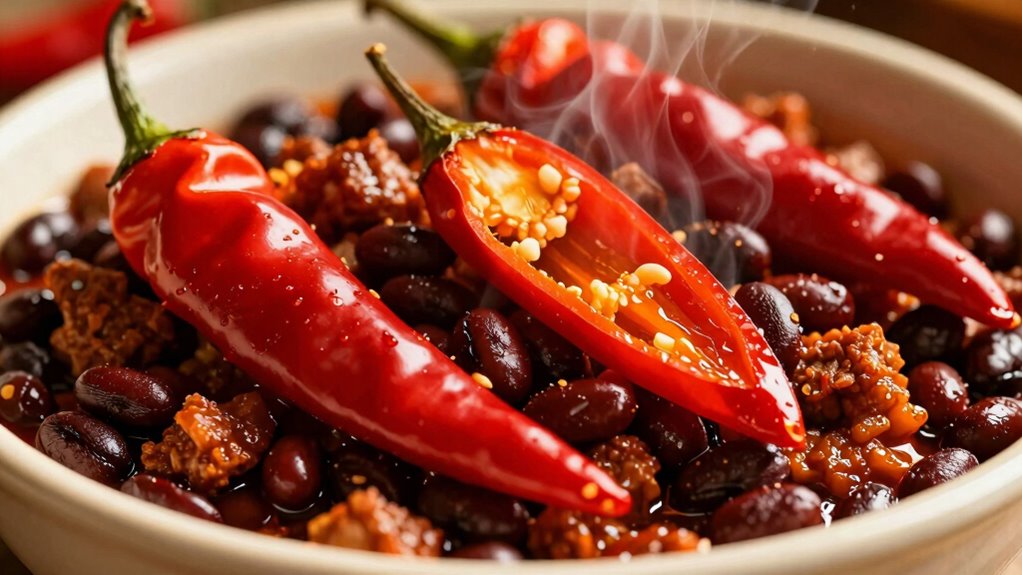
Have you ever wondered if the popular belief about chili peppers causing stomach ulcers is true? It’s a common misconception that spicy foods, especially chili peppers, are harmful to your stomach. In reality, the relationship isn’t that straightforward. Many people believe that the hotter the chili, the more flavorful and exciting it becomes. But that’s not always the case. The idea that heat equals better flavor can be misleading. When you’re choosing a chili, it’s more about finding the right flavor balance than simply chasing the highest heat level. Some peppers deliver a complex taste profile that enhances dishes without overwhelming them with spiciness. It’s the harmony of flavors—bitterness, sweetness, smokiness—that makes a chili memorable, not just its heat perception.
Hotter isn’t always better; balanced flavors create more memorable chili experiences.
Your perception of heat is highly subjective. What’s fiery for one person might be mild for another. This variability is influenced by your tolerance, but also by how the chili’s capsaicin interacts with your palate. Capsaicin is the compound responsible for that burning sensation. When you eat a very hot chili, your brain interprets this as pain, but that doesn’t mean it’s better tasting. Overly spicy peppers can overpower other flavor notes and mask the subtle complexities that make a chili enjoyable. Sometimes, a milder chili offers a richer, more nuanced flavor experience because it allows other ingredients to shine through. Additionally, sensory perception can vary significantly among individuals, emphasizing that enjoyment of chili is a highly personal experience. Recognizing the balance of heat and flavor is essential for appreciating the full depth of a chili’s character. Understanding how chili varieties develop their unique flavor profiles can also help in selecting peppers that better match your taste preferences.
balanced chili pepper variety
As an affiliate, we earn on qualifying purchases.
As an affiliate, we earn on qualifying purchases.
Frequently Asked Questions
How Does Capsaicin Affect the Body’s Pain Receptors?
Capsaicin binds to your body’s capsaicin receptors, which are pain receptors responsible for sensing heat and pain. When it activates these receptors, it initially causes a burning sensation. However, this activation leads to pain modulation by desensitizing the receptors over time, which diminishes pain signals. That’s why capsaicin is used in topical treatments to reduce pain — it tricks your nerves into becoming less responsive to pain stimuli.
Are There Health Benefits to Eating Very Spicy Chili Peppers?
Eating very spicy chili peppers offers health benefits like boosting metabolism, reducing inflammation, and providing antioxidants. You can enhance flavor pairing by combining them with ingredients like lime or coconut milk, enriching your dishes’ taste and health perks. Incorporating chili peppers also ties into culinary history, showcasing centuries of cultural traditions. Just remember, moderation is key, as excessive heat can cause discomfort, but enjoyed wisely, they add both flavor and health benefits.
What Are Some Mild Chili Varieties That Taste Great?
Looking for mild chili varieties that taste great? Have you tried poblano, banana peppers, or Hungarian wax peppers? These cultivars offer rich flavor profiles without overwhelming heat. Cultivar differences mean some chilies are naturally milder and more flavorful, making them perfect for those who enjoy subtle spice. They’re ideal for adding depth to dishes while keeping the heat gentle. Isn’t it better to savor flavor without sacrificing comfort?
Can Eating Super Spicy Chili Damage Your Digestive System?
Eating super spicy chili can sometimes irritate your digestive system, especially if you’re not used to it. In chili farming and spicy food culture, many find that excessive heat can cause stomach pain, heartburn, or indigestion. If you enjoy spicy foods, start with milder varieties and gradually increase your tolerance. Moderation helps you enjoy the flavors without damaging your digestive health, ensuring your love of chili remains a positive experience.
How Can I Reduce the Heat in a Spicy Dish?
To reduce the heat in a spicy dish, you can balance the flavor by adding dairy like sour cream or yogurt, which neutralizes capsaicin. You might also use ingredient substitutions, such as replacing hot peppers with milder ones or adding sweetness with honey or sugar. These adjustments help mellow the spice, enhancing the overall flavor balance and making the dish more enjoyable without sacrificing its depth.
mild to hot chili pepper sampler
As an affiliate, we earn on qualifying purchases.
As an affiliate, we earn on qualifying purchases.
Conclusion
Remember, you don’t have to drown your taste buds in fiery heat to enjoy chili. Think of it like a dance—sometimes a gentle sway is more graceful than a wild stomp. Let each bite be a journey, not a battle. When you find that perfect balance, chili becomes a warm, comforting hug, not a fiery challenge. So, savor the flavor, and let the heat enhance, not overpower, your delicious experience.
flavorful chili spice blends
As an affiliate, we earn on qualifying purchases.
As an affiliate, we earn on qualifying purchases.
capsaicin pain relief cream
As an affiliate, we earn on qualifying purchases.
As an affiliate, we earn on qualifying purchases.