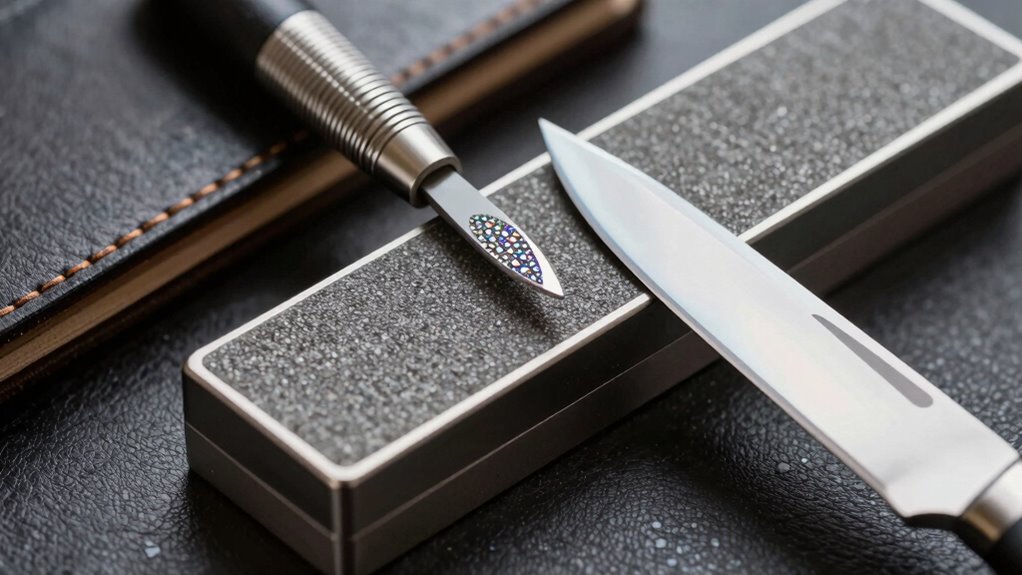

Sharpening removes material from your blade to restore a dull or chipped edge, using abrasive tools like whetstones or electric sharpeners. Honing realigns microscopic teeth along the edge, correcting misalignments and typically done frequently with honing rods or steels. Stropping polishes and smooths the edge, removing microscopic burrs without removing material. Each technique serves a different purpose, and understanding their differences helps you maintain your blades better—there’s more to discover as you continue exploring these essential skills.
Key Takeaways
- Sharpening removes material to reshape the blade’s edge, restoring dull or chipped edges.
- Honing realigns microscopic teeth along the edge, correcting misalignment without material removal.
- Stropping polishes the edge, removing burrs to refine and smooth the blade’s finish.
- Sharpening uses abrasive tools like stones or diamond sharpeners; honing uses rods or steels.
- Stropping is mainly for polishing high-end blades, not for sharpening or sharpening; it maintains edge quality.

Understanding the differences between sharpening, honing, and stropping is vital for maintaining a razor-sharp edge on your knives and tools. Each process plays a unique role in keeping your blades performing at their best, and recognizing when to use each technique guarantees you don’t damage your blades or waste effort. Your choice of blade materials influences your approach; harder steels may require different sharpening tools than softer ones, and knowing the right maintenance techniques helps extend the lifespan of your tools.
Sharpening is the process that actually reshapes the edge of your blade. Over time, use causes the edge to become dull or develop chips, and this is when you need to remove material to restore its original geometry. You typically use abrasive tools like whetstones, diamond sharpeners, or electric sharpeners for this task. The grit size determines how aggressive the sharpening is—coarse grits remove material quickly, while finer grits refine the edge for sharper results. When sharpening, you need to think about the blade material because softer steels may require gentler angles to avoid excessive wear, while harder steels can handle more aggressive sharpening. Proper maintenance techniques involve maintaining consistent angles and applying even pressure, which prevents uneven edges or unnecessary damage. Regularly evaluating your blade’s edge alignment can help determine when sharpening is truly necessary, especially if you notice a significant decline in cutting performance.
Honing is a gentler process that realigns the microscopic teeth along the edge of your blade. It doesn’t remove much material but corrects the slight bending or misalignment caused by regular use. Honing rods or steels are common tools here, and you should use them frequently—sometimes daily—to keep your blades aligned. For different blade materials, the honing process remains similar, but the frequency and pressure you apply might vary. Honing is invaluable because it prolongs the intervals between sharpening sessions, saving your blades from unnecessary wear. It’s a vital maintenance technique that keeps your knives performing smoothly and safely, especially if you’re working with high-quality or expensive blades. Additionally, honing can be particularly effective when combined with strop maintenance to optimize blade sharpness.
Stropping, on the other hand, is mainly used for maintaining straight razors or finely tuned blades. It involves polishing the edge with a leather strap or similar material to remove microscopic burrs and enhance smoothness. Stropping doesn’t sharpen or hone but restores the blade’s polish, making it feel sharper and more refined. This technique is gentle, and because it involves only polishing, it’s suitable for delicate blades or those requiring a fine finish. For blades made of high-end or premium materials, regular stropping preserves their edge and reduces the need for frequent sharpening or honing. Incorporating stropping into your routine is an essential maintenance technique that ensures your blades stay sharp longer and perform with precision. Proper stropping technique, including correct pressure and angle, is crucial for achieving optimal results and avoiding damage to the edge.

Intelitopia Complete Knife Sharpening Stone Set – Dual Grit Whetstone 400/1000 3000/8000 Knife Sharpener with Leather Strop, Flattening Stone, Bamboo Base, 3 Non-slip Rubber Bases & Angle Guide
【Complete Knife Sharpening Stone Kit】You don't need to be a Pro to sharpen your blades, all you need…
As an affiliate, we earn on qualifying purchases.
As an affiliate, we earn on qualifying purchases.
Frequently Asked Questions
Can I Use the Same Tool for Sharpening, Honing, and Stropping?
You shouldn’t use the same tool for sharpening, honing, and stropping because each step requires different techniques and abrasiveness for ideal blade maintenance. Using a versatile tool might seem convenient, but it can damage your blade or reduce effectiveness. Instead, invest in dedicated tools for each task, ensuring your blade stays sharp and in top condition. Proper tool selection enhances your blade’s longevity and performance, making your maintenance routine more efficient.
How Often Should I Sharpen Versus Hone My Knife?
You should sharpen your knife when it can’t cut through anything without a battle, usually every few months or when the blade feels dull. Hone it more often, like weekly, to realign the edge and maintain cutting performance. Think of honing as a quick spa treatment for your blade, while sharpening is like a full makeover. Regular blade maintenance keeps your knife slicing smoothly and your kitchen tasks hassle-free.
What Materials Are Best for Stropping?
You should use a leather strop with stropping compounds for the best results. A leather strop provides a smooth surface that helps polish and refine your blade’s edge. Applying stropping compounds, like pastes or powders, enhances the process by removing microscopic burrs and aligning the edge. Make sure to use quality leather and light pressure to avoid damaging the strop, ensuring your knife stays sharp and ready for use.
Is It Possible to Over-Sharpen a Blade?
Yes, you can over-sharpen a blade, which may weaken its edge and reduce durability. Over-sharpening wears down the blade’s edge faster, especially if the blade’s metallurgy isn’t designed for frequent sharpening. To maintain edge durability, sharpen only as needed and follow proper techniques. Using the right sharpening tools and angles prevents over-sharpening, helping your blade stay sharp longer and preserving its overall integrity.
Do Different Blades Require Different Sharpening Techniques?
Yes, different blades require different sharpening techniques because of blade metallurgy and edge angle. Softer metals might need less aggressive sharpening, while harder steels need precise angles and specialized tools. For example, a Japanese chef’s knife with a narrow edge angle demands careful sharpening to maintain its thin edge, whereas a heavy-duty cleaver benefits from a more robust approach. Adjusting your technique based on the blade’s material and intended use guarantees maximum sharpness and longevity.

Utopia Kitchen Knife Sharpener Rod 12 Inch, Professional Honing Rod for Knife Sharpening with Hanging Hook, Black
Premium Steel Construction – The steel rod is made of carbon steel and plated with nickel-chrome; the fine…
As an affiliate, we earn on qualifying purchases.
As an affiliate, we earn on qualifying purchases.
Conclusion
So, next time your knife feels dull, remember: sharpening, honing, and stropping are all about fixing what you think is broken—yet ironically, they’re just different ways to keep your blade “alive.” You might spend hours honing or stropping, only to realize a quick sharpening could’ve done the trick. It’s funny how we chase perfection, but sometimes, a simple fix is all you need—until you forget which one to use!
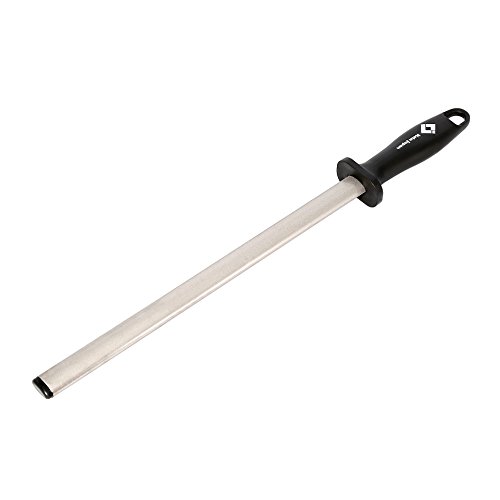
Kota Japan 12 in. Diamond Carbon Steel Professional Knife Sharpener Rod | Kitchen, Home or Hunting | Master Chef, Hunter or Home Gourmet Blade Sharpening Rod or Stick
✔️ DIAMOND ELECTOPLATING: State-of-the-art manufacturing for precision Kitchen, Home or Hunting blade sharpening. Ensures efficient and sharp sharpening…
As an affiliate, we earn on qualifying purchases.
As an affiliate, we earn on qualifying purchases.

Straight Razor Strop Leather Sharpening Strap Barber Leather
Size:45*5cm/18*2". Material: Cow Leather.
As an affiliate, we earn on qualifying purchases.
As an affiliate, we earn on qualifying purchases.