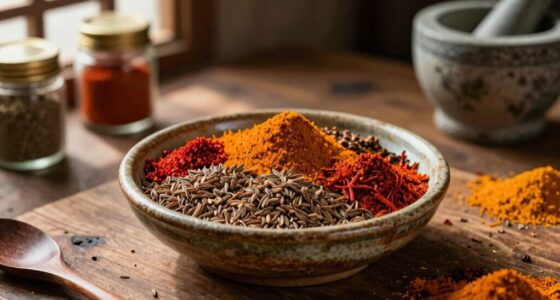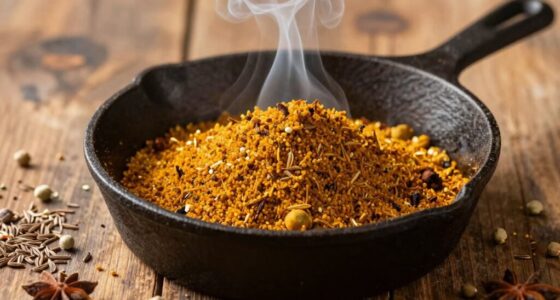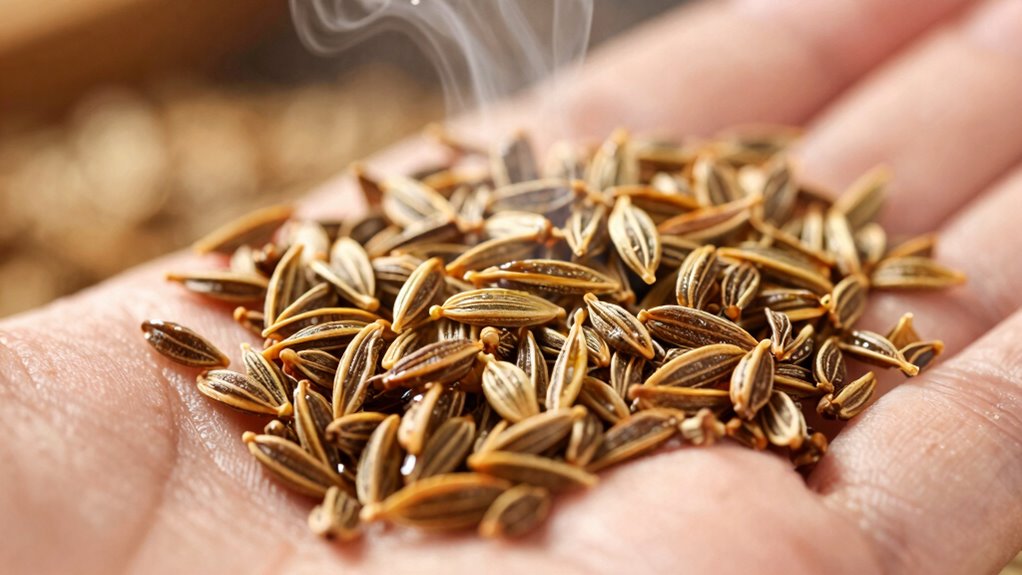

When heat hits cumin, it releases essential oils and triggers chemical changes that amplify its flavor, making it taste bigger and more complex. Heating breaks down cell walls, letting oils seep out and enhancing aroma and taste. Toasting cumin early in cooking helps develop deeper, earthy notes while boosting aromatic compounds. This process creates a richer, more assertive flavor that elevates dishes. Keep exploring to discover how mastering these techniques can unleash cumin’s full potential in your cooking.

Get kitchen staples and gadgets delivered free with Prime
- Fast, free delivery on millions of items
- Prime Video, Amazon Music and more included
- Member-only deals all year
Key Takeaways
- Heating releases essential oils, intensifying cumin’s natural aroma and flavor.
- Toasting breaks down cell walls, releasing more flavorful oils and boosting taste.
- Heat causes chemical transformations that deepen cumin’s earthy and nutty notes.
- Aromatic compounds vaporize and disperse, creating a more pronounced fragrance.
- Proper heating enhances flavor complexity and allows cumin’s bold, rich profile to develop fully.
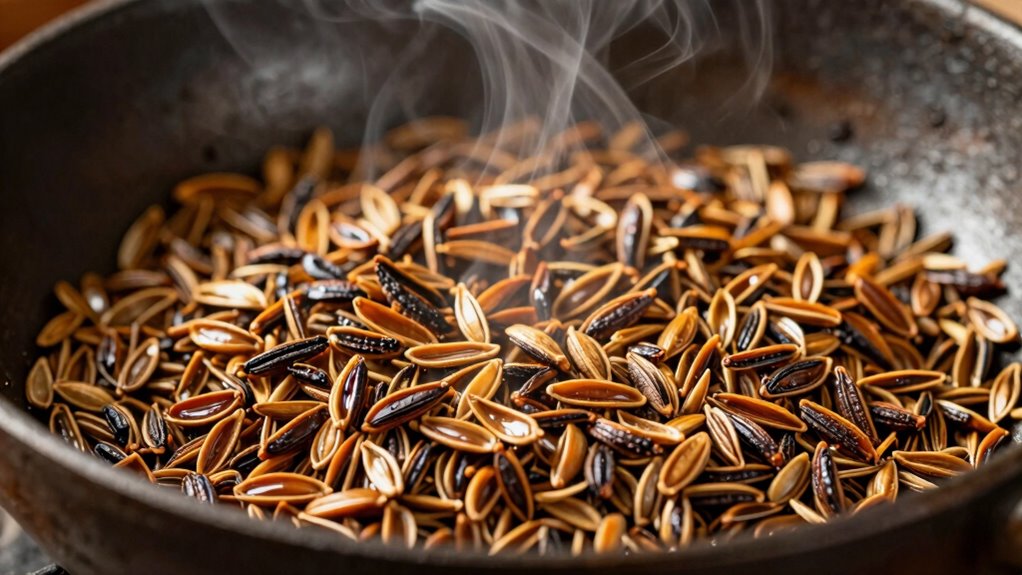
When cumin is heated, its flavor becomes more intense and aromatic, making it taste “bigger” than when raw. This transformation is a key reason why cooking cumin can elevate the overall flavor of your dishes. When you add cumin to a hot pan, the heat triggers a process called culinary flavor enhancement, which amplifies its natural qualities. As the spice warms, it releases essential oils more readily, leading to a richer, more complex taste that packs a punch. You’ll notice that the initial mild, earthy notes deepen, and a subtle nuttiness emerges, making the flavor more robust and satisfying.
One of the main reasons cumin tastes bigger after heating is spice aroma development. The heat causes the volatile aromatic compounds within cumin seeds to vaporize and disperse into the air. This release creates a fragrant aroma that’s more pronounced than when the spice is raw. As the aroma develops, it not only enhances the sensory experience but also signals to your palate that the flavor is intensifying. This aroma development is crucial in unlocking the full potential of cumin, transforming it from a simple spice to a powerful flavor enhancer in your cooking. Additionally, aroma development can be further enhanced by proper toasting techniques, which help release these aromatic compounds more effectively.
Furthermore, heating cumin helps to break down its cell walls, releasing more of its flavorful oils. This process intensifies the spice’s natural qualities and allows the flavor to meld better with other ingredients. When you toast cumin seeds before grinding or add ground cumin directly to a hot dish, you’re actively encouraging this process. The heat also allows the spice to release its earthy, warm notes more fully, which contributes to the perception of a bigger, more assertive flavor. Additionally, understanding the chemical transformation that occurs during heating can help you better control and maximize flavor development in your recipes. Recognizing the importance of heat-induced chemical changes can help cooks refine their technique for optimal flavor extraction.
You can see that the effect of heat on cumin is not just about hot temperatures—it’s about how heat transforms its chemical structure. This transformation is why many recipes call for cumin to be toasted or added early in the cooking process. By doing so, you’re giving the spice time to develop its aroma and deepen its flavor, resulting in a dish that tastes more complex and satisfying. So, next time you cook with cumin, remember that a little heat can go a long way in unlocking its full, bold potential, making your dishes richer and more inviting.
As an affiliate, we earn on qualifying purchases.
Frequently Asked Questions
Does Cumin’s Flavor Change With Different Cooking Methods?
Yes, cumin’s flavor changes with different cooking methods. When you heat cumin, its oils release more, intensifying its aroma and taste. Roasting enhances its earthy, nutty notes, making it ideal for culinary pairings like curries and spice blends. Cumin also holds cultural uses, especially in Middle Eastern and Indian dishes. By adjusting cooking techniques, you can highlight different flavor profiles, enriching your dishes and creating unique culinary experiences.
How Does Storage Affect Cumin’s Taste After Heating?
If you store cumin in a warm, humid place, its flavor diminishes after heating. Imagine leaving cumin in your kitchen cabinet near the stove; the exposure to heat and moisture can cause it to lose its potency. Proper storage effects, like keeping cumin in an airtight, cool, dark container, help preserve its flavor. This guarantees that when you heat it, the spice retains its robust, aromatic qualities longer.
Is There a Difference Between Toasted and Raw Cumin Flavor?
Toasted cumin offers a richer, deeper flavor compared to raw cumin, which has a more subtle, grassy taste. You’ll notice toasted cumin‘s nutty, smoky notes, making it popular in various culinary uses across different cuisines. Its cultural significance is evident in spice blends like garam masala or chorizo. To bring out these flavors, toast cumin lightly before adding it to dishes, enhancing aroma and taste, especially after heating.
Can Overcooking Cumin Make It Taste Bitter?
Yes, overcooking cumin can make it taste bitter. In culinary chemistry, heat causes flavor development, but excessive heat breaks down the essential oils, leading to bitterness and burnt flavors. You should toast cumin just until it’s fragrant, avoiding burning, to maximize flavor without bitterness. Properly cooked cumin releases its warm, earthy notes, enhancing your dish, while overcooking ruins the delicate balance of its flavor profile.
How Long Should Cumin Be Heated for Optimal Flavor Enhancement?
You should heat cumin for about 30 seconds to 1 minute, using a dry skillet over medium heat, to release its full flavor. This cooking technique enhances its aroma and taste, making it perfect for culinary pairings like curries, stews, or spice blends. Be cautious not to overheat, as it can turn bitter. Keep stirring or tossing to guarantee even heating and avoid burning, ensuring maximum flavor enhancement.
As an affiliate, we earn on qualifying purchases.
Conclusion
So next time you heat cumin, remember, you’re awakening a tiny world of flavor that dances and blooms like a sunrise. The heat reveals its secret depths, turning a humble seed into a symphony of rich, bold notes that fill your senses and elevate your dish. Embrace the transformation—it’s as if cumin whispers its ancient stories, inviting you to taste the magic hidden within each spark of heat.
As an affiliate, we earn on qualifying purchases.
As an affiliate, we earn on qualifying purchases.
NFL season / tailgating Picks
team gear
As an affiliate, we earn on qualifying purchases.