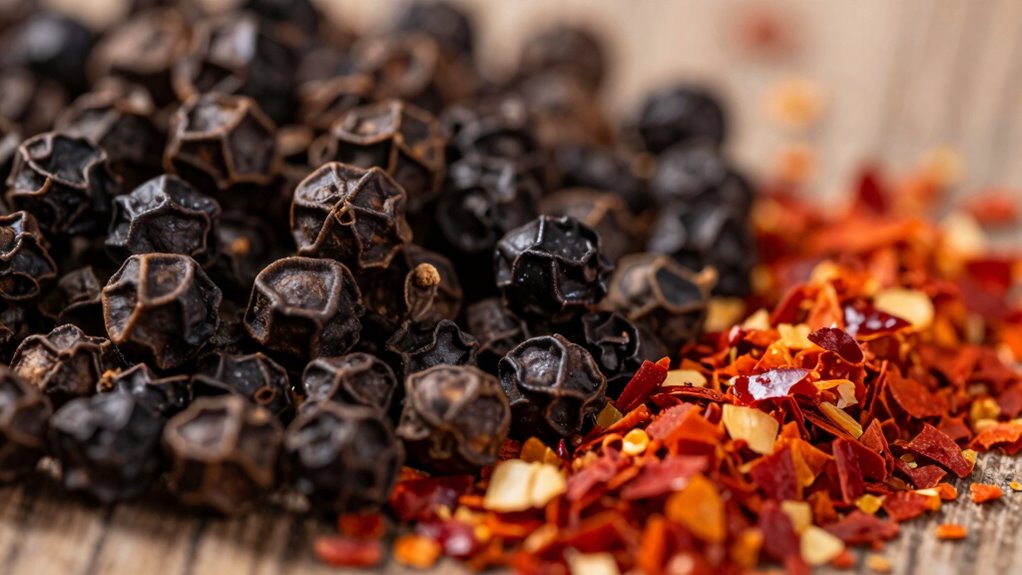

Black pepper and chili heat feel different because they contain distinct compounds that interact with your sensory receptors in unique ways. Piperine in black pepper creates a slow-building warmth and aromatic complexity, resulting in a lingering, subtle heat. In contrast, capsaicin in chili binds to pain receptors, delivering an immediate, fiery burn. Understanding these chemical differences can help you grasp why each spice impacts your senses so differently, and if you keep exploring, you’ll discover even more fascinating insights.

Get kitchen staples and gadgets delivered free with Prime
- Fast, free delivery on millions of items
- Prime Video, Amazon Music and more included
- Member-only deals all year
Key Takeaways
- Black pepper’s piperine interacts with nerve endings to create a slow-building warmth, unlike chili’s rapid, intense burn from capsaicin.
- Capsaicin binds to pain receptors, causing an immediate fiery sensation, whereas piperine produces a lingering, milder warmth.
- The chemical structures differ: piperine offers aromatic complexity, while capsaicin triggers a sharp pain response.
- Black pepper’s aroma and subtle heat enhance depth, contrasting with chili’s bold, spicy, and often smoky aroma.
- The sensory pathways activated by piperine and capsaicin result in distinct temperature and sensation experiences.
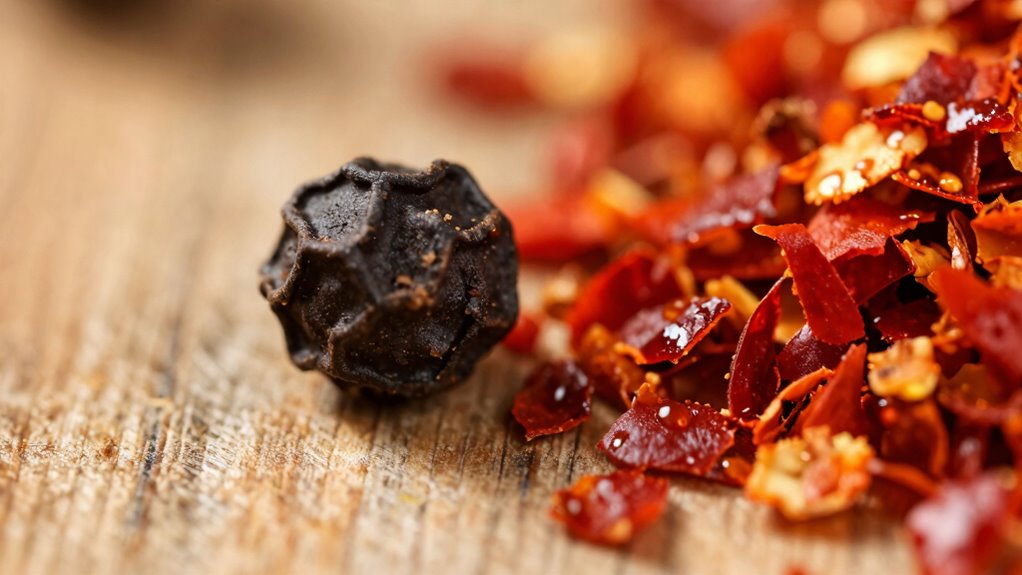
When you taste black pepper and chili heat, you immediately notice they feel different on your palate, but few realize that their distinct sensations come from entirely different chemical processes. Black pepper delivers a sharp, tingling warmth that lingers gently, while chili heat produces an intense, often burning sensation that can spread quickly. This difference stems from the molecules responsible for each sensation and how they interact with your sensory receptors. Black pepper’s pungency comes from piperine, which interacts with nerve endings in your mouth and nose, creating a warming, slightly numbing effect. It’s a slow-build sensation, often accompanied by complex aroma profiles that evoke earthy, woody, or citrusy notes, making it a popular choice for culinary pairings that aim to enhance depth and aroma.
Chili heat, on the other hand, originates from capsaicin, the compound that binds to pain receptors in your mouth, tricking your brain into perceiving burning or heat. Unlike piperine, capsaicin creates an immediate, fiery sensation that can vary in intensity depending on the chili’s capsaicin content. The aroma profiles of chilies also vary widely—ranging from fruity and smoky to green and grassy—adding layers of flavor that complement the heat. When you add chili to dishes, you’re not only introducing a spicy kick but also enriching the overall sensory experience. The fiery sensation tends to be more direct and intense, often prompting you to sip water or neutralize the heat with dairy, which can help temper the capsaicin’s binding to pain receptors. Recognizing how these different chemical compounds interact with your sensory receptors enhances your understanding of spice profiles.
Additionally, the way these compounds interact with sensory receptors in your mouth influences their distinct sensations. Understanding these chemical differences helps you craft better culinary pairings. For example, black pepper’s subtle warming and aromatic qualities work beautifully in dishes that benefit from a layered, nuanced flavor, such as roasted vegetables, stews, and sauces. Its aroma profile accentuates earthiness and freshness, making it a versatile spice that enhances both savory and even some sweet dishes. Recognizing that spice profiles are shaped by their chemical makeup allows chefs and home cooks alike to better harness their unique qualities. Capsaicin-rich chilies, however, are perfect when you want to add a bold, fiery punch—think spicy salsas, marinades, or hot sauces. Their aroma profiles can introduce smoky or fruity accents that complement the heat, intensifying the overall flavor profile. Recognizing that black pepper and chili heat engage different chemical pathways allows you to select the right spice for the desired sensory effect, enhancing culinary creativity and elevating your cooking experience.
black pepper piperine supplement
As an affiliate, we earn on qualifying purchases.
As an affiliate, we earn on qualifying purchases.
Frequently Asked Questions
Do Black Pepper and Chili Activate the Same Pain Receptors?
Black pepper and chili activate different pain receptors; black pepper stimulates the TRPV1 receptors mildly, creating a warming sensation, while chili’s capsaicin binds strongly to these receptors, producing intense heat. This difference influences flavor pairing choices and has deep culinary history, influencing how cuisines develop unique tastes. You can use black pepper for subtle warmth or chili for fiery heat, tailoring dishes to your preferred intensity.
How Do Individual Sensitivities Affect Perception of Black Pepper Versus Chili?
Think of your taste buds as a symphony, each person playing a different tune. Your sensitivities shape how you perceive black pepper versus chili, creating a unique flavor contrast. Some might find chili’s heat overwhelming, while black pepper offers a gentle, warming spice. Sensory adaptation occurs as your palate adjusts over time, making spicy heat feel less intense, but individual sensitivities determine how sharply you experience these flavors.
Can Black Pepper Cause a Burning Sensation Like Chili?
Black pepper doesn’t typically cause a burning sensation like chili because it contains piperine, which offers a sharp, tingling heat rather than a burn. In flavor pairing and culinary applications, black pepper adds depth without overwhelming heat, making it versatile for many dishes. While some individuals might feel a mild tingling, it generally doesn’t produce the intense, lasting burn chili peppers do, making it a safer choice for those sensitive to heat.
Are There Health Benefits Unique to Black Pepper’s Sensation?
You might be surprised, but black pepper’s unique sensation actually offers health benefits like flavor enhancement and digestive support. As you enjoy its pungent kick, it stimulates your taste buds, encouraging better digestion and nutrient absorption. While chili’s heat may cause a burning feeling, black pepper’s sensation can soothe your stomach and promote gut health, making it a beneficial addition to your meals beyond just flavor.
How Does Cooking Alter the Heat Sensation of Black Pepper and Chili?
Cooking reduces the heat sensation of black pepper and chili through flavor development and chemical interactions. As you heat black pepper, its essential oils mellow, lessening its pungency. Chili’s capsaicin interacts with heat, breaking down or dispersing, which diminishes its fiery effect. This process balances flavors, making the spices milder. So, when you cook these spices, you’re actively transforming their heat, creating a more harmonious and nuanced flavor profile.
As an affiliate, we earn on qualifying purchases.
Conclusion
So, next time you bite into black pepper or chili, remember they’re like two dancers in a fiery ballet—each with its own rhythm and flair. Black pepper’s gentle tingle is a slow, warm hug, while chili’s heat is a sudden, blazing spark. Understanding their differences lets you savor each experience fully. After all, knowing why they feel so different is like deciphering a secret code to spice up your culinary adventures.
As an affiliate, we earn on qualifying purchases.
spicy chili powder with smoky flavor
As an affiliate, we earn on qualifying purchases.
As an affiliate, we earn on qualifying purchases.
Halloween Picks
halloween
As an affiliate, we earn on qualifying purchases.