If you’re choosing a base for your dish, use stock when you want rich flavor and full body, perfect for hearty soups and sauces. Broth is better for lighter, quicker meals or when you want a delicate taste, like sipping on a hot bowl. Water works when you need neutrality, such as cooking grains or veggies without adding flavor. Knowing where each fits helps you create better dishes—keep exploring to master their best uses.

Get kitchen staples and gadgets delivered free with Prime
- Fast, free delivery on millions of items
- Prime Video, Amazon Music and more included
- Member-only deals all year
Key Takeaways
- Use stock for rich, full-bodied dishes like sauces, braises, and long-cooked soups.
- Choose broth for quick, light soups and dishes where a delicate flavor is preferred.
- Reserve water for cooking grains, vegetables, or pasta when no added flavor is needed.
- Select stock to add depth and gelatinous texture to sauces and stews.
- Opt for broth when a milder, subtler base suits the recipe’s flavor profile.
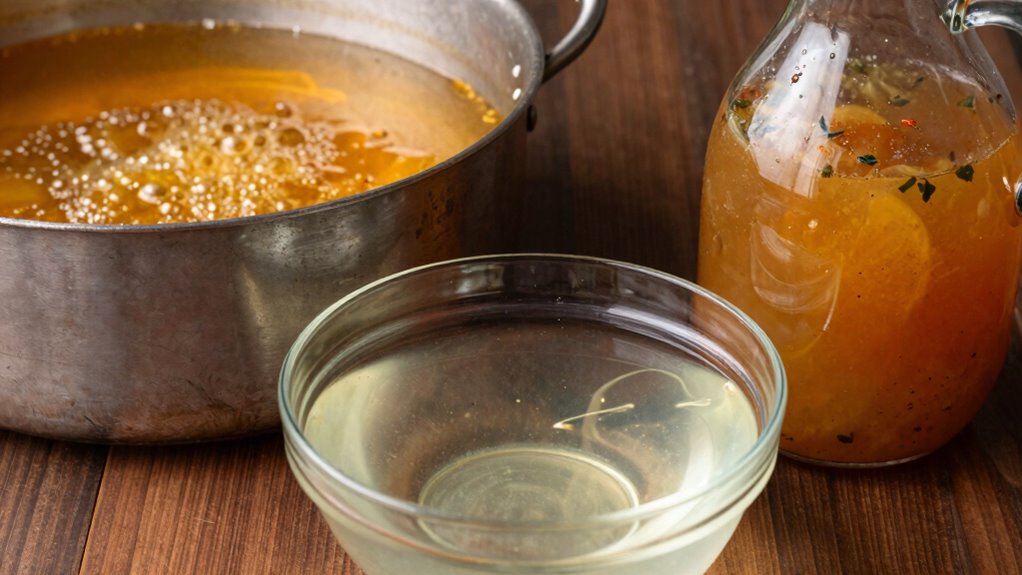
Ever wondered what sets stock, broth, and water apart in your kitchen? It’s a common question, and understanding these differences can considerably improve your cooking techniques and the flavor enhancement of your dishes. Each plays a unique role, and knowing when to use which can elevate your culinary creations.
Stock is typically made by simmering bones, often with vegetables and herbs, over a long period. This process extracts gelatin and minerals, giving stock a rich, full-bodied flavor and a slightly thickened texture. When you’re aiming for depth and body in soups, sauces, or braises, stock is your best choice. Its robust flavor acts as a foundation, adding richness without overpowering the other ingredients. Because of its concentrated flavor, stock often benefits from careful seasoning and reduction, making it a versatile base that enhances the overall taste of your dish. Additionally, the presence of gelatin in stock can improve the mouthfeel and body of your sauces and gravies.
Stock is made by simmering bones with vegetables and herbs, creating a rich, full-bodied flavor and slightly thickened texture.
Broth, on the other hand, is usually made by simmering meat, vegetables, and herbs for a shorter time. It has a lighter, more delicate flavor than stock and is often seasoned more heavily. Broth is perfect for quick soups, light sauces, or when you want to add moisture and subtle flavor to your ingredients without overwhelming them. Its clarity and milder taste make it suitable for sipping or for dishes where you want the essence of the ingredients to shine through without the heaviness of stock.
Water is the simplest of the three. It’s neutral and flavorless, primarily used as a cooking medium rather than a flavor enhancer. You’ll turn to water when you need to cook grains, vegetables, or pasta without adding extra flavor, or when the dish itself already includes enough seasoning. While water doesn’t contribute flavor on its own, it’s essential for controlling the consistency of your dish or for diluting overly concentrated liquids. Understanding the role of cooking liquids can help you better control the outcome of your recipes.
As an affiliate, we earn on qualifying purchases.
Frequently Asked Questions
Can You Substitute Water for Stock in Recipes?
Yes, you can substitute water for stock in recipes, but keep in mind it won’t provide the same flavor enhancement. Water is a neutral ingredient substitution, so your dish may lack richness and depth. To improve taste, consider adding herbs, spices, or aromatics. Use water as a fallback when needed, but for a more flavorful result, try to use stock or broth whenever possible.
How Long Can Homemade Stock or Broth Be Stored?
Your homemade stock or broth can last up to 4-6 days in the fridge, but it’s like a ticking time bomb if you forget about it! For longer storage, freezing is your best bet. Store it in airtight containers or ice cube trays, and it can last 3-6 months. Use freezing tips like leaving room for expansion, and you’ll be enjoying flavorful, homemade goodness for ages!
Are There Health Benefits to Using Broth Instead of Stock?
Using broth instead of stock can offer health benefits, as broth typically contains more flavor enhancement and nutrients from added ingredients like vegetables and seasonings. Nutritional comparison shows broth often has more vitamins and minerals, supporting your immune system and digestion. Plus, broth is easier to digest and can be more hydrating. So, when choosing a base, broth provides extra flavor and nutritional value, making your dishes both tasty and healthier.
What’s the Difference Between Vegetable Stock and Broth?
Vegetable stock and broth differ mainly in flavor and culinary use. Stock is made by simmering vegetables with bones or meat, offering a richer, deeper flavor ideal for base sauces and soups. Broth is lighter, made mainly from vegetables and seasonings, making it perfect for flavor enhancement in dishes or as a comforting drink. Both add culinary versatility, but broth’s milder taste suits more delicate recipes.
Can Water Be Used to Dilute Thick Soups or Stews?
You can definitely use water to dilute thick soups or stews, but it might dilute the flavor, so think of it as a tool for flavor enhancement and cooking versatility. To keep your dish tasting rich, add a splash gradually and taste as you go. This way, you maintain the depth of flavor while adjusting the consistency, ensuring your soup or stew remains delicious without sacrificing its hearty appeal.
As an affiliate, we earn on qualifying purchases.
Conclusion
Think of stock, broth, and water as the roots of your culinary tree—each with its own purpose, feeding the flavors above. When you understand where each belongs, your dishes will flourish with depth and clarity. Like a gardener tending to different plants, you’ll know exactly when to use water for a simple lift, broth for richness, or stock to build a robust foundation. Master these basics, and your cooking will truly reach new heights.
As an affiliate, we earn on qualifying purchases.
As an affiliate, we earn on qualifying purchases.
Halloween Picks
halloween
As an affiliate, we earn on qualifying purchases.