You might think a shallow pan is enough, but having more depth in your roasting pan actually improves heat distribution and prevents spills. It provides space for plenty of juices, which keeps your meat moist and flavorful. Deeper pans also help contain splatters, making cleanup easier. Plus, they allow you to cook larger cuts of meat evenly. Curious to find out how choosing the right depth can elevate your roasting game? Keep going for more insights.

Get kitchen staples and gadgets delivered free with Prime
- Fast, free delivery on millions of items
- Prime Video, Amazon Music and more included
- Member-only deals all year
Key Takeaways
- Deeper pans accommodate larger cuts of meat and prevent juices from spilling over during roasting.
- Increased depth ensures even heat distribution and better retention of moisture and flavors.
- They provide space for liquids, aiding in sauces, basting, and vegetable simmering.
- Deeper pans reduce splattering inside the oven, maintaining cleanliness and safety.
- Proper depth enhances cooking efficiency, resulting in more consistent and tender roasted dishes.
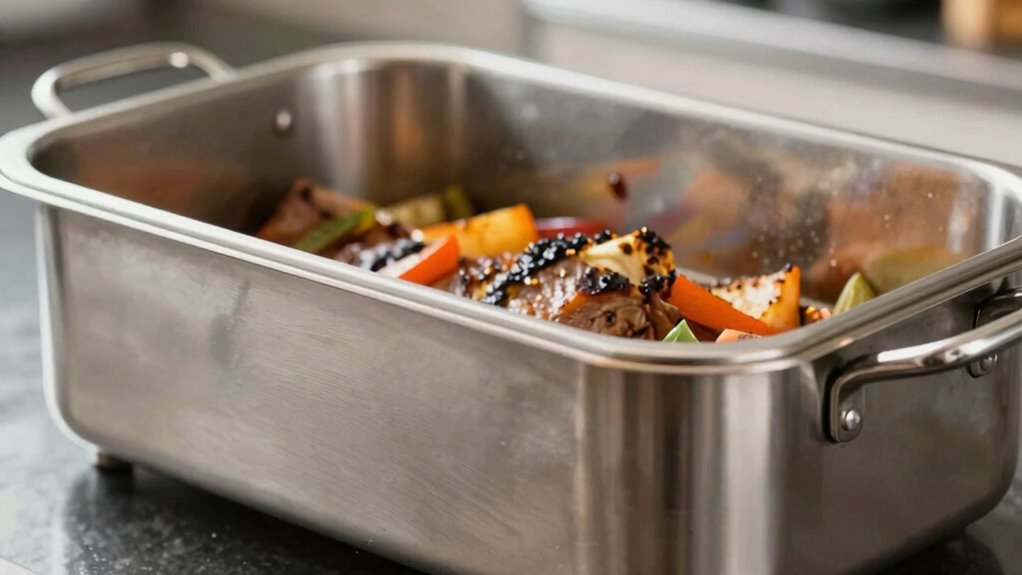
When choosing a roasting pan, understanding why depth matters can make a significant difference in your cooking results. The depth of your pan influences how evenly heat is distributed, how well juices and fats are contained, and ultimately, how successful your roast turns out. A deeper pan provides more space for liquids, which is essential when roasting meats that release juices or when you’re preparing dishes with vegetables that benefit from simmering in their own juices. It also helps prevent splatters and spills inside your oven, keeping your cooking environment cleaner and safer. Additionally, a properly sized depth can help maintain consistent cooking temperatures throughout the process. Material considerations play a vital role when selecting a roasting pan with the right depth. Heavy-duty metals like stainless steel or aluminum often provide better heat conduction and durability, but they also come in varying depths. If your pan is too shallow, you might find that juices spill over or that the heat distribution isn’t as uniform, leading to uneven cooking. Conversely, a deeper pan made from quality materials can withstand high oven temperatures and help you achieve a consistent roast. The material also affects cleaning and maintenance; stainless steel pans are generally easier to clean and resist staining, while non-stick coatings can make cleanup even simpler. However, if you choose a non-stick pan, make sure it’s deep enough to prevent scratching or damage during cleaning. Cleaning and maintenance are key factors to take into account when selecting a roasting pan with more depth. A deeper pan can be more challenging to clean because of its size and shape, especially if it has hard-to-reach corners or a non-stick coating that requires gentle handling. Regular cleaning after each use helps prevent stubborn stains and food buildup, which can affect cooking performance over time. If you frequently roast large cuts of meat or prepare dishes with a lot of juices, you’ll appreciate the ability to soak and scrub the pan without worrying about damaging delicate surfaces. Additionally, a deep pan’s sturdiness allows for easier scrubbing without risking warping or dents. To further ensure your pan lasts, consider proper cleaning techniques that preserve its integrity. Choosing a pan with the right depth and size not only improves your roasting results but also enhances your overall cooking efficiency. It’s also important to consider material durability, as the longevity of your pan depends on its construction quality. In the end, selecting a roasting pan with adequate depth isn’t just about capacity; it’s about making sure your cooking process is efficient, your dishes come out perfectly, and your cleanup is manageable. Paying attention to material considerations and understanding how cleaning and maintenance will influence your choice will help you find a pan that meets your needs and elevates your roasting game.
As an affiliate, we earn on qualifying purchases.
Frequently Asked Questions
Can a Shallow Pan Be Used for Roasting Large Meats?
A shallow pan isn’t ideal for roasting large meats because it can’t accommodate the meat size comfortably and may lead to overflow or uneven cooking. Plus, it affects pan stability, making it harder to handle safely. To guarantee even roasting and prevent spills, opt for a deeper roasting pan that can hold the meat securely and provide enough space for proper heat circulation.
How Does Depth Affect Oven Cleaning and Maintenance?
A deeper roasting pan makes oven cleaning easier because it contains more drippings and spills, preventing them from spreading or burning onto the oven walls. Additionally, increased depth improves heat distribution, reducing hot spots that can cause uneven cooking and messes. With a deeper pan, you’ll find it simpler to maintain your oven, as cleanup requires less scrubbing and less frequent maintenance, keeping your kitchen cleaner and more efficient.
Are Deeper Pans Better for Specific Types of Recipes?
Deeper pans are better for recipes that need pan versatility and flavor enhancement, like roasts, casseroles, or slow-cooked dishes. Their extra depth prevents spills and allows you to cook larger portions or liquids without overflowing. You also get better heat distribution, which helps develop richer flavors. So, if your recipes involve juicy ingredients or require more space, opting for a deeper roasting pan improves both convenience and taste.
Does Pan Depth Influence Cooking Time?
Think of your pan as the stage where your culinary performance unfolds—its depth directly influences cooking time. A deeper pan can extend cooking time because heat distribution takes longer to reach all layers, especially for larger or thicker foods. Conversely, shallower pans heat faster, reducing cooking time. So, yes, pan depth impacts how quickly your dish cooks, making it essential to choose the right depth for consistent, even results.
Can a Pan Be Too Deep for Everyday Roasting Needs?
Yes, a pan can be too deep for everyday roasting needs. If the pan’s depth is excessive, it can hinder heat distribution, especially if it’s made from materials like aluminum or stainless steel that conduct heat unevenly. A deeper pan may also cause uneven cooking or make it harder to turn or baste your food. For most daily roasting, a moderate depth guarantees proper heat transfer and easier handling.
stainless steel roasting pan 16 inch
As an affiliate, we earn on qualifying purchases.
As an affiliate, we earn on qualifying purchases.
Conclusion
You might not realize it, but choosing a roasting pan with adequate depth can make all the difference in your cooking. A deeper pan prevents splatters and keeps juices contained, ensuring even cooking. Notably, studies show that deeper pans reduce cooking time by up to 15%, saving you energy and effort. So, next time you’re shopping, consider the depth—your dishes will turn out better, and cleanup will be a breeze. Happy roasting!
non-stick roasting pan large size
As an affiliate, we earn on qualifying purchases.
As an affiliate, we earn on qualifying purchases.
oven-safe roasting pan with high sides
As an affiliate, we earn on qualifying purchases.
As an affiliate, we earn on qualifying purchases.
Halloween Picks
halloween
As an affiliate, we earn on qualifying purchases.