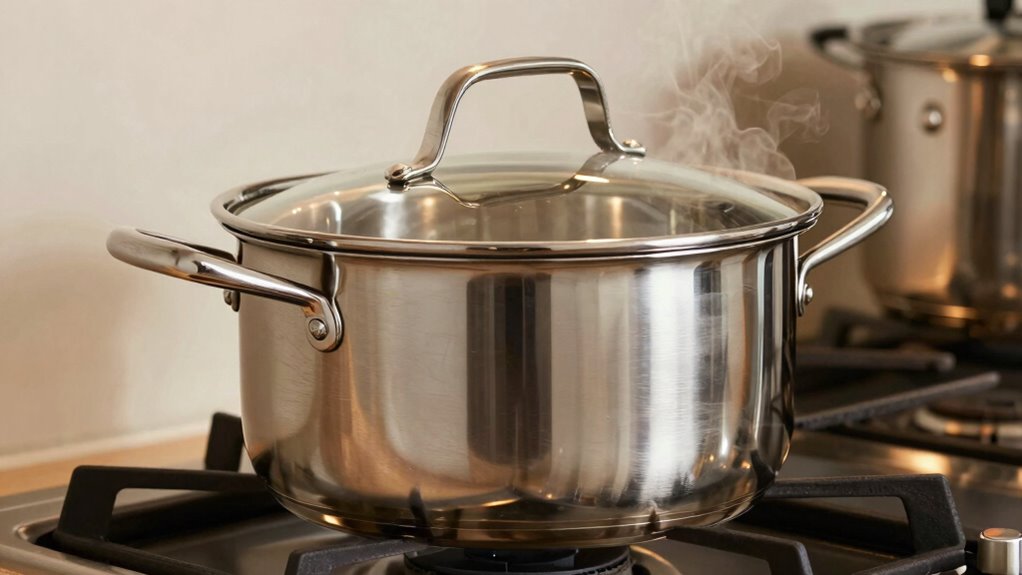

Tri-ply cookware feels different because its layered metal design quickly responds to your temperature adjustments. The multiple layers, often with an aluminum or copper core, guarantee even heat distribution and minimize hot spots. This means your food cooks more uniformly and reacts faster when you change the heat. The outer stainless steel keeps its look longer and resists scratches. If you want to understand how these layers work together to improve your cooking experience, keep exploring how tri-ply is built.

Get kitchen staples and gadgets delivered free — and shop member deals
- Fast, free delivery on millions of items
- Access to Prime Big Deal Days deals on October 6–7
- Prime Video, Amazon Music and more included
Key Takeaways
- Tri-ply cookware’s layered metal construction ensures rapid and even heat transfer, resulting in a more responsive cooking experience.
- The aluminum or copper core in tri-ply distributes heat quickly, minimizing hot spots and allowing precise temperature control.
- The layered design reacts swiftly to stove temperature adjustments, providing consistent heat throughout cooking.
- Outer stainless steel layers resist scratches and maintain aesthetic appeal, contributing to a smooth, quality feel on the stove.
- The overall construction enhances heat responsiveness and durability, making cooking feel more controlled and reliable.
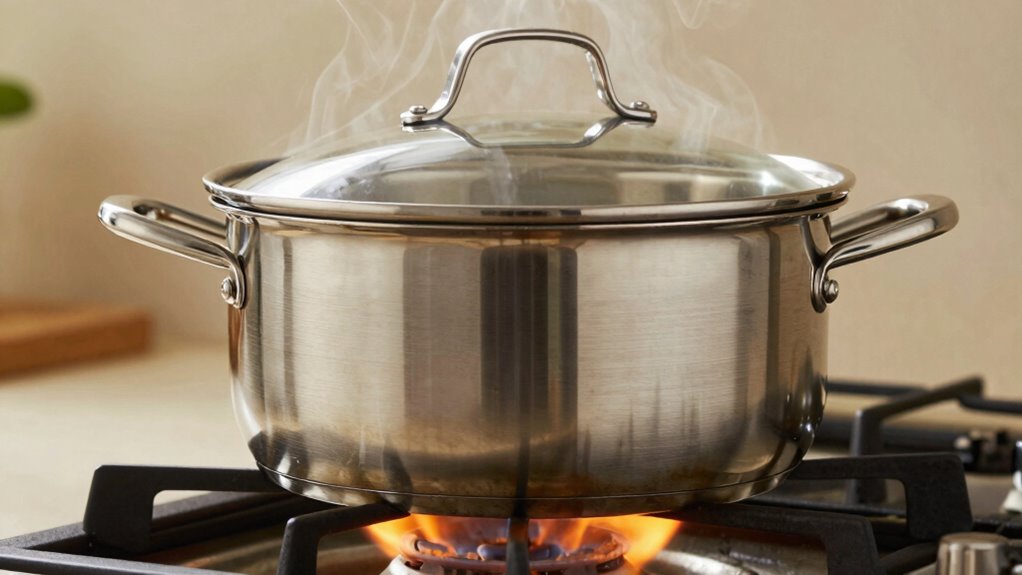
When you place tri-ply cookware on the stove, you’re leveraging a design that combines multiple layers of metal to improve heat distribution and durability. This construction typically involves an aluminum or copper core sandwiched between stainless steel layers, allowing heat to spread evenly across the cooking surface. The result is a vessel that heats quickly, stays consistent, and responds better to temperature changes. But what makes tri-ply cookware feel so different from other options isn’t just the cooking experience—it’s also rooted in its historical development and alternative material options that influenced its design. For instance, incorporating layered metal construction has significantly enhanced the performance and longevity of cookware over traditional single-material designs. Historically, cookware was made from single materials like cast iron or pure stainless steel. These materials have their advantages but often suffer from uneven heat distribution or slower response times. As cookware technology advanced, manufacturers sought better solutions. The development of multi-layered designs, including tri-ply, emerged in the mid-20th century. This innovation allowed for combining the best properties of different metals—such as the excellent heat conduction of aluminum or copper with the durability and non-reactivity of stainless steel. Over time, this layered approach became the standard for premium cookware, offering cooks greater control and precision. Additionally, the use of alternative materials has opened new avenues for customization and specific culinary needs. Beyond stainless steel and aluminum, alternative material options have been explored to improve the performance and versatility of cookware. Copper, for instance, is renowned for its superior heat conduction, but it’s often more expensive and reactive. To address these issues, some manufacturers incorporate copper cores within tri-ply structures, ensuring rapid heat transfer while maintaining the durability and ease of cleaning associated with stainless steel. Similarly, clad or layered designs with other metals like titanium have been developed for specific needs, such as lightweight construction or enhanced strength. These material innovations expand the possibilities for different cooking styles and preferences, giving you a range of choices that can match your specific requirements. What makes tri-ply feel so distinct is how these materials interact during cooking. You’ll notice that temperatures respond swiftly to adjustments, and heat stays consistent regardless of the pan’s size or shape. This kind of performance stems from its layered composition, which evenly disperses heat and minimizes hot spots. The layered construction also contributes to the cookware’s durability; the outer stainless steel resists scratching and corrosion, while the inner core manages heat transfer efficiently. Moreover, the layered construction also helps in maintaining the cookware’s aesthetic appeal over time, making it a long-lasting investment. So, when you’re cooking with tri-ply, you’re experiencing a product shaped by decades of development and innovative material choices, designed to give you a more precise, reliable cooking experience.
tri-ply stainless steel cookware set
As an affiliate, we earn on qualifying purchases.
As an affiliate, we earn on qualifying purchases.
Frequently Asked Questions
How Does Tri-Ply Cookware Affect Heat Distribution Over Time?
Tri-ply cookware improves heat distribution over time through superior heat conduction and thermal consistency. As you cook, the layered construction guarantees heat spreads evenly from the base to the sides, reducing hot spots. This consistent heat transfer lets you control cooking temperatures better, preventing burning or uneven cooking. Over time, this means your dishes turn out more reliably and efficiently, making tri-ply cookware a smart choice for precise, consistent results.
Can Tri-Ply Cookware Be Used on Induction Stoves?
Yes, you can absolutely use tri-ply cookware on induction stoves! Its magnetic stainless steel core makes it a superhero for induction cooking, turning your kitchen into a powerhouse. Plus, with ceramic coatings and non-stick surfaces, you’ll enjoy effortless cooking and cleanup. The magic of tri-ply is that it combines durability, even heat, and compatibility—making your culinary adventures smoother, faster, and more exciting than ever before.
Why Does Tri-Ply Cookware Sometimes Feel Heavier Than Other Types?
You’ll notice that tri-ply cookware sometimes feels heavier than other types because of its construction. The weight comparison comes from its layered design, which typically includes stainless steel and aluminum, making it more substantial. Material differences, like the added layers and durable metals, contribute to this heft. While it may seem heavy, this weight guarantees excellent heat conduction and durability, giving you better cooking performance and longevity.
How Should I Clean and Maintain Tri-Ply Cookware?
Think of your tri-ply cookware as a well-oiled machine—you need to keep it in top shape. For cleaning tips, hand wash with warm, soapy water and avoid abrasive sponges. For maintenance routines, regularly check for warping and keep the exterior dry to prevent corrosion. Avoid dishwasher cleaning if possible, and always dry thoroughly after washing. This way, your cookware stays in prime condition, ready for your next culinary adventure.
Does the Material in Tri-Ply Cookware Impact Its Durability?
Yes, the material composition impacts tri-ply cookware’s durability. Typically, it combines stainless steel, aluminum, and sometimes copper, which enhances longevity and wear resistance. Stainless steel offers strength and corrosion resistance, while aluminum or copper provides even heat distribution. This combination guarantees your cookware withstands regular use without warping or degrading quickly, making it a reliable choice for long-term cooking. Proper care further prolongs its durability.
As an affiliate, we earn on qualifying purchases.
Conclusion
Understanding why tri-ply cookware feels different on the stove can enhance your cooking experience. Its unique construction provides better heat distribution, making your dishes more consistent. Curiously, studies show that tri-ply pans heat up to 20% faster than single-material cookware, saving you time and energy. So, next time you notice a difference, remember it’s the quality materials working together to give you better control and results. Embrace the change and enjoy your improved cooking journey!
As an affiliate, we earn on qualifying purchases.
professional tri-ply pots and pans
As an affiliate, we earn on qualifying purchases.
As an affiliate, we earn on qualifying purchases.
Fall Picks
fall essentials
As an affiliate, we earn on qualifying purchases.