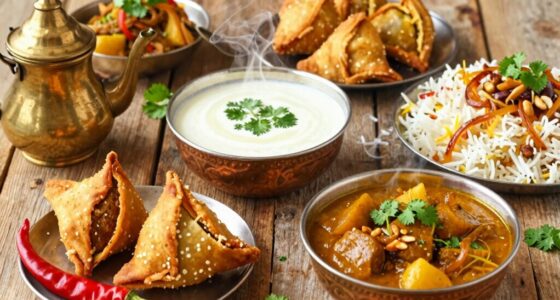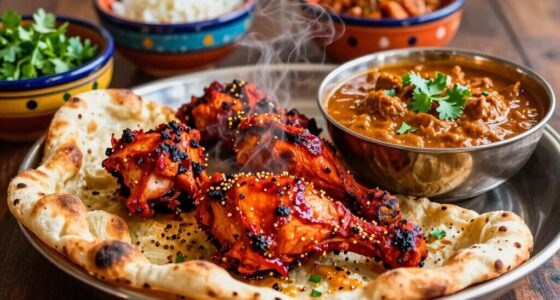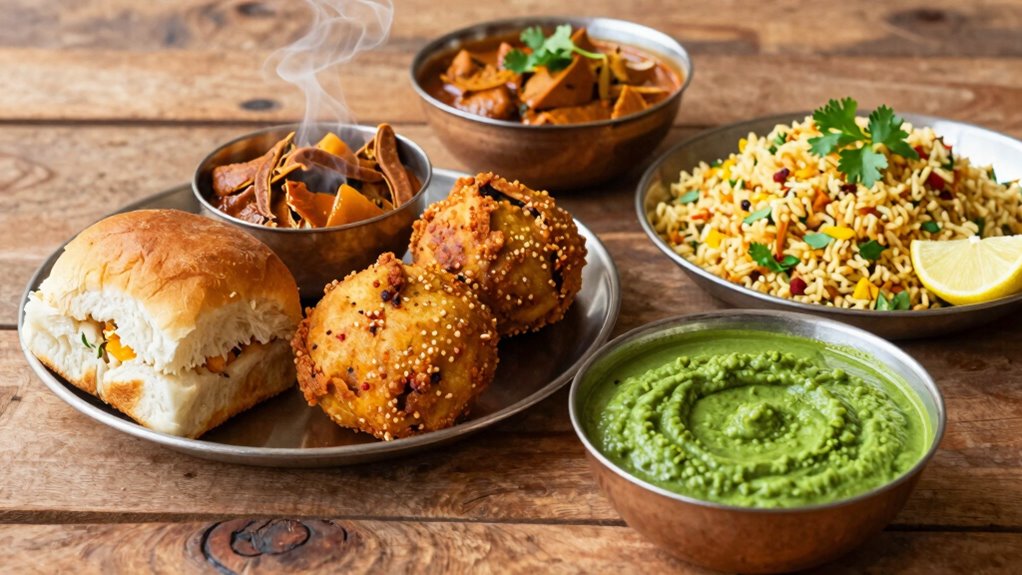

Maharashtrian cuisine has a much broader range than most people realize. From fiery Kolhapuri dishes to sweet and sour delicacies like kokum and tamarind, the flavors vary widely across regions. Coastal areas emphasize seafood with coconut, while inland communities focus on grains like jowar and bajra. Traditional spices and ingredients shape unique, layered tastes that often go unnoticed. If you explore further, you’ll discover even richer culinary traditions that highlight the cuisine’s true diversity.
Key Takeaways
- Regional ingredients like coconut, jaggery, tamarind, and kokum create diverse flavor profiles across Maharashtra.
- Coastal, inland, and rural areas each have unique dishes reflecting local geography and culinary traditions.
- Spices such as cumin, coriander, turmeric, and red chili are used variably, adding complexity beyond common stereotypes.
- Traditional cooking methods and lesser-known recipes showcase the cuisine’s depth and adaptability.
- Maharashtrian cuisine encompasses a wide spectrum of flavors, from fiery to sweet and sour, surpassing popular dishes.
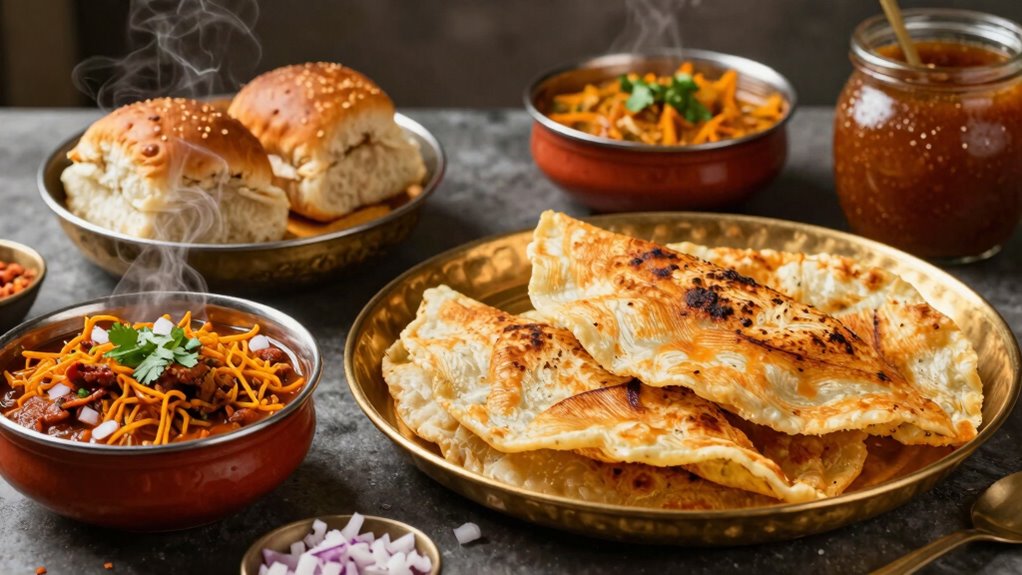
Maharashtrian cooking offers a vibrant blend of flavors, colors, and aromas that reflect the rich cultural heritage of Maharashtra. When you explore this cuisine, you quickly realize it’s much more diverse than many people assume. It’s not just about the familiar dishes like puran poli or vada pav; it’s about an intricate tapestry of tastes crafted through the use of traditional spices and regional variations. Each region within Maharashtra has its own culinary identity, shaped by local ingredients, climate, and history, which means you get a wide spectrum of styles and flavors.
The use of traditional spices is central to Maharashtrian cooking. These spices aren’t just added for heat or flavor—they carry cultural significance and are passed down through generations. You’ll find cumin, coriander, turmeric, and red chili powder as staples, but the way they’re combined and used varies regionally. For example, in western Maharashtra, you might encounter more coconut and jaggery in dishes, giving them a sweeter, richer profile, while in eastern parts, sour ingredients like tamarind and kokum are more prominent, adding tanginess and depth. This diversity in spice blends creates a landscape of flavors that can be fiery, sweet, sour, or a complex combo of all three, depending on where you’re eating. Additionally, the regional ingredients used in Maharashtrian cooking play a crucial role in defining its unique taste profiles. Exploring regional culinary influences reveals how history and geography shape these flavor profiles further.
Regional variations are what truly set Maharashtrian cuisine apart. In the Konkan coast, seafood is a major component, prepared with coconut, raw mango, and fiery red chilies, producing dishes that are both aromatic and spicy. Moving inland, you’ll find dishes that rely more on grains like jowar (sorghum) and bajra (pearl millet), often used to make bhakri or roti, accompanied by simple yet flavorful vegetable curries. The Vidarbha region favors hearty, earthy flavors, with thick lentil-based dals and spicy meat preparations. Maharashtrian cuisine also varies between urban and rural areas, with rural communities often emphasizing traditional methods of cooking with minimal spices but maximum flavor extraction. These regional distinctions demonstrate the cuisine’s adaptability to local environments and available resources. All these regional variations demonstrate that Maharashtrian cooking is a dynamic, layered cuisine with more range than most people expect. You’re encouraged to explore beyond the well-known dishes and discover how local ingredients, traditional spices, and historical influences shape its diverse culinary landscape. Whether you’re savoring a spicy Kolhapuri chicken or a subtly flavored sol kadhi, you’re experiencing a cuisine that’s rich in tradition and full of surprises—showing that Maharashtrian cooking is truly more complex and exciting than most realize.
As an affiliate, we earn on qualifying purchases.
Frequently Asked Questions
What Are the Common Ingredients Used in Maharashtrian Cuisine?
You’ll find that common ingredients in Maharashtrian cuisine include traditional spice blends like goda masala and kokum, which add unique flavors. You also use ingredients like coconut, jaggery, and fresh coriander. These ingredients feature prominently in regional dessert varieties like puran poli and modak. Overall, the cuisine’s diverse flavors come from these staple ingredients, giving it a rich, authentic taste that surprises many newcomers.
How Does Maharashtrian Cooking Differ From Other Indian Regional Cuisines?
You’ll notice Maharashtrian cooking differs from other Indian regional cuisines through its diverse festive culinary traditions and regional flavor variations. You’ll find unique dishes like puran poli and vada pav, reflecting local ingredients and celebrations. Unlike the more heavily spiced North Indian cuisine, Maharashtrian dishes balance flavors with coconut, jaggery, and curry leaves, showcasing a distinct regional taste that’s both comforting and vibrant, making the cuisine truly diverse.
Are There Specific Cooking Techniques Unique to Maharashtrian Dishes?
You’ll find that Maharashtrian dishes often use unique fermentation techniques, like those for making traditional fermented batters and pickles, which add depth and tanginess. Additionally, spice blending methods are distinct, combining bold, smoky, and tangy flavors with ingredients like dried red chilies, coconut, and jaggery. These techniques create complex, flavorful dishes that stand out, offering a rich culinary experience that’s both hearty and vibrant.
Which Maharashtrian Dishes Are Suitable for Vegetarians?
You’ll find many vegetarian delicacies in Maharashtrian cuisine suited for diverse tastes. Dishes like puran poli, bhakri with vegetable curries, and the famous vada pav are popular choices. Regional variations add unique flavors, from spicy Kolhapuri vegetarian dishes to mild, coconut-based Konkani specialties. These options showcase the rich diversity within Maharashtrian cuisine, proving it’s more versatile and accommodating for vegetarians than many people realize.
How Has Maharashtrian Cuisine Evolved Over the Years?
Ever wonder how Maharashtrian cuisine has evolved? You’ll notice a shift from traditional fermentation techniques and authentic spice blending to modern adaptations. While maintaining its roots, chefs now experiment more, blending spices creatively and incorporating global ingredients. This evolution keeps the dishes vibrant and diverse, appealing to contemporary tastes. So, the cuisine continues to grow, respecting tradition while embracing new flavors and culinary trends.
traditional Maharashtrian cookware
As an affiliate, we earn on qualifying purchases.
As an affiliate, we earn on qualifying purchases.
Conclusion
You might be surprised to learn that Maharashtrian cuisine boasts over 200 distinct dishes, showcasing its incredible diversity. From spicy curries to sweet treats, it’s a vibrant tapestry of flavors that many overlook. Next time you think of Maharashtrian food, remember it’s more than just popular dishes—it’s a rich culinary heritage with a surprising range. Immerse yourself and explore this flavorful world—you’ll find there’s always something new to savor!
authentic Maharashtrian ingredients kit
As an affiliate, we earn on qualifying purchases.
As an affiliate, we earn on qualifying purchases.
As an affiliate, we earn on qualifying purchases.